- Delhi
EV Charging Stations in Delhi | ElectreeFi
Delhi has the densest public charging network of any Indian city, with roughly one charge point every three square kilometres. Charging runs from the fuel-station forecourts of Connaught Place and Ring Road out to the residential colonies of Rohini, Dwarka and Patparganj.
ElectreeFi supports EV charging in Delhi on both sides of the market: drivers looking for a working charger, and businesses installing charge points of their own.
Why ElectreeFi for EV Charging in Delhi

Experience You Can Trust
With 32,000+ chargers deployed across India and integrations with 80+ charger OEMs, ElectreeFi brings large-scale field experience to every Delhi project.

Smart & Scalable Infrastructure
Our cloud-based IoT platform supports AC and DC fast chargers, real-time monitoring, multi-payment options, and user-friendly access through mobile apps.
Tailored for the Delhi Market
We work with the Delhi EV Policy 2026, DISCOM load approvals across BSES and Tata Power Delhi, and the mix of fuel stations, malls and colonies that make up the city.

Comprehensive Lifecycle Support
From planning, installation, commissioning, to operation and maintenance, ElectreeFi provides an all-in-one solution to simplify your EV charging deployment.
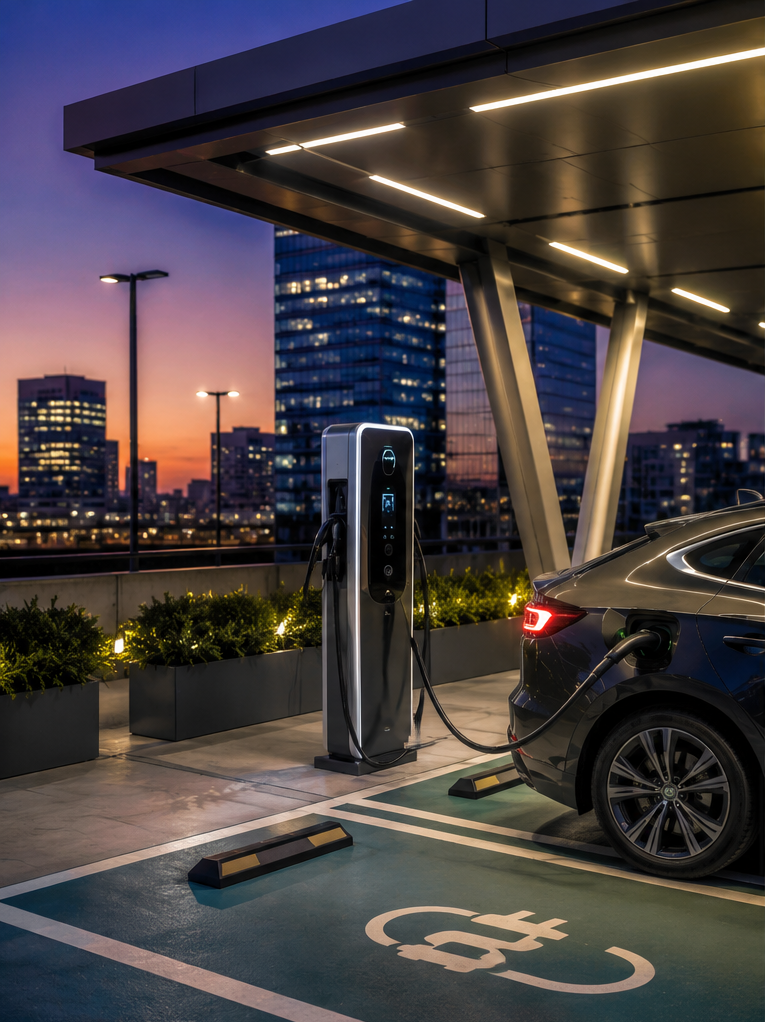
Our Services in Delhi
Site Planning & Charger Installation
Selection of suitable charger type (AC Level-2 or DC Fast Charger).
Complete on-site installation, testing & commissioning.
EV Charging Management Platform (CMS)
Integration with multiple payment gateways, RFID, and mobile app billing.
Interoperability & roaming support between networks.
Operations & Maintenance (O&M)
Fleet & Property Charging Solutions
EV charging setup for residential towers, office parks, malls, and public parking spaces.
Custom monetization models to generate recurring revenue from charging services.
Public charging directories list well over 1,700 public charging points across New Delhi, the largest concentration in any Indian city. Tata Power operates the biggest share, with further sites from IOCL, EESL and the city’s own grid substations. The table below shows a sample of publicly listed locations.
| Location | Area | Connectors listed |
|---|---|---|
| EESL Chelmsford Club | Rafi Marg | CCS2, CHAdeMO, AC Type 2 |
| Tata Power Irwin Road | Connaught Place | CCS2, CHAdeMO |
| Tata Power Soami Nagar | Soami Nagar North | CCS2, CHAdeMO |
| Tata Power Sabarwal | RK Puram, Sector 5 | CCS2 |
| Tata Power Rajkumar | IIT Crossing | CCS2, Bharat DC-001 |
| IOCL Aaui | I P Estate, Ring Road | CCS2, Bharat DC-001 |
| Tata Power Komal & Bros | Mandawali, Patparganj | CCS2, Bharat DC-001 |
| 66KV Grid Sub Station | Sector 3, Rohini | AC Type 1 |
Sample compiled from public charging directories, 2026. Station availability, pricing and connector mix change frequently, so always check live status in an app before travelling.
Where to find charging points in Delhi
Delhi’s charging network follows a different pattern from most Indian cities, because so much of it sits on existing fuel station forecourts:
- Fuel stations. Tata Power and IOCL have put DC fast chargers into petrol pumps right across the city, from Connaught Place to Burari. These are the most reliable option for a quick top-up.
- Government and institutional sites. EESL points around Rafi Marg and the central government district, typically with a wide connector mix.
- Malls and markets. Basement parking in the larger retail centres, busiest at weekends.
- Residential colonies. Rohini, Dwarka, Patparganj and RK Puram have added points steadily, some restricted to residents.
What it costs to charge
Public charging is billed per unit of electricity consumed rather than per minute. Cost depends on how much energy your battery draws, whether the charger is AC or DC, and which operator runs the site. DC fast charging is quicker and generally priced higher per unit. Delhi’s DISCOMs offer a separate EV tariff category, which is part of why public charging here is often competitively priced against other metros.
Delhi EV Policy 2026: what it means for you
Delhi notified a new electric vehicle policy running from 1 July 2026 to 31 March 2030. The parts that matter most:
- Charging infrastructure. The policy targets 23,000 new public charging points across the city during the policy period, with support sought under the central PM E-Drive scheme.
- Dealer obligation. Every vehicle manufacturer operating in Delhi must deploy at least one public charging station at each dealership, with a minimum of three charging points for two and three-wheelers and two for four-wheelers.
- Road tax and registration. 100 percent exemption for eligible pure electric vehicles.
- Purchase incentives. Paid by direct benefit transfer within 60 days of applying. Eligible small electric goods vehicles in the N1 category can attract up to ₹1 lakh.
Policy terms change. Confirm current eligibility with the relevant department or your dealer before relying on any of these benefits.
Benefits of Setting Up EV Charging in Delhi
- Future-ready properties: Attract EV-owning customers, tenants, and employees.
- New revenue opportunities: Monetize public or private charging usage.
- Sustainability impact: Support cleaner air in one of the world’s most pollution-affected capitals.
- Government support: The Delhi EV Policy 2026 plans 23,000 new public charging points and offers 100% road tax and registration exemption on eligible EVs.
How ElectreeFi Works with You
EV Charging Landscape in Delhi
Delhi NCR holds more than 3,200 public charging stations, second only to Maharashtra among Indian regions, and Delhi itself has the highest charger density per square kilometre in the country. Nationally, India crossed roughly 27,000 to 29,000 public charging stations during 2026.
Demand in Delhi is unusually broad. The city has one of the largest electric three-wheeler fleets in India, a fast-growing set of delivery and ride-hailing operators, and a rising share of private electric cars. That mix is why Delhi sites often carry CCS2, CHAdeMO and Bharat DC-001 connectors together rather than standardising on one.
Frequently Asked Questions
Public charging directories list well over 1,700 public charging points across New Delhi, and Delhi NCR as a whole accounts for more than 3,200. Delhi has the highest charger density of any Indian city, at roughly one charge point every three square kilometres. The Delhi EV Policy 2026 targets a further 23,000 public charging points by 2030. Because a listed station is not always working, live availability in an app is a better guide than any directory count.
Much of Delhi’s public charging sits on existing petrol station forecourts, operated mainly by Tata Power and IOCL, which makes them easy to find and reliable for a quick DC top-up. Beyond that there are EESL points around Rafi Marg and the central government district, chargers in mall basement parking, and a growing number in residential colonies including Rohini, Dwarka, Patparganj and RK Puram. Availability varies through the day, so check live status before setting out.
Tata Power runs the largest share of Delhi’s public charging, with further networks from IOCL, EESL and several private operators. Under the Delhi EV Policy 2026, every vehicle manufacturer operating in the city must also provide public charging at each dealership. Because the network is split across operators, drivers often need several apps and wallets, which is the problem EV roaming is designed to solve by letting one account work across networks.
Public charging is billed per kilowatt hour consumed, not per minute. Your cost depends on how much energy your battery takes, whether the charger is AC or DC, and which operator runs the site. DC fast charging is quicker but priced higher per unit than AC. Delhi’s electricity distribution companies offer a separate EV tariff category, which helps keep public charging competitively priced compared with other metros. You should always see the tariff before starting and receive an itemised invoice afterwards.
The policy runs from 1 July 2026 to 31 March 2030. For buyers it provides 100 percent exemption from road tax and registration fees on eligible pure electric vehicles, with purchase incentives paid by direct benefit transfer within 60 days of applying. Eligible small electric goods vehicles in the N1 category can attract up to ₹1 lakh. For the city it targets 23,000 new public charging points and requires every vehicle manufacturer to provide public charging at each dealership.
Delhi sites commonly carry several standards together. CCS2 is the DC fast charging standard used by most electric cars sold in India today. CHAdeMO appears on a number of Delhi sites for older imported models, more often than in most Indian cities. Bharat DC-001 serves smaller batteries, and AC Type 2 is the slower standard used where vehicles park for hours. Setting your vehicle in a charging app means the map only shows points that physically fit.
Yes, and the policy actively encourages it. Start with electrical capacity: the sanctioned load at your site decides how many chargers you can run and at what power, and insufficient load is the most common reason a project stalls. You will need approval from your DISCOM, which in Delhi means BSES or Tata Power Delhi depending on your area, plus resident welfare association approval in a housing society. You then need software to handle sessions, tariffs, payments and invoicing, and a maintenance arrangement.
Yes. The ElectreeFi app is free on Android and iOS and lets you find nearby charging stations, filter them by location, connector type and ratings, view site photographs and driver reviews, book a charger in advance, navigate to it, start and stop the session from your phone, watch live charging status, and pay through an in-app wallet or supported payment gateways. Every session is recorded with an invoice, which is useful if you claim charging as a business expense.
Start Your EV Charging Project in Delhi Today
Whether you are a property owner, a housing society, a fleet operator or a retail site in Delhi, ElectreeFi can plan, install, run and maintain your charging infrastructure.