Charging Management System (CMS)
Empower Your EV Infrastructure Management with ElectreeFi
Comparing platforms? We publish an open comparison of the EV charging management systems available in India — including where a competitor is the better fit than us: Best EV charging management software in India.
Comprehensive CMS Provider
Over 105,000 charge points deployed across India, facilitating more than 15 million charging transactions, making us the largest CMS provider in India.
Trusted by Major CPOs
Trusted by renowned CPOs like IOCL, CESL, BESCOM, HERO MOTORCORP, and more for managing their charging infrastructure.
Innovative Solutions
Offer multilingual capabilities, regulatory price policy implementation, and support for smart charging with grid load management and local load management.
Secure and Reliable
VAPT certified by Cert-in empanelled agency, ensuring a completely secure platform hosted on AWS Cloud, the leading cloud provider in the industry.
300000 +
15 Million+
15 +
Key Features of ElectreeFi EV Charging Management Platform
Master Your EV Ecosystem
Comprehensive EV Charging Management System
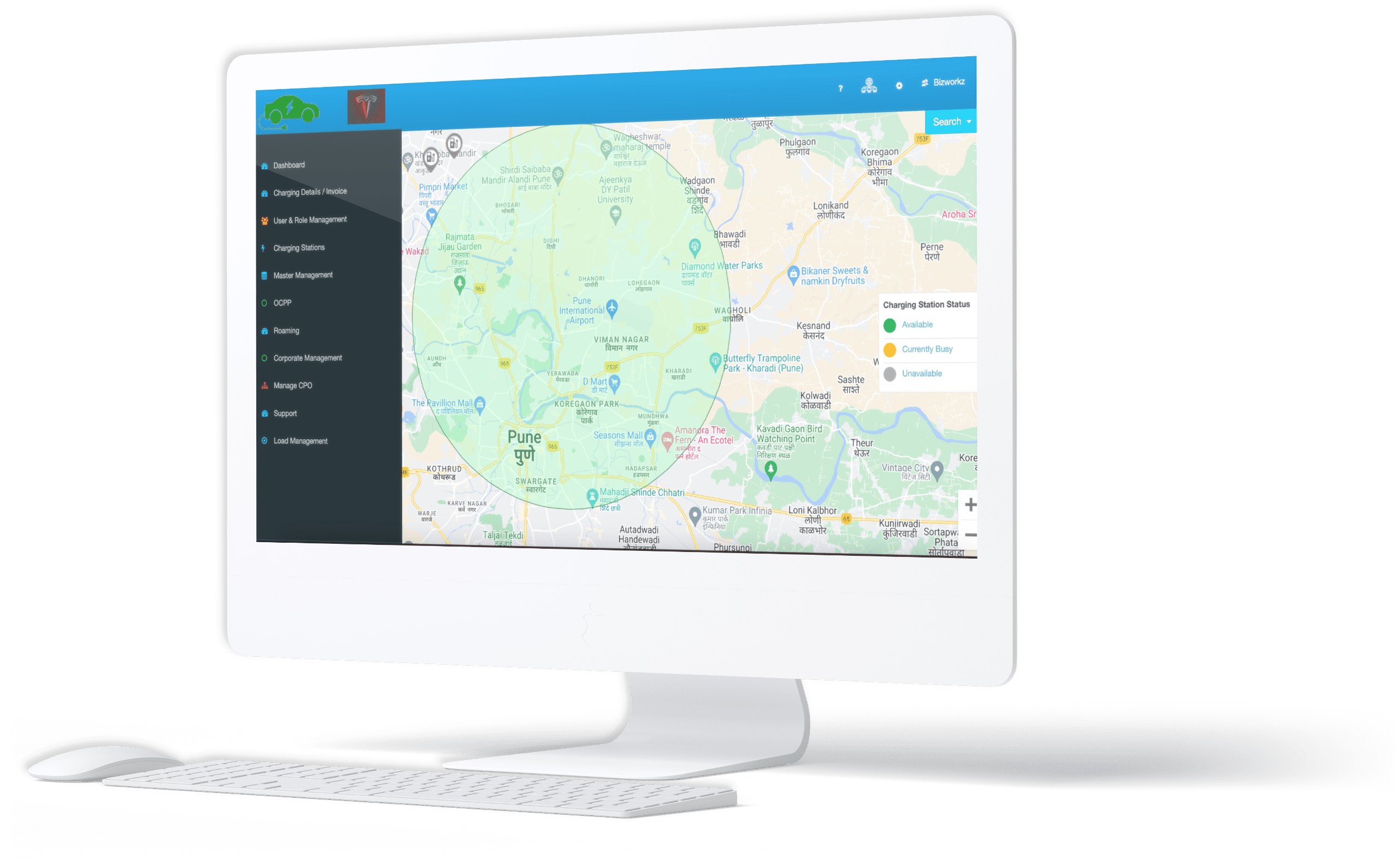
Take full control of your charging infrastructure with ElectreeFi’s intuitive dashboard, allowing you to analyze station performance, track payments, and manage station amenities effortlessly.
Dynamic Financial Management
With ElectreeFi’s finance module, handle all financial aspects of your EV charging infrastructure in one centralized platform. Track revenue, manage invoices, and handle subscriptions with precision and efficiency, ensuring seamless financial operations.

Advanced Roaming Integration
ElectreeFi leads the market with its advanced roaming integration capabilities, facilitating seamless sessions, tariff management, and reservations across different charging networks, enhancing accessibility and convenience for EV drivers.
Empower Your EV Charging Operations with Comprehensive Modules
EV Charging Stations
Monitor and manage charging stations, amenities, and charging point statuses.
Charging Details / Invoice
View detailed charging session information and invoices for transparent billing.
User & Role Management
Manage user roles, permissions, and employee accounts effortlessly.
Corporate Management
Streamline corporate account management, user assignments, and vehicle allocations efficiently.
Load Management
Optimize energy usage and monitor DT meters for efficient load management.
Powering Your EV Charging Management Platform with ElectreeFi
What is an EV charging management system?
An EV charging management system, usually shortened to CMS, is the software layer that sits between your charge points and everything you need them to do: start and stop sessions, take payment, set tariffs, watch for faults, and report on what the network earned.
Without one, a charging station is just a piece of hardware on a wall. It cannot tell a paying customer from a passer-by, cannot bill anyone, cannot tell you it has gone offline, and cannot be priced differently at peak hours. The CMS is what turns installed hardware into a running business. If you are still weighing the category, start with what a charging management system actually does and how the backend software fits the wider network. For specific angles: the role of a Charge Point Operator, running an electric fleet, cutting charger downtime, and where charging software saves operating cost.
A charger management system has to do four jobs well:
- Talk to the hardware. Over the open OCPP protocol, so the software is not tied to one manufacturer.
- Handle the money. Tariffs, payments, invoices and settlement to the charge point owner.
- Keep the network up. Live status, fault alerts and remote diagnostics, because an offline charger earns nothing.
- Serve the driver. A map, an app, a way to start a session and a receipt at the end.
ElectreeFi does all four on one platform, and has been doing it at national scale in India since long before most operators had a second site.
Built and proven at Indian scale
Charging software is easy to demo and hard to run. The difference shows at scale, in the sites with poor mobile coverage, the chargers from four different manufacturers, the DISCOM tariff that changed last week, and the driver who needs an invoice for an expense claim.
| What we run | Detail |
|---|---|
| Charge points deployed | Over 105,000 charge points deployed across India |
| Charging transactions | More than 2 million processed |
| Operators who trust it | IOCL, CESL, BESCOM, Hero MotoCorp and others |
| Roaming integrations | 15 or more live network integrations |
| Hardware supported | Integrations with 80 or more charger manufacturers |
| Security | VAPT certified by a Cert-In empanelled agency, hosted on AWS |
Those operator names matter more than the numbers. Oil marketing companies and state utilities run procurement processes that most software never survives, and they do not change platforms casually.
OCPP and why hardware independence matters
The single most expensive mistake in charging infrastructure is buying hardware and software from the same vendor as a locked bundle. When the hardware disappoints, the software goes with it, and every site has to be replaced together.
ElectreeFi speaks OCPP, the open protocol the industry standardised on, which means the platform does not care whose charger is on the wall. We maintain integrations with 80 or more charger manufacturers, so you can:
- Buy hardware on price, lead time and local service, rather than on which software it is tied to
- Run a mixed estate from several manufacturers through one dashboard
- Replace a charger without replacing the software behind it
- Add newer OCPP 2.0.1 hardware alongside an older OCPP 1.6 estate
If you are still choosing hardware, our guide to OCPP 2.0.1 and what it changes is a useful starting point, as is choosing an OCPP charger manufacturer in India.
Payments, tariffs and settlement
Most charging businesses do not fail on technology. They fail on the money layer: tariffs that cannot be changed quickly, payments that fail at the charger, and settlement that takes a spreadsheet and three days.
The platform handles the commercial side end to end:
- Flexible tariffs by site, by time of day, by connector type or by customer group, with regulatory price policy supported where a state mandates it.
- Multiple payment routes so a single failure does not end a session: in-app closed wallet, payment gateways including Paytm, PayU and BillDesk, RFID cards, and QR.
- Automatic settlement to the charge point owner, so a site host or franchise partner is paid without manual reconciliation.
- Invoices on every session, which matters for fleet and corporate customers claiming the cost back.
- Corporate accounts with user assignment and vehicle allocation, for companies running employee or fleet charging.
More detail on the payment layer sits on our EV charging payment solutions page.
Uptime, monitoring and load management
A charger that is offline earns nothing and costs you the customer who drove to it. Monitoring is not a reporting feature, it is the revenue protection layer.
- Live status on every charge point and connector, so you see a fault before a driver reports it
- Remote diagnostics and reset, which resolves a large share of faults without sending an engineer
- Fault alerts routed to the people who can act on them
- Smart charging with grid and local load management, so a site with limited sanctioned load can still run multiple chargers by balancing draw across them
- DT meter monitoring for sites where the distribution transformer is the real constraint
Load management is the feature that decides whether a site is viable at all. Sanctioned load is the most common reason an Indian charging project stalls, and balancing draw across chargers is often cheaper than applying for more. See smart charging with load management for how it works in practice.
Roaming: one account across networks
India’s charging network is split across many operators, and each one historically built its own app and wallet. Drivers end up with four or five apps and money stranded in each, which suppresses usage across the whole market.
ElectreeFi supports 15 or more roaming integrations, built on open protocols such as OCPI. For an operator that means your chargers become visible and usable to drivers who are registered with another network, with sessions, tariffs and reservations handled across the link and settlement reconciled behind the scenes.
In practice, roaming turns a network of your size into a network of the whole connected market’s size, without you installing a single extra charger. Our explainer on EV roaming and OCPI covers the mechanics.
Who Runs On ElectreeFi
Charge Point Operators
Fleet operators
Oil marketing companies
Property and mall owners
State utilities and agencies
OEMs and dealerships
How a deployment works
Most operators come to us in one of two situations: starting from nothing, or moving an existing estate off software that is not working. Both are routine.
- Assessment. What hardware you have or plan to buy, what the site load allows, and how you intend to charge for sessions.
- Integration. Connecting your chargers over OCPP. If the manufacturer is one of the 80 plus we already support, this is configuration rather than development.
- Commercial setup. Tariffs, payment routes, settlement rules, corporate accounts and user roles.
- Go live. Stations appear in the driver app, sessions start producing invoices, and the dashboard starts reporting.
- Operations. Monitoring, fault handling and ongoing maintenance, with 24×7 support behind it.
If you are still at the infrastructure stage, we also handle charging station installation and setup, so the hardware and the software arrive as one project rather than two.
Frequently Asked Questions
An EV charging management system, or CMS, is the software that controls and monitors a network of charge points. It handles session start and stop, authentication by app, RFID or QR, tariffs and payment, invoicing, live status and fault alerts, and reporting on usage and revenue. Without a CMS a charging station cannot identify a customer, take payment, or tell you it has gone offline, so the hardware cannot operate as a business.
In practice they describe the same thing and the terms are used interchangeably across the industry. Both refer to the central software platform that manages charge points, sessions, users, tariffs and payments. You may also see it called a charge point management system, a CPMS, or simply a CMS. ElectreeFi’s platform covers all of these functions in one system.
ElectreeFi has deployed over 105,000 charge points across India and has processed more than 15 million charging transactions. It is built for national-scale networks rather than single sites, and is used by operators including IOCL, CESL, BESCOM and Hero MotoCorp. There is no practical ceiling that a growing operator is likely to hit.
Yes, provided the charger speaks OCPP, which almost all modern hardware does. We maintain integrations with 80 or more charger manufacturers, covering both OCPP 1.6 and OCPP 2.0.1 equipment. This matters commercially: it means you buy hardware on price, lead time and service quality rather than being locked to whichever software the manufacturer bundles, and you can run a mixed estate through one dashboard.
The platform is VAPT certified by a Cert-In empanelled agency and hosted on AWS. Vulnerability assessment and penetration testing by a Cert-In empanelled agency is a requirement in most Indian government and public sector procurement, which is part of why state utilities and oil marketing companies are able to run on it.
Yes. The platform supports 15 or more roaming integrations built on open protocols such as OCPI, so drivers registered with another network can find and use your chargers, with sessions, tariffs and reservations handled across the link and settlement reconciled automatically. For an operator this increases utilisation without installing any additional hardware.
Drivers can pay through an in-app closed wallet, payment gateways including Paytm, PayU and BillDesk, RFID cards or QR. Tariffs can be set by site, time of day, connector type or customer group, and regulatory price policy is supported where a state requires it. Settlement to the charge point owner is automated, so site hosts and franchise partners are paid without manual reconciliation, and every session generates an invoice.
Yes, and this is one of the more important features in India. Smart charging with grid and local load management balances power draw across chargers so a site can run more charge points than its sanctioned load would otherwise allow. DT meter monitoring is included for sites where the distribution transformer is the binding constraint. Insufficient sanctioned load is the most common reason a charging project stalls, and balancing draw is usually cheaper and faster than applying for an upgrade.
Yes. Migrating an existing estate from another platform is routine. Because the connection to the hardware is over OCPP, chargers are reconfigured to point at ElectreeFi rather than replaced. The work involves confirming hardware compatibility, setting up tariffs, payment routes and user accounts, then cutting over. Operators usually move because of uptime, settlement problems or an inability to change pricing quickly on their current system.
24×7 support covers both operators and drivers. Because we run the management platform, the support team can see charge point status remotely and diagnose many faults without a site visit, which shortens downtime. Operations and maintenance can also be taken on as a managed service if you would rather not staff it internally.
What Operators Say
Used ElectreeFi? Tell other operators how it went.
We publish reviews as written, with your name and company, after checking that you are a customer. Critical reviews are published too — a page of nothing but praise helps no one deciding between platforms.