- Pan India
EV Charging in India | ElectreeFi
India crossed roughly 27,000 to 29,000 public charging stations during 2026, and the network is still growing quickly. But it is spread unevenly: Maharashtra and Delhi NCR hold the largest shares, Karnataka has the biggest state network, and coverage thins considerably outside the major metros.
This hub brings together everything we know about EV charging in India city by city: how many public charge points each city has, who operates them, what charging costs, which connectors you need, and what each state’s policy offers drivers and charging station owners.
Why ElectreeFi for EV Charging in India

Experience You Can Trust
With 32,000+ chargers deployed across India and integrations with 80+ charger OEMs, ElectreeFi brings large-scale field experience to projects in every major market.

Smart & Scalable Infrastructure
Our cloud-based IoT platform supports AC and DC fast chargers, real-time monitoring, multi-payment options, and user-friendly access through mobile apps.
Built for Indian Conditions
We work with state EV policies, DISCOM load approvals and the realities of Indian sites, from dense metro basements to highway forecourts.

Comprehensive Lifecycle Support
From planning, installation, commissioning, to operation and maintenance, ElectreeFi provides an all-in-one solution to simplify your EV charging deployment.
Our Services Across India
Site Planning & Charger Installation
Selection of suitable charger type (AC Level-2 or DC Fast Charger).
Complete on-site installation, testing & commissioning.
EV Charging Management Platform (CMS)
Integration with multiple payment gateways, RFID, and mobile app billing.
Interoperability & roaming support between networks.
Operations & Maintenance (O&M)
Fleet & Property Charging Solutions
EV charging setup for residential towers, office parks, malls, and public parking spaces.
Custom monetization models to generate recurring revenue from charging services.
EV charging by city
Detailed guides for each major market, covering where to charge, what it costs, which connectors are used, and what the local policy offers. Choose your city:
| City guide | Public charge points listed |
|---|---|
| EV Charging in Delhi | 1,700+ |
| EV Charging in Bengaluru | 831 |
| EV Charging in Mumbai | 461 |
| EV Charging in Pune | 446 |
| EV Charging in Hyderabad | 190 |
| EV Charging in Gurugram | 150 |
| EV Charging in Chennai | 112 |
| EV Charging in Noida | 106 |
| EV Charging in Ahmedabad | 101 |
| EV Charging in Kolkata | 57 |
Counts from public charging directories, 2026, and change frequently.
Who operates public charging in India
Knowing who runs a site tells you a lot about what to expect from it:
- State and utility operators. BESCOM in Karnataka, CESL and EESL nationally. Often at government premises, usually carrying Bharat standard connectors alongside CCS2.
- Oil marketing companies. IOCL and HPCL have added charging to existing petrol forecourts, which makes them easy to find, well lit and open long hours.
- Private charge point operators. Tata Power has the widest national footprint, with Fortum, Kazam and others strong in specific cities.
- Vehicle manufacturers. Ather, MG, Mahindra, Hyundai and BMW run chargers at dealerships and, in Ather’s case, a dedicated two-wheeler network.
Connector standards you will meet
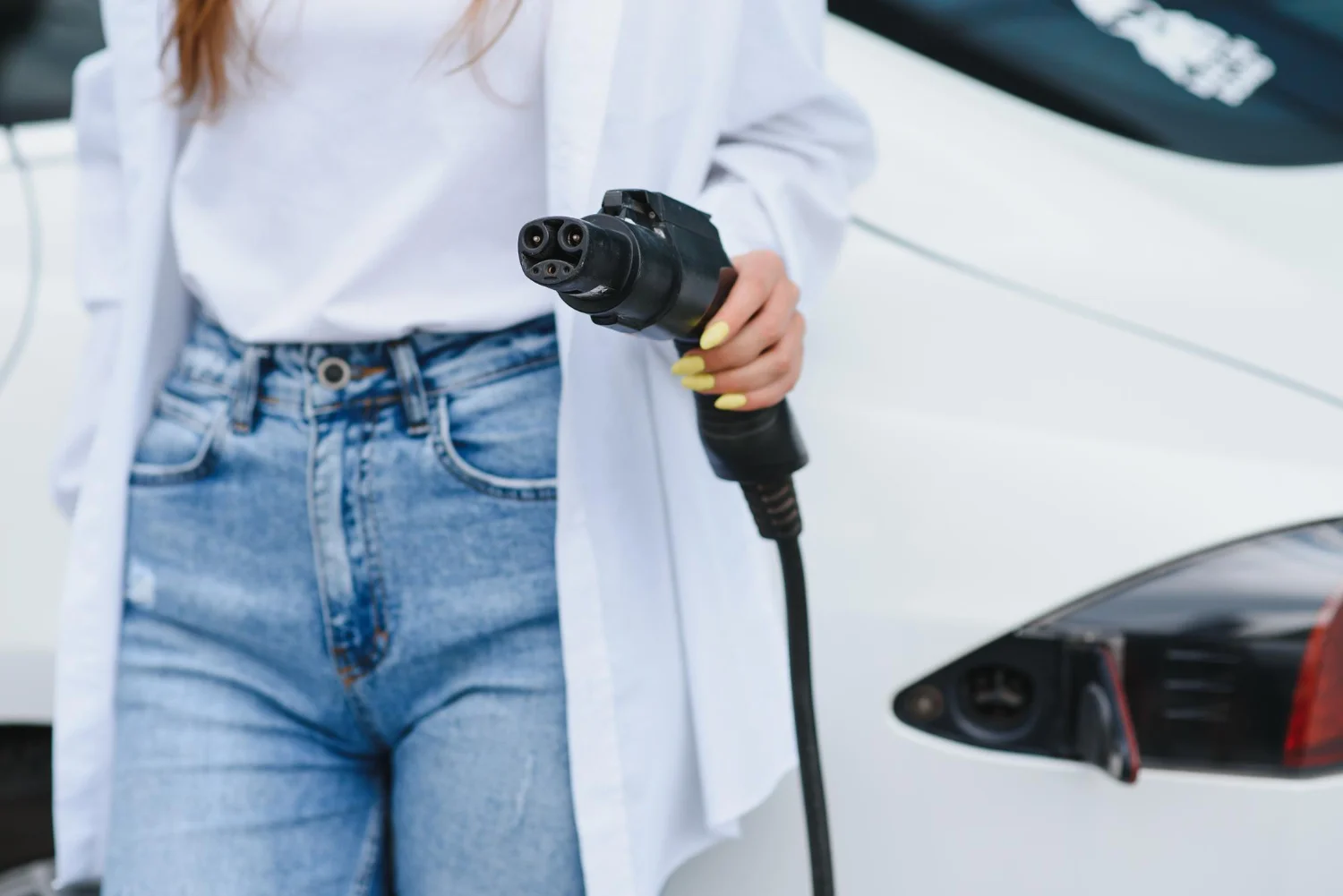
CCS2 for DC fast charging on most modern cars, AC Type 2 for slower destination and workplace charging, Bharat AC-001 and DC-001 on many government-backed sites, and CHAdeMO, GB/T or 3-pin sockets on older installations. Setting your vehicle in a charging app means the map only shows points that physically fit.
State EV policies at a glance
Charging infrastructure support and road tax treatment vary considerably by state. This table is a quick orientation, not legal advice:
| State | Charging infrastructure support | Road tax position |
|---|---|---|
| Delhi | 23,000 new public charge points planned | 100% road tax and registration exemption |
| Uttar Pradesh (Noida) | 20% capital subsidy, up to ₹10 lakh per station | 100% exemption, limited to EVs made in UP since Oct 2025 |
| Haryana (Gurugram) | 25% capital subsidy, up to ₹10 lakh for fast charging | 100% road tax exemption, plus toll tax exemption |
| Karnataka (Bengaluru) | Around 25% capital subsidy on charging equipment | Tiered lifetime tax by price band since April 2026 |
| Maharashtra (Mumbai, Pune) | Charging targeted every 25 km on state highways | Purchase incentives and road tax concessions |
| Telangana (Hyderabad) | Concessional land in EV parks for operators | 100% exemption until December 2026 |
| Tamil Nadu (Chennai) | Discounted land in EV supplier parks | 100% waiver reported to Dec 2025, confirm current status |
| Gujarat (Ahmedabad) | 25% capital subsidy, plus electricity duty exemption | 1% reduced rate reported to Mar 2026, confirm current status |
| West Bengal (Kolkata) | Rapid chargers every 25 km on green routes | Road tax exemption, SGST reimbursement |
Summary only, for orientation. Policy terms change frequently and several windows have already lapsed. Always confirm the current notification with the relevant department or your dealer before relying on any benefit.
Benefits of Setting Up EV Charging in India
- Future-ready properties: Attract EV-owning customers, tenants, and employees.
- New revenue opportunities: Monetize public or private charging usage.
- Sustainability impact: Support cleaner air in the cities that need it most.
- Government support: Most states offer capital subsidies of 20% to 25% for public charging stations, with road tax concessions for EV buyers.
How ElectreeFi Works with You
The EV Charging Landscape in India
India’s charging network is shaped by three forces. Utilities and state agencies such as BESCOM, CESL and EESL have built a large public base. Oil marketing companies including IOCL and HPCL have put chargers onto existing fuel forecourts, which is the fastest way to add reliable sites. And private operators such as Tata Power, Fortum, Ather and Kazam have built networks around retail, hospitality and two-wheeler demand.
The result is a network split across many operators, which is why drivers so often end up with four or five charging apps. EV roaming, built on open protocols such as OCPI, is how that fragmentation gets solved.
Frequently Asked Questions
India crossed roughly 27,000 to 29,000 public charging stations during 2026, with some sources reporting around 22,750 of those as operational at any one time. Distribution is uneven: Maharashtra has the largest state network at an estimated 4,800 or more, Delhi NCR holds over 3,200, and Karnataka has built the biggest network of any single state. Coverage thins considerably outside major metros and highway corridors.
Delhi has the highest count and the highest density, with public directories listing well over 1,700 charge points in New Delhi and roughly one charger every three square kilometres. Bengaluru follows with around 831, then Mumbai at 461 and Pune at 446. Among states rather than cities, Karnataka has built the largest public charging network in the country.
The market splits three ways. State and utility operators such as BESCOM, CESL and EESL run a large public base. Oil marketing companies including IOCL and HPCL have added charging to existing fuel forecourts. Private operators including Tata Power, Fortum, Ather and Kazam serve retail, hospitality and two-wheeler demand. Tata Power has the widest national footprint.
CCS2 is the DC fast charging standard for most electric cars sold in India today. AC Type 2 is the slower standard used where vehicles park for hours. Bharat AC-001 and Bharat DC-001 are Indian standards found on many government-backed sites and suit smaller batteries. CHAdeMO appears on older imported models, and GB/T and plain 3-pin sockets show up on some legacy sites. Always check the connector before you drive.
Today, often yes, because each operator built its own app, wallet and account. That is the single biggest frustration in Indian public charging. EV roaming, built on open protocols such as OCPI, is designed to remove it by letting one account work across multiple networks, in the same way mobile phone roaming works. The ElectreeFi app carries charge points from multiple operators on one platform, so one login and one wallet cover stations that would otherwise need several apps.
Most states offer a capital subsidy for public charging infrastructure, typically 20 to 25 percent of equipment or investment cost with a per-station cap. Uttar Pradesh offers 20 percent up to ₹10 lakh, Haryana 25 percent up to ₹10 lakh for fast charging, and Karnataka and Gujarat around 25 percent, with Gujarat also exempting EV charging from electricity duty. Central support is available through the PM E-Drive scheme. Terms change frequently, so confirm the current notification before committing.
Plan Your EV Charging Project with ElectreeFi
From a single site to a national network, ElectreeFi provides the platform, the hardware integration and the operations support behind EV charging across India.