India adds new chargers every month. Malls, highways, housing societies, and fuel pumps all want one. Yet the real test of ev charging in india is not how many plugs exist. It is whether those plugs work, connect, and earn. A charger that sits offline gives drivers nothing and gives operators even less. Charge point operators (CPOs) now need networks that think, not just hardware that switches on.
This guide explains why intelligence beats volume. It covers the gaps in today’s networks, the features that close them, and the steps CPOs can take this quarter.
The Real Problem Behind Empty and Broken Chargers
Many buyers still hesitate to switch to an electric car because they fear a dead charger. The fear is fair. A map may show ten chargers nearby, yet three might be offline, two might be busy, and one might reject the driver’s payment. Drivers do not count chargers. They count successful sessions.
Operators feel the same pain from the other side. Hardware arrives from many brands, and each brand ships its own software. Teams juggle separate dashboards, chase faults over phone calls, and learn about outages only after customers complain. Uptime drops, revenue leaks, and trust fades.
India’s mix of two wheelers, three wheelers, cars, and buses makes this harder. Each vehicle type needs different connectors and power levels.
More chargers cannot fix this. Ten new units without central control create ten new failure points.
What a Smarter Network Actually Means
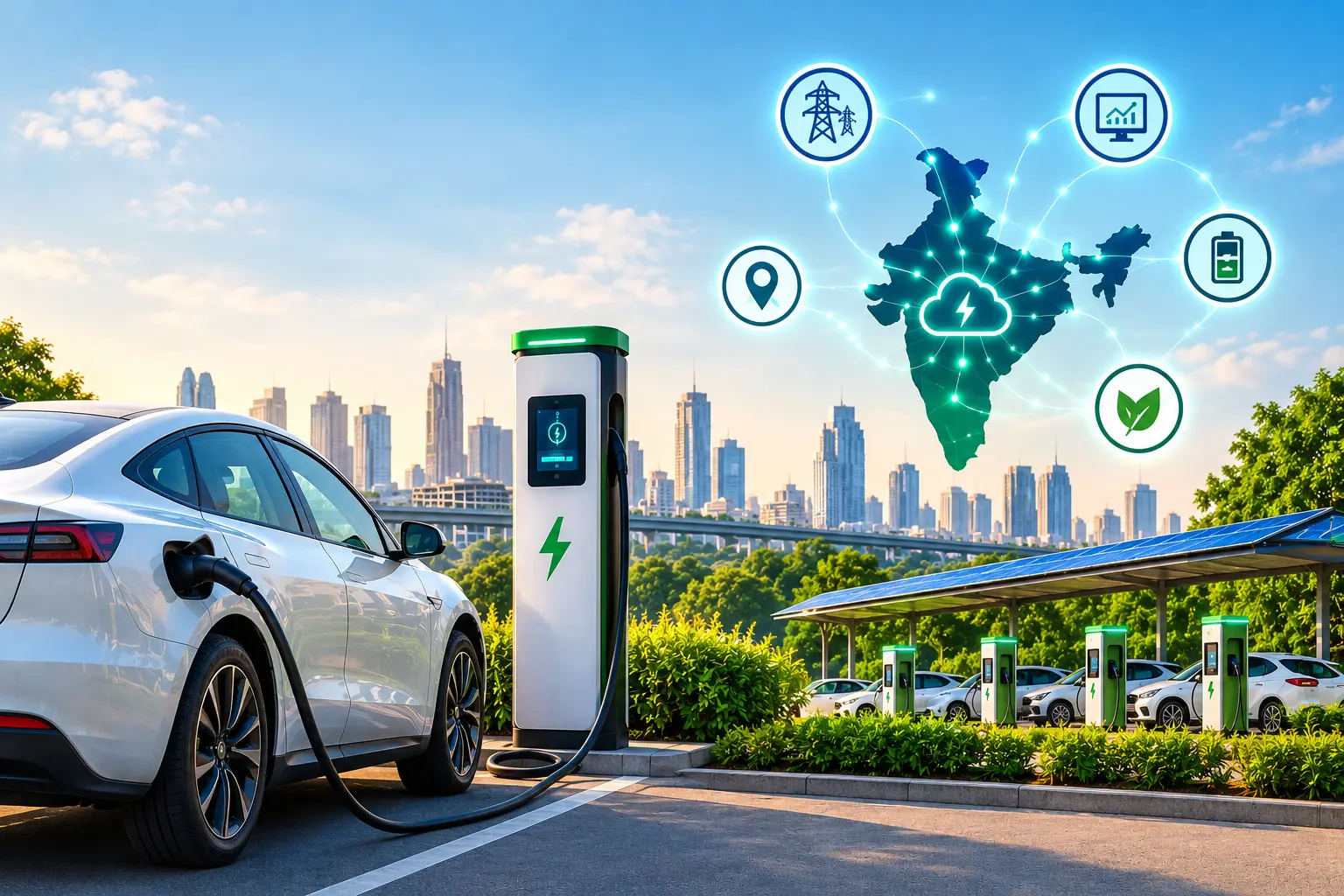
A smart network links every charger to one cloud platform. That platform watches each session, controls each unit, and learns from the data. Four features define it.
Open protocols. Most Indian chargers talk to software through OCPP, the Open Charge Point Protocol. A platform that supports OCPP lets a CPO mix brands without rewriting anything. OCPI, a companion protocol, lets networks share chargers with each other.
Live monitoring. Dashboards show charger status, session data, and revenue as events unfold. Alerts flag faults within minutes, so technicians act before drivers complain.
Smart load management. Chargers draw from a limited grid connection. Load management splits that power across active sessions and moves demand away from peak hours. Operators avoid penalties and keep energy costs steady.
Simple payments. Drivers pick a connector, set the amount, pay the operator directly, and start charging. Fewer payment failures mean more completed sessions.
Why EV Charging Needs Software First, Hardware Second
Hardware is a one time purchase. Software decides how often that hardware earns for the next decade. Smart EV charging starts with a record of every session, fault, and tariff change. CPOs read that record and act on it.
Consider a site that peaks at 6 pm and sits empty at noon. A manager with real time data can set time based tariffs, add a second connector, or move an idle unit to a busier location. A manager without data simply guesses.
Strong software also protects the driver’s experience. Remote diagnostics fix many faults without a site visit. Automatic alerts tell support teams which charger needs attention first. Drivers see fewer failed sessions and return more often. Repeat visits build the utilisation that makes ev charging in india profitable for operators.
Smarter Networks Protect Your Revenue and Your Grid
Peak demand charges hit operators hard. When ten cars plug in at once, a site can overshoot its sanctioned load and trigger higher bills. Load management prevents that spike by lowering each session’s power draw for a short window. Drivers still leave with enough range, and the operator avoids a surprise at month end.
Dynamic pricing adds another lever. A CPO can charge slightly more at busy hours and slightly less when chargers sit idle. That move nudges drivers toward quiet slots, spreads demand across the day, and lifts earnings without new equipment. Demand response programmes take the idea further by rewarding sites that cut load when the grid runs tight.
Different sites need different strategies. A fleet hub needs fast turnaround and predictable schedules. A mall needs long dwell sessions and easy payments. A housing society needs fair access and controlled billing. One smart platform can serve all three, because operators set the rules for each site inside the same dashboard.
Roaming Turns EV Charging in India Into One Network
Today a driver may need four apps for one city trip. Roaming removes that friction. With OCPI, a driver uses one app and one payment method for EV charging across partner networks. The CPO gains new users without building new sites.
Utilisation rises, and so does revenue per charger. Smaller operators benefit most, because they reach customers who would never find them alone. Roaming also pushes networks to keep uptime high, since partners judge each other by reliability.
How Electreefi Builds Smarter Networks for CPOs
Electreefi runs an IoT based charging management platform that supports more than 70,000 charge points across India. The platform integrates with 48 charger brands, so operators avoid hardware lock in. It speaks OCPP for charger control and OCPI for roaming.
The platform has handled over 15 million charging transactions. That track record gives CPOs confidence that the system scales. Its smart charging module adds grid load management, dynamic charging rates, and demand response support.
Support goes beyond software. The team handles charger sales, installation, and setup, and it offers annual maintenance contracts, round the clock call support, and field service. It also advises on site selection and charger choice before a single unit goes live.
Five Steps CPOs Can Take This Quarter
Smarter networks grow in stages. These steps give CPOs a practical order of action.
- Audit your uptime. Track how often each charger stays online and how often sessions fail. Audit your EV charging uptime before you buy a single new unit.
- Standardise on OCPP. Choose a platform that works with many charger brands. Avoid hardware that locks you into one vendor.
- Turn on load management. Share grid power across sessions and shift demand away from peak hours.
- Join a roaming network. Open your chargers to drivers from partner apps through OCPI.
- Plan maintenance early. Sign a service contract with round the clock support, so faults close fast.
Final Thoughts
Chargers bring drivers to the curb. Networks keep them coming back. The future of ev charging in india depends on connected, open, and well managed infrastructure, not on plug counts alone. CPOs who invest in software, data, and roaming now will earn more per charger and lose fewer customers. Ready to upgrade your network? Speak with an EV consulting expert today.
Frequently Asked Questions
Is running a charging station profitable in India?
Yes, when utilisation stays steady. Profit depends on site choice, charger type, tariffs, and uptime. Smart monitoring and load management cut costs, while roaming brings extra drivers.
What is OCPP and why does it matter?
OCPP is an open protocol that lets chargers and software communicate. It frees CPOs from single vendor lock in and lets them manage many charger brands from one dashboard.
How much does it cost to set up a charging station in India?
Cost varies with charger power, grid connection, civil work, and software. AC chargers cost far less than DC fast chargers. A site survey gives an accurate estimate.
What is smart charging with load management?
It shares limited grid power across active sessions and shifts demand away from peak hours. CPOs lower energy bills and protect site infrastructure.
Can one platform manage chargers from different brands?
Yes, if the platform supports OCPP and works across many charger makers. Operators then monitor uptime, sessions, and revenue in one place.