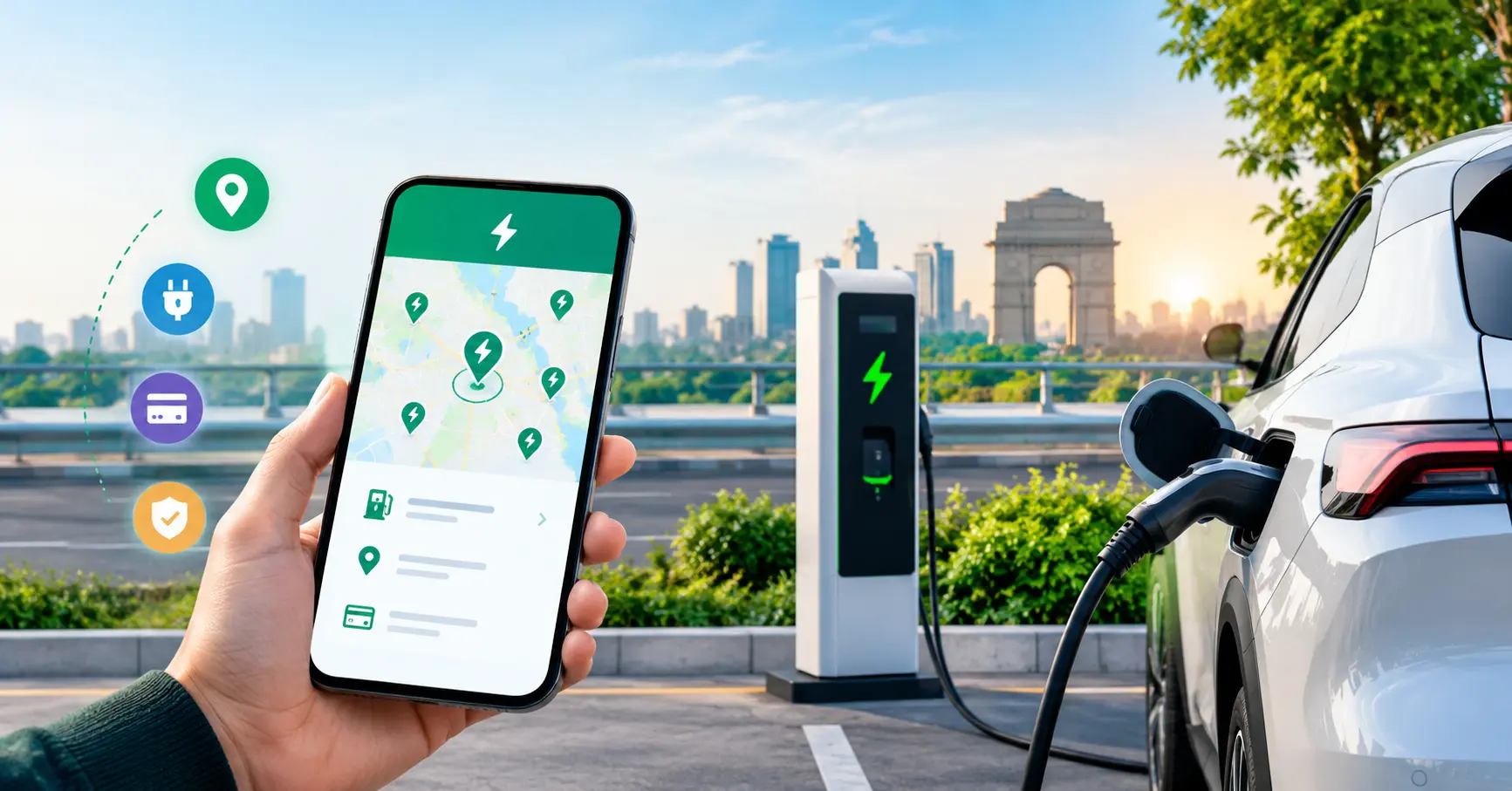
Range worry fades fast when you know where the next charger waits. Most new owners learn this after one stressful trip. The right EV charging apps in India replace that guesswork with a clear plan, because they show nearby chargers, live status, and prices on one screen. This guide explains how these apps work and what to check before you install one.
India now has thousands of public chargers across malls, highways, fuel pumps, and housing societies. Each network often runs its own app, its own wallet, and its own pricing rules. A driver who tries five apps in one week knows how messy that gets. A smart choice saves time, money, and a lot of stress.
Why EV Charging Feels Hard for New Owners
A petrol pump works the same way everywhere. Chargers do not. Connector types differ, power levels differ, and payment methods differ from one site to the next. Some chargers sit idle because of a software fault. Others stay busy because a driver parked and walked away. You cannot see any of this from the road. An app shows you most of it before you leave home, so you reach a working charger on the first try.
Take a simple example. A family drives from Delhi to Jaipur in an electric car. They plan two stops, but one charger is offline and the other has a queue. With live status in an app, they switch to a third station and lose ten minutes instead of an hour. That is the real value of a good app.
What Do Charging Apps Actually Do?
A charging app works as a map, a payment tool, and a session controller in one place. You open it, find a charger, scan a QR code or tap a connector, and start charging. The app tracks energy used, time spent, and cost. When the session ends, it sends a receipt. Many apps also save your history, so you can see how much you spend each month.
Better apps add trip planning, route based charger suggestions, and reminders when your battery needs a top up. Some let you book a slot at busy stations. Others send alerts when a charger comes back online. These small features matter more than flashy designs.
Features to Check Before You Install an App
The best EV charging apps in India share a few clear traits. First, they show live charger status, not just a static map. A green icon means little if the charger broke last week. Second, they let you filter by connector type, such as CCS2 or Type 2, so you never drive to a plug that does not fit your car.
Third, they show the price per unit before you start. Hidden fees frustrate drivers more than high rates do. Fourth, they accept UPI, cards, and wallets, so you never need to carry cash or a special card. Fifth, they offer quick support when a session fails. A helpline number inside the app saves you from standing in the heat while you wait for answers.
Check the Google Play Store and App Store listings too. Read recent reviews, not just the star rating. Look at the last update date. An app that nobody has updated for a year probably struggles with new chargers and new payment rules.
How to Pick the Best EV Charging Apps in India
Start with coverage in your own city and on your usual routes. An app with great Mumbai coverage will not help you on a highway through Rajasthan. Next, look at how many networks the app connects. Wider access means fewer app switches and fewer failed sessions.
Then test the app with one short session before you rely on it. Pay attention to how fast the app loads, how clearly it shows charger status, and how quickly the session starts. Test it at a quiet hour, so you can learn the steps without pressure. If the session runs smoothly, keep the app. If it freezes or double charges you, delete it and move on.
Roaming Brings Many Networks Into One App
Roaming solves the biggest headache in this space. A roaming setup lets drivers use chargers from different operators through a single app and one payment method. Behind the scenes, networks talk to each other through open standards such as OCPI. Drivers see one wallet and one history, while operators gain more visitors without adding new hardware.
ElectreeFi built its platform around this idea. The network spans over 70,000 charging points across India and works with 48 charger manufacturers. The mobile app has crossed 350,000 downloads, and you can get it on the Google Play Store and the App Store. Drivers use it at home, at work, and on the road.
Safety, Privacy, and Trust Matter Too
An app handles your location, your payment details, and your vehicle data. Treat it like a banking app. Install it only from official stores. Read the permissions it asks for. Look for secure payment gateways and a clear privacy policy. Avoid apps that ask for access they do not need. A trustworthy provider explains how it stores your data and how you can delete it.
Experience also counts. Operators that have run charging networks for years tend to build more reliable apps, because they have seen real failures and fixed them. Look for a company that shows clear numbers, working support lines, and a physical office address.
Why Operators Should Care About App Quality
Charge point operators, or CPOs, win or lose sessions inside the app. A driver who cannot see your charger will not drive to it. A driver who cannot pay in two taps will leave. Good EV charging depends on software as much as hardware, and the app sits at the center of that software.
CPOs can raise utilization with a few steps. List every charger on a major platform. Keep status data accurate in real time. Show prices clearly. Support UPI and wallet payments. Respond quickly to driver complaints. Each step builds trust, and trust brings repeat visits. Operators who want a ready platform can reach the team behind it through its contact page and ask for a walkthrough.
Daily Habits That Make Charging Easy
Home EV charging works best overnight, when tariffs and grid load stay low. Use public chargers for long trips and quick top ups. Plan stops before you leave, and keep a backup charger in mind. Many manufacturers suggest keeping the battery between 20 and 80 percent on most days, which suits daily driving and protects battery health. Save your payment details in the app so you waste no time at the station.
Choose Smart and Charge With Confidence
The right EV charging apps in India do more than show a map. They save time, cut costs, and make every trip feel predictable. Check live status, connector filters, clear pricing, roaming, and support before you commit. Test one session, read recent reviews, and stay with the app that works every time. Better habits and better software make EV charging simple for every driver.
FAQs
Which is the best charging app for electric cars in India?
The best app depends on your city and routes. Pick one with live charger status, UPI payments, and wide network access. Test two apps for a week and keep the one that starts sessions fastest.
How do I find charging stations near me?
Open the app and allow location access. Filter by your connector type, then check live status and price. Choose a station that shows “available” before you drive there.
How much does it cost to charge an electric car in India?
Home charging follows your electricity tariff. Public chargers bill per unit, and rates change by operator and charger speed. Check the price inside the app before you start a session.
Can I use one app at every public charger?
Not always. Roaming lets one app reach several networks, but coverage varies by city. Review the partner list in the app before you rely on it for a long trip.
How can a CPO list chargers on a charging app?
A CPO connects chargers to a management platform through the OCPP protocol. The platform then publishes each charger with live status, pricing, and payment options. Choose a platform that supports many charger brands.