Buying a charger feels simple until you see the choices. Portable units, wall boxes, smart models, and fast chargers all promise quick results. Picking the right electric car charger depends on your car, your home, and your daily drive. This checklist walks you through each decision in plain steps. You will finish with a clear answer and fewer costly surprises.
Indian EV owners face a few special conditions. Voltage swings, shared parking, and society rules all shape the choice. Some cars also accept only a limited charging speed, so a wrong pick wastes money and slows every session. Let us start with your vehicle.
Step 1: Check Your EV’s Port and Charging Speed Limit
Your car sets the rules. Open the owner manual and find the port type and the onboard charger rating. Most new electric cars in India use a Type 2 port for AC charging and a CCS2 port for DC fast charging. Confirm both before you spend a rupee.
The onboard charger matters more than most owners expect. If your car accepts only 3.3 kW on AC, a 7.4 kW unit will not charge it faster. The car simply takes what it can handle. Match the unit to that limit, or buy a higher rated unit only if you plan to upgrade your vehicle soon.
Step 2: Know the Difference Between AC and DC Charging
Many owners treat every car charger as the same product. That belief causes expensive mistakes. AC units suit homes, offices, and apartments. They charge slowly but gently, and they cost far less. DC fast chargers push power straight into the battery, so they suit highways and fleet hubs rather than a normal garage.
Think of AC as your overnight tool. You plug in after dinner and wake up to a full battery. DC works like a quick top up on a long trip. For daily home use, an AC unit almost always wins.
Step 3: Pick the Right Power Rating for Your Electric Car Charger
Start with your daily distance. Most city owners drive 30 to 60 km a day, which uses roughly 6 to 10 kWh. Even a slow unit refills that overnight.
A 3.3 kW portable unit adds around 3 kWh per hour. A 7.4 kW wall unit adds close to 7 kWh per hour when your car accepts that speed. On a 40 kWh battery, the portable option needs 10 to 12 hours for a deep charge, while the wall unit finishes in 5 to 6 hours. Choose the speed that fits your parking window and your sleep schedule.
Step 4: Inspect Your Home Wiring and Parking Setup
Your electrician matters as much as your charger. Ask for a dedicated line from the main panel, proper earthing, and a correctly rated MCB. Never plug a charger into a shared or old socket. Weak wiring heats up fast and creates a real fire risk.
Check your sanctioned electricity load as well. A 7.4 kW unit draws heavily when your geyser and air conditioner also run. If the load looks tight, apply for an increase with your electricity provider or choose a lower power unit.
Apartment owners need one more step. Talk to your resident welfare association and collect written approval before installation. Look for a provider with an apartment focused solution, such as Park n Charge, which offers managed access and fair usage for residents. Shared parking works better when everyone follows the same rules.
Step 5: Compare Smart Features Before You Choose a Car Charger
Smart features separate a basic unit from a useful one. App control lets you start, stop, and schedule sessions from your phone. Scheduling helps you charge during cheaper night hours when your electricity provider offers time of day tariffs. Usage reports show exactly what each session costs.
Look for units that follow the OCPP standard. This open protocol connects the unit to many charging management platforms, so one brand never locks you in. Load management adds another layer of safety. It adjusts charging power automatically, so your home never overloads when other appliances run.
Step 6: Verify Safety, Weather Rating, and Certification
Indian weather tests every product. Dust, rain, and heat hit outdoor units hard. Look for an IP rating of at least IP54 for covered spots and IP65 for open areas. Overcurrent, overvoltage, and earth leakage protection should come built in.
Never compromise on safety when you buy a car charger. Ask the seller for test certificates and proof of compliance with Indian standards. A trustworthy brand shares these documents without hesitation. Skip unbranded units with no paperwork, however cheap they look.
Step 7: Plan for Installation, Warranty, and Support
A good unit still fails without good service. Ask who installs it, who maintains it, and how fast support responds. Check the warranty length and read what it covers. Choose a provider that handles charger sales, installation, and maintenance under one roof. That setup saves time and removes finger pointing between vendors.
Ask about annual maintenance contracts too. Regular checks catch loose connections and worn cables before they cause downtime.
Quick Decision Guide by Owner Type
Apartment residents should choose a smart AC unit with managed access and society approval. House owners can pick a 7.4 kW wall unit if their car and wiring allow it. Tenants should consider a portable unit that moves with them. Highway travellers should rely on public DC stations and keep a home AC unit for daily use.
Public charging needs planning as well. A good app shows nearby stations, live availability, and payment options in one place. Electreefi offers an app on Google Play and the App Store that supports charging at home, at work, and on the road. The team also runs a 24/7 support line at +91 70370 37013 for charging questions.
Your Final Checklist Before You Buy
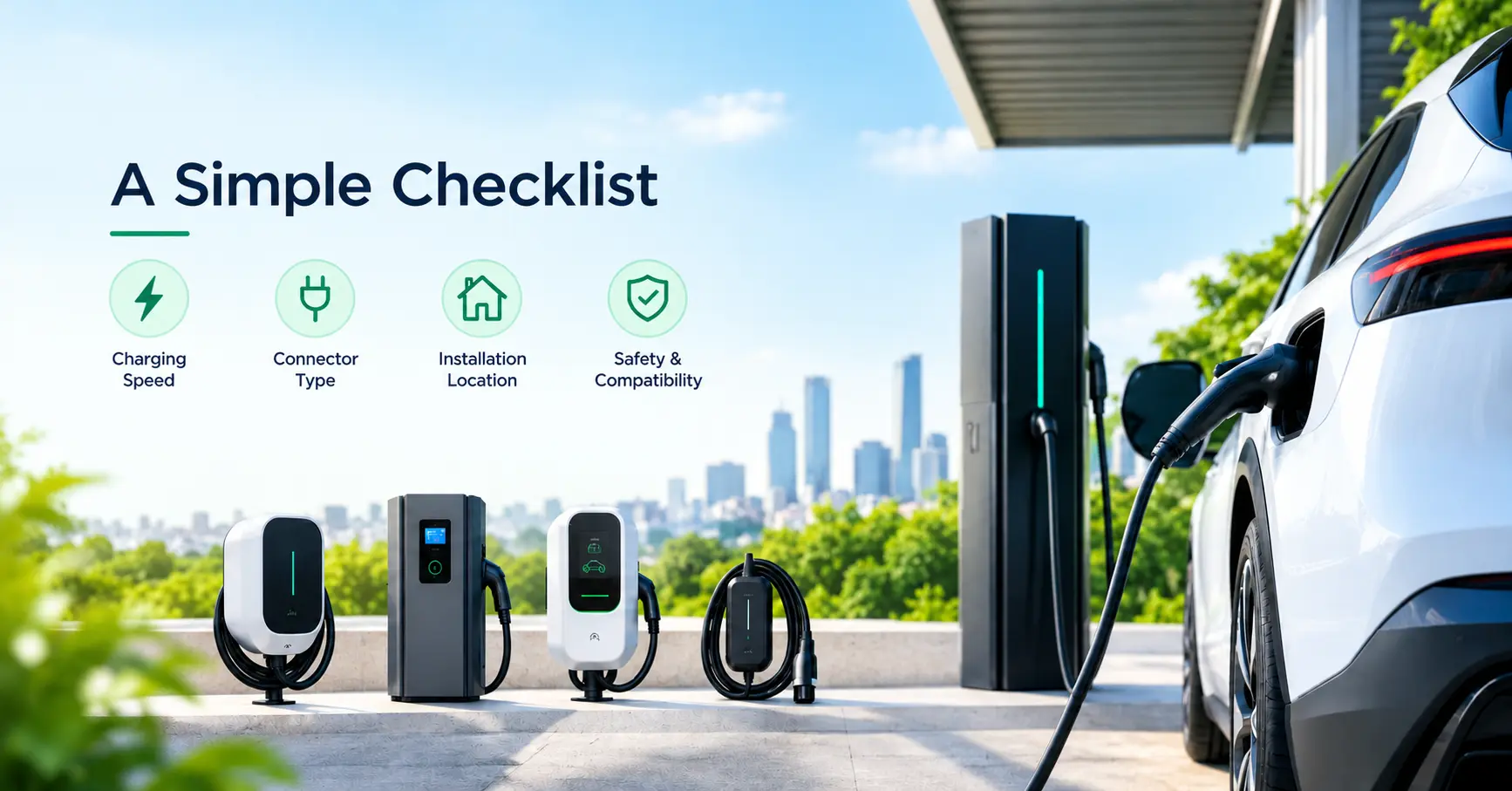
Run through these points before you place an order. Confirm your port type and onboard charger limit. Match the power rating to your daily drive. Get your wiring and load checked. Choose smart features, a solid IP rating, and clear certificates. Finally, pick a provider that supports you after installation.
The right electric car charger saves time, protects your battery, and keeps your electricity bill predictable. A reliable car charger also adds value to your home or society parking. Take your time, ask direct questions, and book a site visit before you decide.
FAQs
How long does it take to charge an EV at home?
Charging time depends on battery size and charger power. A 3.3 kW unit needs roughly 10 to 12 hours for a 40 kWh battery. A 7.4 kW wall unit needs about 5 to 6 hours.
Can I install a home EV charger in an apartment?
Yes, in most cases. Get written approval from your resident welfare association first. Then ask a provider for managed access and metered billing, so every resident pays for their own usage.
Which charger type does my EV need in India?
Check your car’s manual. Most new EVs use Type 2 for AC and CCS2 for DC fast charging. Your onboard charger rating also limits AC speed.
How much does a home EV charger cost in India?
Price depends on power rating, smart features, and installation work. Portable units cost less than wall units. Request written quotes that include wiring, MCB, and installation, so you compare real totals.
Is it safe to charge an EV overnight?
Yes, with proper wiring. Use a dedicated line, correct earthing, and a unit with built in protection. Avoid extension cords and old sockets.