India plugs in more electric vehicles every month, and the power grid feels every single one of them. Evening hours already carry the heaviest load, yet thousands of EV owners reach for their chargers at exactly the same time. Open Automated Demand Response fixes this timing problem by letting your charger and the electricity grid talk to each other automatically. You still wake up to a full battery. The grid simply picks the smartest moment to deliver that energy.
Most people hear the term and imagine something complicated. The idea actually sits much closer to daily life than you expect.
What This Technology Really Does
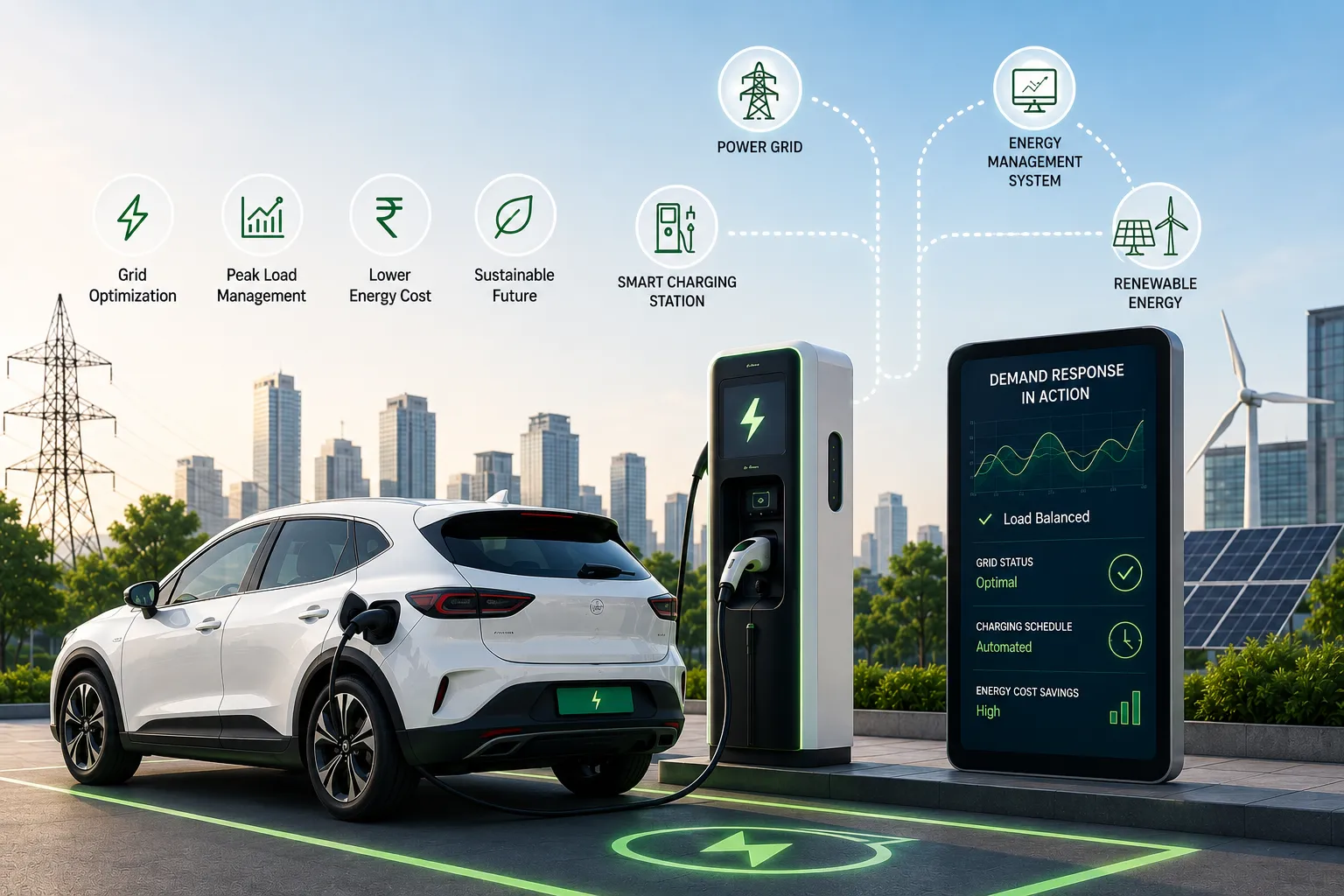
Picture your charger as a device that listens. Your electricity utility sends a signal whenever demand climbs too high or whenever cheap renewable power floods the system. Your charger receives that signal and adjusts on its own. It might slow down for twenty minutes. It might pause and restart once the evening peak passes.
OpenADR is the shared language that makes this conversation possible. Engineers designed it as an open standard, so any charger brand, any software platform and any utility can speak it. No vendor locks you in.
The word “automated” matters most here. You never receive a phone alert asking permission at 8 pm. You set your preference once, something like “my car must be ready by 7 am”, and the system quietly handles everything else while you sleep.
Why India Needs This Right Now
Our grid runs tight through summer evenings. Air conditioners, household lights and factory loads all peak together between 6 pm and 10 pm. EV charging lands directly on top of that peak, because most owners reach home and plug in straight away.
Utilities face two options. They can build more power plants and thicker cables, which costs a fortune and takes years to finish. Or they can shift flexible loads into quieter hours. EV charging ranks as the most flexible load we own, since your car sits parked for ten hours overnight and truly needs only three or four of them.
State discoms across Delhi, Maharashtra, Karnataka and Tamil Nadu already publish time of day tariffs. Regulators keep expanding these slabs each year. Demand response turns those tariffs into automatic savings instead of something you must remember every night.
The maths works in everyone’s favour. Utilities avoid crores of rupees in peak capacity spending. You pay a lower tariff for the same units. The grid stays stable during the hours when hospitals, homes and offices need it most.
Smart EV Charging Finally Becomes Genuinely Smart
Many chargers today claim intelligence, yet they only offer a timer. You choose 11 pm, and the charger starts at 11 pm regardless of what the grid needs. Real intelligence means responding to live grid conditions rather than a fixed clock setting.
An OpenADR enabled charger reads price signals, grid stress alerts and renewable availability in real time. It then spreads your charging session across the cheapest and cleanest windows available that night.
Consider a simple example. You reach home at 7 pm with a battery at 20 percent and you need 80 percent by morning. A basic timer charges hard from 11 pm to 2 am. A responsive charger instead sips power slowly during the evening peak, then pulls hard between 1 am and 4 am when tariffs drop to their lowest point. Your morning result stays identical. Your bill does not.
Apartment communities gain even more. Ten cars charging together can trip a building transformer. Coordinated smart charging with load management shares the available capacity across every vehicle, so nobody waits and nothing fails.
Open Automated Demand Response in Your Daily Routine
You will barely notice the technology working, which is precisely the point.
Your app shows you a simple picture each morning: units consumed, money spent and clean energy used. Over a month, those numbers start telling a clear story. Owners who charge during off peak windows often cut their charging cost by 30 to 40 percent compared to peak hour charging, depending on their state tariff.
You keep full control throughout. Need a fast top up before an unplanned drive to Jaipur? Tap the override button and charge at full speed immediately. The system respects your priority every time.
Battery health improves as a quiet bonus. Slower charging over longer windows generates less heat than repeated high speed sessions. Your battery pack ages more gently and holds its range for longer.
What Indian EV Owners Should Watch For
Ask three questions before you buy your next home charger or choose a public network.
First, check the protocol. Chargers built on OCPP connect easily to demand response programmes, while closed proprietary systems often cannot. Second, confirm that the operator actually partners with your discom, because a capable charger achieves nothing without a utility signal behind it. Third, read the override policy so you always keep the final say.
Ask a fourth question too. Find out whether the platform gives you clear session data, because you cannot judge your savings without honest numbers in front of you.
Public charging deserves the same scrutiny. Networks running on open standards let you roam across operators with one app and one payment method. Drivers exploring EV charging solutions in metros like Bengaluru and Hyderabad already see how open platforms remove the pain of juggling five different apps.
The Bigger Picture for India
India targets 500 GW of non fossil capacity by 2030. Solar generates most of its power at midday, while wind picks up after dark. Both sources fluctuate, and the grid needs flexible demand to absorb those swings.
Millions of parked EVs form a massive distributed battery. When charging shifts toward surplus renewable hours, every EV owner directly reduces coal burn without changing a single habit. Your car quietly becomes part of the clean energy system rather than another strain on it.
Pilot programmes with discoms and charge point operators already run in several states, and early results look encouraging for utilities and drivers alike. Fleet depots show the strongest gains, since dozens of vehicles charge together and shift easily to night hours.
Home users matter just as much. India will soon count millions of private chargers in apartments and independent houses. Each one that responds to grid signals removes a small piece of pressure from the evening peak, and together they add up to serious national impact.
Charge Smarter, Starting Today
The technology exists, the tariffs exist and the savings exist. You only need equipment and a platform that can use them properly. Choose an open, OCPP ready charging setup, link it to a management platform that supports demand response, and let automation do the thinking every night.
ElectreeFi works with over 70,000 charging points and 48 charger OEMs across India, and its mobile app puts scheduling, payments and session history in one place. Download the app or talk to the team to make your charging routine cheaper, cleaner and completely automatic.
Frequently Asked Questions
What does OpenADR mean in EV charging?
OpenADR is an open communication standard. It lets your utility send automatic signals to your charger, which then shifts charging to cheaper, cleaner and less crowded hours without any manual effort from you.
Will my EV still be fully charged by morning?
Yes. You set a departure deadline in the app, and the system guarantees your target charge before that time. It only adjusts the timing and speed within that window.
Does demand response charging harm my battery?
No. Slower, spread out charging actually produces less heat than repeated fast charging. Most battery experts consider gentle overnight charging one of the healthiest habits for long term pack life.
How much can I save on EV charging in India?
Savings depend on your state tariff. Owners shifting most sessions to off peak slabs commonly reduce their charging bills by 30 to 40 percent against peak hour rates.
Do I need a special charger for demand response?
You need a connected charger that supports OCPP and a platform tied to your discom. Most modern smart chargers in India already meet this requirement.