Your fleet clients judge you on one simple promise: ready vehicles at the start of every shift. When you pick ev fleet charging management software, you decide how fast your hub charges, how much power it pulls, and how much profit you keep. A wrong choice shows up quickly in missed trips and unhappy fleet managers.
India’s fleet market is growing fast. Delivery firms, cab aggregators, and city bus operators now switch to electric vehicles in large numbers, and each of them needs a charging partner they can trust. For a Charge Point Operator (CPO), the software behind your chargers often becomes your strongest selling point. It shapes your uptime, your costs, and your reputation with every client you serve.
This guide walks you through the features that matter, the questions to ask vendors, and the red flags to avoid.
Why Your Fleet Hub Needs the Right Software
A fleet hub works very differently from a public charging station. Public chargers serve random drivers at random times. Fleet hubs serve dozens of vehicles that arrive together, often late at night, and these vehicles must leave with full batteries by morning.
Without smart software, your team tracks sessions on spreadsheets, guesses at power limits, and finds faults only after a driver complains. That approach drains money every single day. Good charging management software turns that chaos into a clear, planned routine your team can follow.
7 Things to Check in EV Fleet Charging Management Software
Open Protocol Support (OCPP and OCPI)
Start with the basics. Your platform must speak OCPP, the open protocol that lets chargers talk to the cloud. OCPP support lets you buy chargers from any brand and still run them all from one dashboard. It also protects you from vendor lock in when you expand.
Ask about OCPI too. This protocol powers EV roaming, so drivers from partner networks can use your chargers. Roaming brings new users to your hub without any new hardware.
Multi Brand Charger Compatibility
Most Indian hubs run a mix of chargers. You may own DC fast chargers from one OEM and AC chargers from another. Ask each vendor for a list of charger brands they already support in India. A long, tested list saves you weeks of integration work and lets you buy hardware at the best price.
Smart Load Management
Power is your biggest running cost. When 40 vehicles plug in at once, they can push your hub past its sanctioned load. That triggers penalty charges from your DISCOM or, worse, a tripped supply.
Smart charging with load management spreads available power across vehicles based on priority and departure time. The system charges urgent vehicles first and shifts the rest to off peak hours. You keep your connection safe and cut your energy bill at the same time, which directly lifts your margin on every fleet contract.
Real Time Monitoring and Alerts
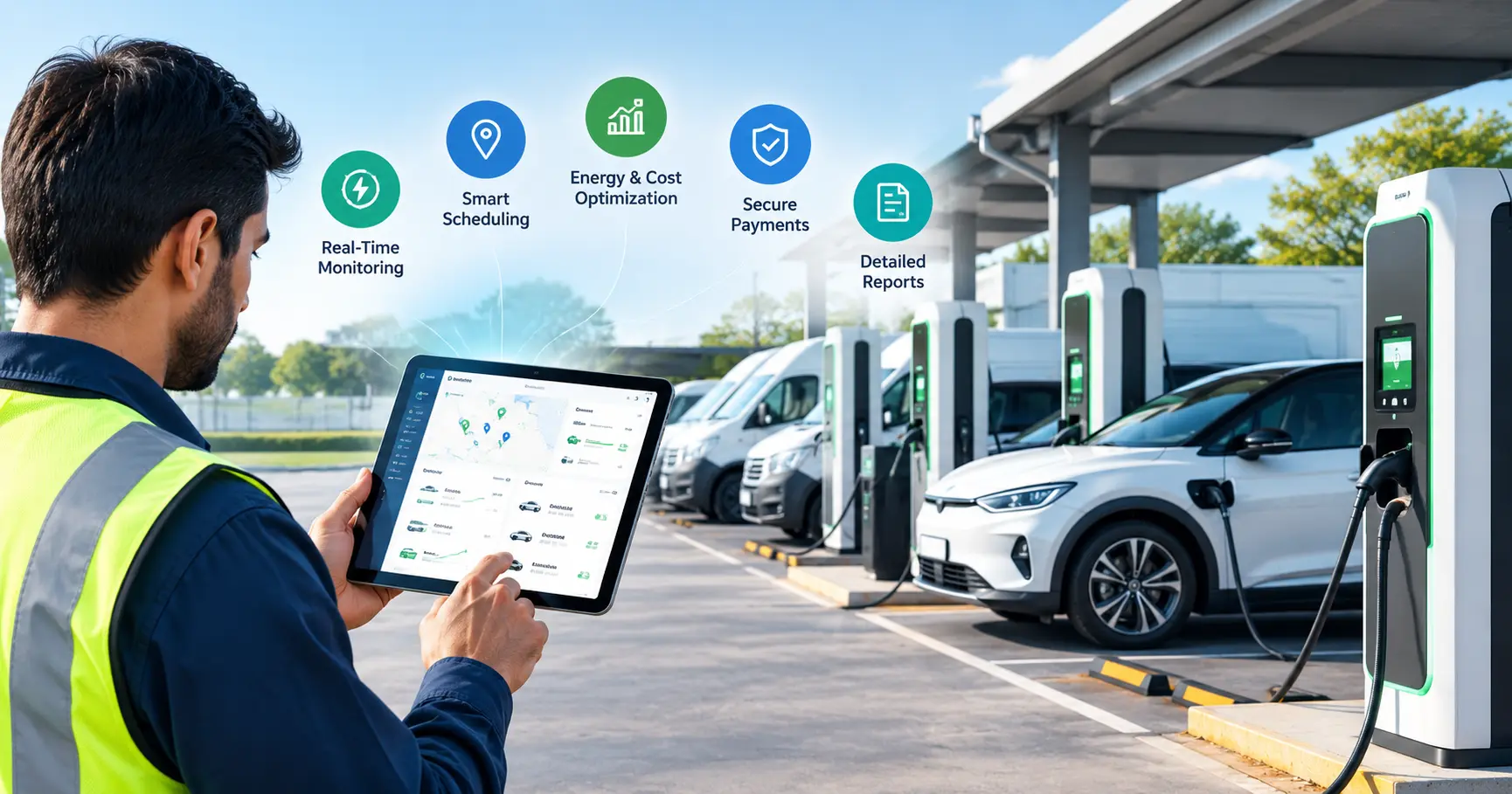
You cannot fix what you cannot see. Look for live dashboards that show each charger’s status, power draw, and session progress. Instant fault alerts let your team act before a driver even notices a problem.
Ask how the platform reports downtime. Clear uptime data helps you meet service level agreements with fleet clients and protects your contracts. Pair it with a solid routine like this EV charging station maintenance checklist for CPOs in India to keep every charger earning.
Fleet and Driver Controls
Fleet clients want control over who charges and when. Your charging management software should let you set access by vehicle, driver, or RFID card. It should also support schedules, so specific vehicles charge only within set time windows.
Some platforms go further with EV fleet management tools that track vehicle location, driver behaviour, and deployment points. That data helps fleet managers plan routes and shifts with confidence, and it gives you a stronger reason for clients to stay with your hub.
Billing, Payments, and Reports
Fleet billing works differently from public billing. Many clients pay monthly, per vehicle, or per kWh at a contracted rate. Your platform should handle all these models without manual work.
Check the reports too. You need session data, energy use, and revenue per charger in a format your clients can audit. Clean reports build trust and speed up payments.
Also ask whether clients can view their own sessions through a separate login. Self service access cuts the number of calls your team handles each month. It also shows clients that you run a transparent, well organised hub, and that helps you win renewals.
Scalability and Local Support
Your hub may run 20 chargers today and 200 next year. Choose charging management software that already handles large networks across India, not one that only works in a pilot. Ask about support hours as well. Fleets run around the clock, so your vendor should offer 24/7 help instead of office hour tickets.
Questions to Ask Before You Sign
Before you commit, put every vendor through a short test. Ask these questions during your demo:
- Which charger OEMs do you support in India today?
- How does your load management respond to a sudden load spike?
- Can my fleet clients log in and view their own data?
- What uptime do your current customers achieve?
- How fast does your team respond to a critical fault at 2 AM?
Strong vendors answer with real numbers and live examples. Weak vendors answer with brochures.
Red Flags to Avoid
Walk away if a charging management software vendor locks you into its own charger hardware. Closed systems limit your growth and raise your costs over time. Also watch for platforms with no load management, hidden per session fees, or no clear way to export your data.
Slow support is another warning sign. Send a test query before you sign and track how long the reply takes. A vendor that responds slowly during the sales stage will likely respond even slower once you become a paying customer.
Finally, test the user experience yourself. If your own staff struggles with the dashboard during a demo, your fleet clients will struggle even more.
How the Right Software Pays You Back
The right ev fleet charging management software works like a silent operations manager. It keeps chargers online, controls power costs, and gives clients the data they want. Higher uptime means more charged vehicles, happier clients, and longer contracts.
Lower peak demand means smaller bills. Better reports mean faster payments. Over time, these gains add up and shape the long term profit of your hub.
Power Your Fleet Hub with the Right Partner
ElectreeFi brings over seven years of EV ecosystem experience to CPOs across India. Our cloud platform works with 48 charger OEMs, runs more than 70,000 charging points, and supports OCPP and OCPI from day one. Fleet operators also get smart load management, live dashboards, and 24/7 call support from one team.
Ready to choose ev fleet charging management software that grows with your hub? Explore our EV charging management platform or contact our team to book a free demo today.
Frequently Asked Questions
What does fleet charging software do for a CPO?
It connects every charger at your hub to one cloud dashboard. You can monitor sessions, control power use, manage driver access, and bill fleet clients from a single screen. This cuts manual work and keeps vehicles ready for each shift.
How much does EV charging software cost in India?
Most vendors charge a monthly fee per charger or per connector. Your final price depends on hub size, features like load management and roaming, and the support level you need. Always ask for a live demo and a clear quote.
Why does OCPP matter for fleet charging?
OCPP lets chargers from different brands talk to one platform. It protects you from vendor lock in and lets you add new chargers freely as your fleet clients grow.
Can smart charging reduce electricity bills for fleet hubs?
Yes. Smart charging moves non urgent sessions to off peak hours and keeps your hub within its sanctioned load. This lowers demand charges and helps you avoid DISCOM penalties.
How long does it take to set up fleet charging software?
Setup time depends on your charger brands and hub size. When the platform already supports your chargers, onboarding moves much faster. Ask each vendor for a clear timeline during the demo.