Charge point operators lose money every minute a charger sits idle or a vehicle waits in a queue. This is exactly the gap that good ev fleet management software is built to close. It gives CPOs one clear view of vehicles, chargers, and drivers instead of three separate spreadsheets that never quite agree with each other. When that visibility improves, downtime drops and revenue starts moving in the right direction.
Most CPOs did not sign up to babysit charging queues or chase drivers for status updates. Yet without the right tools, that is exactly where a lot of their day goes. The rest of this article breaks down where downtime actually comes from, how fleet software fixes it, and what to look for before you commit to a platform.
Why Downtime Hurts Charge Point Operators
Downtime rarely shows up as one big failure. It builds up from small delays that pile on top of each other across a fleet.
A charger reports a fault but nobody notices for two hours. A vehicle finishes charging and sits at the bay because the next driver is not scheduled to move it. A fleet manager finds out about a dead connector only after a driver calls to complain. Each of these moments looks small on its own, but across a fleet of fifty or a hundred vehicles, the lost hours add up fast.
Every idle hour is also an hour that vehicle cannot generate revenue, whether it is a delivery van, a cab, or a bus on a fixed route. CPOs who run on manual tracking usually discover the true cost of downtime only after reviewing a full month of utilization reports.
What EV Fleet Management Software Actually Tracks
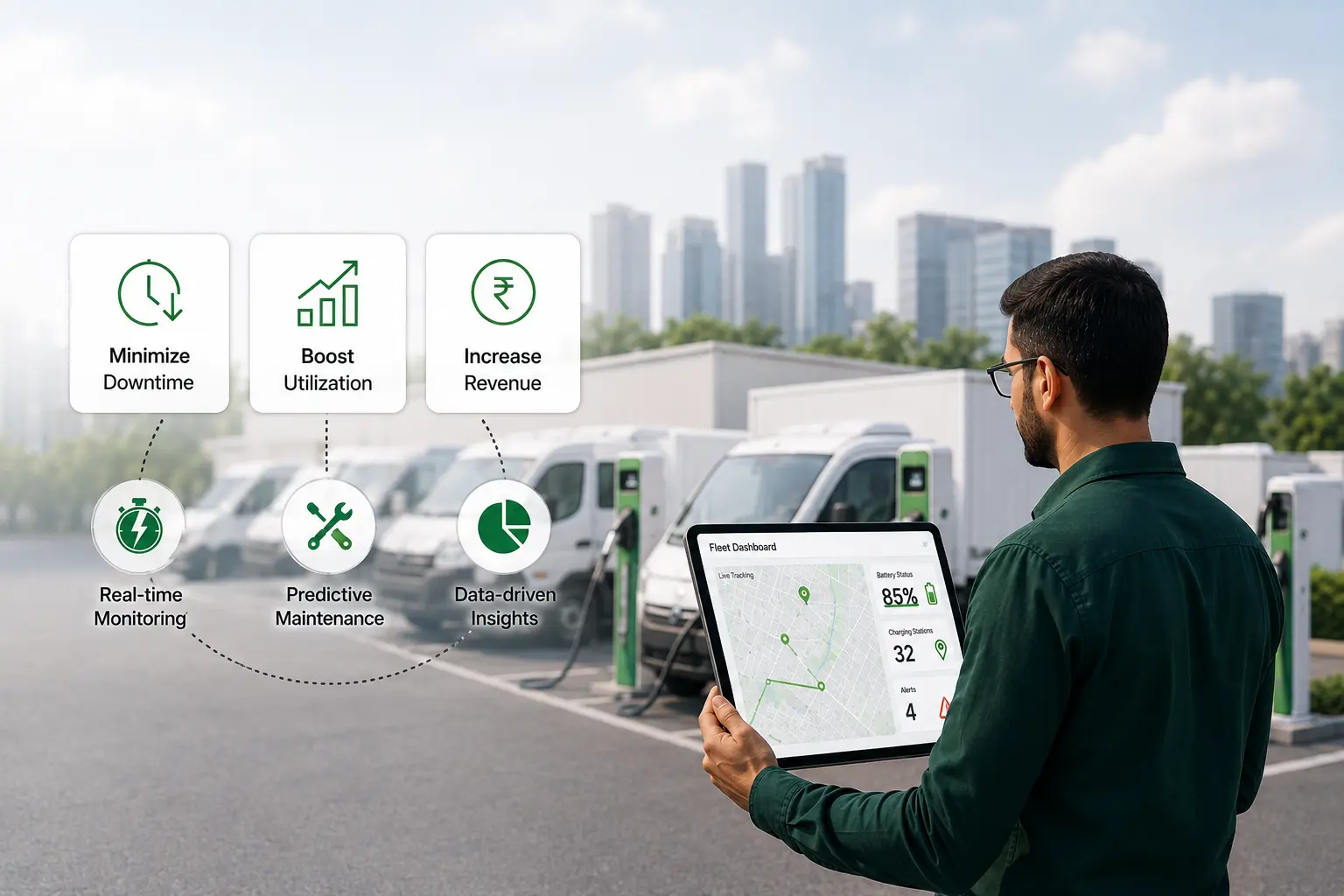
Good software does not just show whether a vehicle is charging. It tracks location, state of charge, driver assignment, journey history, and charger status together in one dashboard.
This matters because downtime usually has more than one cause. A vehicle might be fully charged but parked in the wrong bay. A charger might be functional but flagged incorrectly as faulty in an old spreadsheet. When all this data sits in one place, fleet managers spot the real bottleneck instead of guessing.
Driver behavior data adds another layer. Harsh braking, long idle periods, and inefficient routes all affect battery health over time. Tracking these patterns early helps prevent the kind of battery degradation that eventually pulls a vehicle off the road for repairs.
How Real Time Monitoring Cuts Downtime
Real time alerts change how fast a team can respond to a problem. Instead of waiting for a driver complaint, the system flags a charger fault, a stalled session, or an unusual power draw the moment it happens.
This speed matters more than most operators expect. A fault caught in minutes rarely escalates into a half day repair job. A fault caught after hours of silent failure often does. Fleet managers who work from live dashboards can redirect a vehicle to a working charger before a shift is disrupted, which keeps routes on schedule and drivers productive.
Predictive alerts go a step further by flagging patterns that suggest a fault is coming, not just one that already happened. That gap between reactive and predictive maintenance is often where the biggest downtime savings show up.
Smarter Charging Schedules Protect Revenue
Uncoordinated charging creates two expensive problems. Vehicles queue up during peak hours, and the fleet ends up paying higher electricity rates during those same peak windows.
Smart scheduling spreads charging sessions across the day based on when vehicles are actually needed and when power is cheaper. A delivery fleet that returns in waves does not need every vehicle plugged in at once. Staggering sessions keeps chargers available and avoids demand charges that spike during high load periods.
This kind of scheduling also protects battery health over the long run, since slower, well timed charging puts less strain on cells compared to constant fast charging under pressure. Fewer strained batteries mean fewer unplanned repairs, and fewer repairs mean more vehicles available for revenue generating trips.
Data and Analytics Turn Fleets Into Profit Centres
Raw data is only useful once it becomes a decision. Utilization reports show which vehicles are earning their keep and which ones sit idle more than they should.
Cost per kilometre reports reveal whether a route is genuinely profitable once charging costs and maintenance are factored in. Charger performance reports show which units need servicing before they fail completely, and which locations might justify an additional charger to reduce queuing.
Fleet operators who review this data monthly tend to catch inefficiencies long before they become expensive problems. A route that looked fine on paper might be quietly losing money because of excessive dead mileage between the depot and the first stop. Analytics surface that kind of detail that manual tracking simply misses.
Choosing the Right Fleet Management Software for Your Fleet
Not every fleet management software is built the same way, and the differences matter once you are running dozens or hundreds of vehicles. Look for open protocol support so the platform works across charger brands rather than locking you into one manufacturer.
Check whether the platform offers real time alerts, predictive maintenance flags, and reporting that goes beyond basic charge logs. A platform that only tells you a session started and ended will not help you reduce downtime in any meaningful way. You also want a support team that responds quickly when something does go wrong, since even the best software cannot prevent every fault.
Scalability deserves attention too. A platform that works well for ten vehicles should not require a complete overhaul once your fleet grows to a hundred. For fleets running mixed vehicle types, from two wheelers to buses, this kind of battery swapping infrastructure can also work alongside charging to keep vehicles moving during peak demand.
Bringing It All Together
Downtime is rarely one dramatic failure. It is a series of small gaps in visibility, scheduling, and maintenance that quietly drain revenue over weeks and months. Closing those gaps starts with software that shows the full picture instead of scattered fragments.
CPOs who invest in the right platform typically see fewer unplanned outages, better charger utilization, and vehicles that spend more time earning and less time waiting. If you are also exploring depot readiness for two wheeler fleets, this guide on battery swapping station setup covers what to plan for before scaling up.
Electreefi works with charge point operators and fleet managers across India to bring vehicles, chargers, and drivers into one connected system. Contact the team to see how a live dashboard can cut downtime and lift revenue for your fleet.
Frequently Asked Questions
What is EV fleet management software?
It is a platform that tracks electric vehicles, chargers, and drivers together in one dashboard. It shows location, battery status, journey history, and charger health so fleet managers can plan charging and catch faults early.
How does fleet software actually reduce downtime?
It sends real time alerts the moment a fault or delay happens instead of waiting for a driver to report it. Faster response times mean fewer vehicles sitting idle while a small issue turns into a bigger repair.
Can this software work with chargers from different brands?
Yes, as long as the platform supports open protocols like OCPP. This keeps a fleet from being locked into a single charger manufacturer and makes it easier to expand infrastructure later.
Does smart charging scheduling really save money?
Yes. Spreading charging sessions across off peak hours avoids demand charges and reduces queuing at busy times, which keeps both energy costs and vehicle downtime lower.
Is EV fleet management software worth it for smaller fleets?
Most operators see value once they are running more than a handful of vehicles, since manual tracking becomes unreliable at that scale. Even smaller fleets benefit from catching charger faults early and avoiding unplanned outages.