Fleet operators in India work on thin margins. Every idle hour costs you money. An electric vehicle battery swap system removes the biggest delay in your day, because your driver never waits for a charger. He pulls into a station, exchanges the empty pack for a charged one, and drives away in minutes.
This guide explains how swapping works, where it saves money, and what you must check before you sign a contract. It speaks to delivery fleets, cab aggregators, and logistics companies running electric bikes and autos in Indian cities.
What Is an Electric Vehicle Battery Swap System?
An electric vehicle battery swap system lets a driver trade a drained battery for a fully charged one at a station. The station keeps a stock of packs on charge around the clock. Your vehicle carries no fixed battery. It simply carries whatever healthy pack the network hands you that day.
The commercial idea behind it is simple. You stop buying the battery and start paying for the energy you actually use. Most operators call this model Battery as a Service.
Why Charging Time Breaks Fleet Math
A standard slow charger fills a scooter pack in four to six hours. A cargo auto takes longer. If you run one shift a day, that suits you fine. If you run two or three shifts, the numbers stop working.
Downtime hits you twice. You lose trips, and then you lose drivers. Gig riders move to whichever operator keeps them earning. When a rider waits four hours for a charge, he earns nothing that afternoon, and he remembers it next month.
Depot charging also demands space and power. You need parking, wiring, a sanctioned load, and often a transformer upgrade. Land in Indian cities costs a fortune. Sanctioned load approvals take months. Swapping shifts that burden onto the network operator, who spreads the cost across many fleets.
How the Swap Works in Practice
The process stays the same at almost every station.
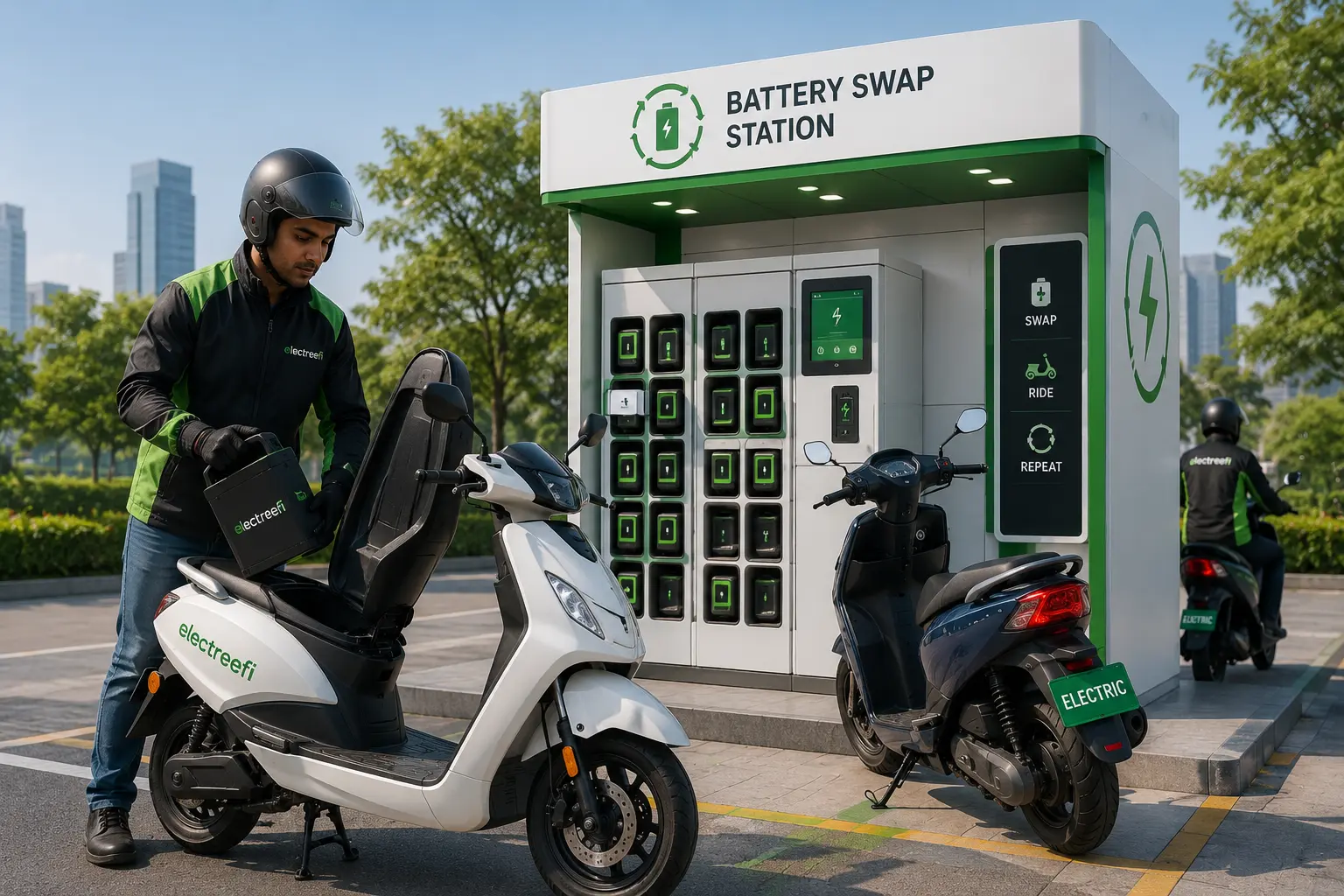
- Your driver opens the app and finds the nearest station holding charged packs.
- He reserves a pack, so nobody takes it before he reaches the site.
- He docks the empty battery in the cabinet, and the cabinet releases a charged one.
- The software logs the transaction and bills your account for the energy consumed.
The whole exchange takes two to five minutes. A driver completes it during a tea break, which means he loses almost no earning time.
Where Battery Swapping Fits Your Fleet Best
Swapping rewards high utilisation. Think last mile delivery, food delivery, e commerce logistics, and shared passenger autos. These vehicles run long hours on repeatable city routes, and they earn more the longer they stay moving.
Smaller packs suit the model best. A rider lifts a scooter battery by hand with no equipment. Larger commercial vehicles need automated swap bays, and those bays cost far more to build and maintain.
Swapping suits you less if your vehicles return to one depot each night and rest for eight hours. In that case, plain overnight charging usually wins on cost. Be honest about your duty cycle before you commit.
What Smart Software Adds to the Network
Hardware alone never runs a network well. A smart electric vehicle charging system tracks every pack, predicts demand at each station, and charges batteries when grid tariffs fall. It also watches cell temperature and voltage, so a weak pack leaves the network before it strands a driver on the road.
Good software gives you one dashboard. You see battery health, energy cost per kilometre, station uptime, and driver behaviour in a single view. Companies such as Electreefi build this intelligence layer alongside the physical network, which lets an operator manage swapping and depot charging together instead of juggling two systems.
Ask any vendor to show you the dashboard before you sign. If the reporting looks thin during a demo, it will look worse once you run two hundred vehicles.
Check These Six Points Before You Sign
A swap contract locks your fleet in for years, so ask hard questions early.
Standards. Confirm the packs meet AIS 156 safety norms and the applicable BIS standards for swappable batteries.
Coverage. Count the stations sitting on your actual routes, not the total across the city. A dense cluster in one zone helps nobody in another.
Uptime. Demand a written service level with penalties attached. Ask what happens when a station runs dry at peak hour.
Battery health. Establish who owns the pack, who replaces a degraded one, and at what state of health that replacement triggers.
Pricing. Check whether you pay per unit of energy, per swap, or per month. Confirm whether the operator can raise the rate mid contract.
Vehicle fit. Your vehicle manufacturer must approve the pack. A mismatched battery voids your warranty and your insurance cover.
Put every one of these terms in writing. A verbal assurance means nothing at 9 pm when your riders sit outside a dead station.
Counting the Real Cost, Not the Sticker Price
The battery accounts for a large share of an electric vehicle’s purchase price, often a third or more on smaller models. Remove the battery from the purchase and your upfront outlay falls sharply. You then carry a predictable running fee instead of a large capital burden.
Compare total cost per kilometre. Add vehicle cost, swap fees, insurance, service, and expected downtime. Run that figure across three years, then set it against your current fuel and maintenance spend. Most operators find the comparison clearer once they stop looking at monthly invoices in isolation.
Count the trips you gain too. Two extra trips per vehicle each day change your economics far more than a small difference in swap tariff.
Factor in resale value as well. When the network owns the battery, you never carry the risk of a degraded pack on your books. You hand back the vehicle or redeploy it without absorbing a heavy replacement bill in year four. Many operators overlook this point, then discover it late when they try to sell an ageing fleet.
Start Small, Then Scale With Data
Run a pilot first. Pick ten vehicles on one busy route and track them for sixty days. Measure trips completed per day, energy cost per kilometre, station wait time, and driver complaints.
If the numbers hold, expand route by route rather than city by city. Bring your drivers in early, because they decide whether the system works on the ground. Train them on docking, fault reporting, and app basics before day one.
The Road Ahead for Indian Fleets
India keeps pushing battery standardisation, and interoperability will improve as more operators adopt common pack formats. Fleets that move early gather route data, driver habits, and supplier terms that late entrants cannot copy quickly.
An electric vehicle battery swap system will not rescue a badly planned fleet. It will, however, remove the single biggest constraint on electric fleet productivity, which is time spent standing still. Map your routes, run your pilot, and let your own numbers decide the rest.
Frequently Asked Questions
What is battery swapping in electric vehicles?
Battery swapping lets a driver exchange a drained battery for a charged one at a station in minutes. The vehicle never sits on a charger. The network owns, charges, and maintains the packs, so you manage vehicles instead of managing batteries.
How long does an EV battery swap take?
Most swaps for electric bikes and autos finish within two to five minutes. The driver docks the empty pack, and the cabinet releases a charged one immediately. Compare that against four to six hours on a standard slow charger.
Is battery swapping cheaper than charging in India?
It depends on how hard you run each vehicle. High utilisation fleets usually save, because they complete more trips per day and avoid building depot infrastructure. Single shift fleets often find overnight charging cheaper. Always compare cost per kilometre across three years.
Which vehicles support battery swapping in India?
Electric two wheelers and three wheelers lead adoption today, especially delivery bikes and cargo autos. Your vehicle manufacturer must approve the swappable pack, so confirm compatibility before you place a vehicle order.
Does battery swapping affect my vehicle warranty?
It does not, provided you use packs your manufacturer approves. Unapproved batteries void warranty and insurance claims. Ask both the manufacturer and the swap operator for written confirmation before your fleet switches over.