Long-distance travel in an EV requires more preparation than a traditional road trip. Range anxiety, charging stop availability, and unpredictable weather conditions can turn an exciting journey into a stressful experience. This is exactly why a reliable electric vehicle trip planner has become an essential tool for every EV driver planning a trip beyond their usual daily routes.
A good trip planner removes the guesswork from your journey. It calculates your route, identifies charging stops, and adjusts for real-time conditions so you reach your destination without unnecessary delays. This guide explains how these tools work, why they matter, and how you can use them to plan faster, safer, and more efficient road trips.
Why You Need an Electric Vehicle Trip Planner
Traditional navigation apps calculate the fastest route between two points, but they rarely account for your vehicle’s battery range or charging needs. An electric vehicle trip planner solves this problem by factoring in your car’s battery capacity, current charge level, and driving style to recommend the most efficient route.
Without proper planning, drivers risk running low on charge in areas with limited charging infrastructure. A dedicated planner prevents this by mapping out charging stops in advance, ensuring you never face unexpected range anxiety during a long drive.
Trip planners also save time by avoiding unnecessary detours. Instead of searching for charging stations along the way, you get a pre-planned route that integrates charging seamlessly into your journey.
How an Electric Vehicle Trip Planner Works
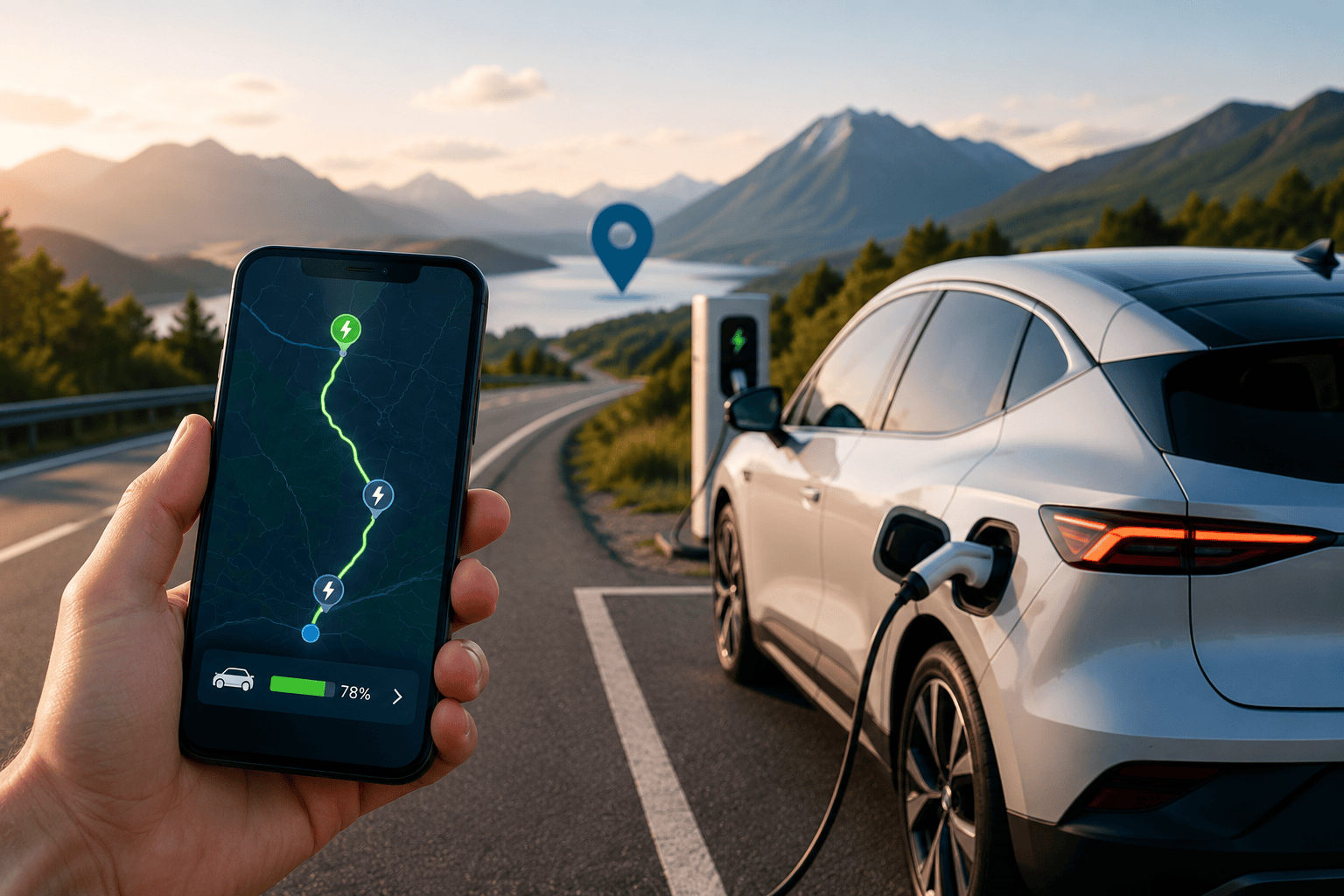
Most trip planning tools use a combination of real-time data and vehicle-specific information to generate accurate route recommendations. The system considers your starting battery level, vehicle efficiency, terrain, weather, and traffic conditions before suggesting a route.
The planner then identifies charging stations along the way, factoring in charger speed, availability, and network compatibility. Some advanced tools also account for elevation changes, since climbing hills consumes more battery power than driving on flat terrain. This level of detail ensures the suggested route matches your vehicle’s actual performance rather than a generic estimate.
Key Features to Look for in a Trip Planner
Real-Time Charging Station Data
The best planners update charging station availability in real time, showing whether a station is operational, occupied, or out of service. This feature prevents you from arriving at a charger that cannot serve you.
Vehicle-Specific Route Calculation
A quality planner uses your exact vehicle model and battery specifications to calculate range accurately. Generic estimates often lead to inaccurate predictions that do not reflect your car’s actual efficiency.
Weather and Terrain Adjustments
Cold weather and steep terrain significantly affect battery performance. Planners that factor in these variables provide more reliable range estimates than tools that ignore environmental conditions.
Multi-Stop Itinerary Support
Many trips involve multiple destinations rather than a single point-to-point journey. A capable planner allows you to add several stops while still optimizing charging locations along the entire route.
Charging Time Estimates
Knowing how long each charging stop will take helps you plan breaks efficiently, whether that means grabbing a meal, resting, or catching up on work while your vehicle charges.
Using a Route Planner with EV Charging Points
A route planner with EV charging points goes beyond basic navigation by integrating charging infrastructure directly into your travel route. Instead of manually searching for stations near your path, the tool automatically places charging stops at intervals that match your vehicle’s range.
This integration becomes particularly valuable on unfamiliar routes where charging infrastructure may be sparse or inconsistent. By relying on accurate, updated data, drivers can confidently plan trips through regions they have never visited, knowing their charging needs are already accounted for.
Benefits of Using a Trip Planner for Long-Distance EV Travel
Reduced Range Anxiety
Knowing exactly where and when you will charge removes the uncertainty that often accompanies long EV trips. This confidence allows drivers to focus on enjoying the journey rather than worrying about battery levels.
Time Efficiency
Well-planned charging stops minimize wasted time searching for stations or waiting at busy chargers. Efficient planning keeps your overall travel time closer to what you would expect from a traditional road trip.
Cost Savings
Some planners highlight charging stations with lower rates or free charging options, helping you reduce the overall cost of your trip. Identifying these opportunities in advance adds meaningful savings on longer journeys.
Improved Safety
Avoiding unexpected low-battery situations reduces the risk of getting stranded in unfamiliar or remote areas. Proper planning keeps your journey predictable and manageable from start to finish.
Better Trip Enjoyment
When logistics are handled in advance, drivers and passengers can focus on the experience of the trip itself rather than constantly monitoring battery percentage and charger locations.
How to Plan Your Next EV Road Trip Step by Step
Step 1: Enter Your Vehicle Details
Input your EV model, battery capacity, and starting charge level to ensure accurate range calculations throughout your trip.
Step 2: Set Your Route and Stops
Add your final destination along with any intermediate stops you want to include in your itinerary.
Step 3: Review Suggested Charging Points
Examine the recommended charging stations, checking their speed, network compatibility, and estimated wait times before confirming your route.
Step 4: Adjust for Preferences
Modify the route based on personal preferences, such as avoiding tolls, prioritizing fast chargers, or adding rest stops near restaurants and attractions.
Step 5: Monitor Real-Time Updates
Keep the planner active during your trip so it can adjust for traffic, weather changes, or station availability as conditions evolve along the way.
Common Mistakes EV Drivers Make Without a Trip Planner
Many drivers underestimate how much terrain and weather affect battery range, leading to inaccurate time-of-arrival estimates. Others rely on outdated charging station information, only to arrive and find the charger out of service or occupied.
Skipping route planning entirely often results in drivers searching for chargers mid-trip, which wastes time and increases stress. Relying solely on generic navigation apps without EV-specific features frequently leads to poor route choices that do not account for charging needs.
The Growing Importance of Smart Trip Planning Technology
As EV adoption increases worldwide, trip planning technology continues to evolve with smarter algorithms and more comprehensive charging network data. Modern planners increasingly integrate with charging management platforms, providing drivers with a seamless experience from route calculation to actual charging sessions.
This evolution matters for both individual drivers and fleet operators managing multiple electric vehicles. Accurate trip planning reduces downtime, improves scheduling reliability, and supports the broader shift toward sustainable transportation.
How ElectreeFi Supports Smarter EV Travel
Companies like ElectreeFi focus on building connected charging ecosystems that complement smart trip planning tools, helping drivers move seamlessly from route calculation to actual charging sessions. This kind of integration reflects where EV infrastructure is heading, with planning and charging management working together rather than as separate, disconnected steps.
Final Thoughts
An electric vehicle trip planner transforms long-distance EV travel from a stressful guessing game into a confident, well-organized journey. By calculating accurate routes, identifying reliable charging stops, and adjusting for real-world conditions, these tools make every road trip faster, safer, and more efficient.
Whether you are planning a weekend getaway or a multi-day cross-country trip, using a dedicated planner ensures you spend less time worrying about charging and more time enjoying the drive. As EV infrastructure continues to expand, trip planning technology will only become more essential for confident, efficient travel.
Frequently Asked Questions
How accurate are electric vehicle trip planners?
Most planners provide highly accurate estimates by factoring in vehicle specifications, terrain, weather, and real-time traffic conditions. Accuracy improves further when the tool uses live charging station data rather than static information.
Can a trip planner work for any EV model?
Most modern planners support a wide range of EV models by allowing users to input specific vehicle details, ensuring range calculations match the actual performance of your car.
Do trip planners account for charging station availability?
Yes, quality planners use real-time data to show whether stations are operational, occupied, or out of service, helping drivers avoid unreliable or unavailable chargers along their route.
How does weather affect EV trip planning?
Cold temperatures reduce battery efficiency, which can shorten your effective range. Advanced planners adjust their calculations based on weather conditions to provide more realistic time and range estimates.
Is trip planning necessary for short EV trips?
Short trips within your vehicle’s comfortable range typically require less planning, but longer journeys benefit significantly from route optimization and charging stop scheduling to avoid unexpected delays.