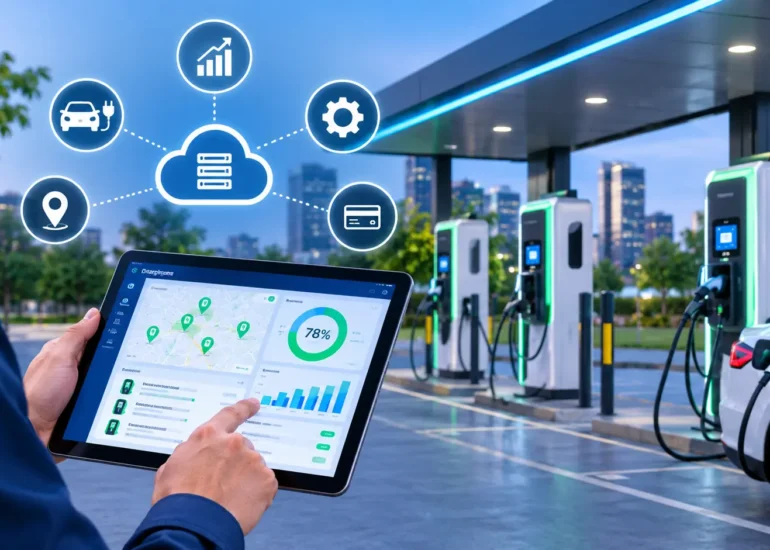
You plug in your car, tap your phone, and the session starts in seconds. Behind that simple moment, an EV Charging Management System tells the charger when to start, how much power to send, and how to bill you. This software links chargers, drivers, and operators on one cloud platform. If you own an electric car or scooter in India, knowing how it works helps you avoid failed sessions and surprise bills.
India adds more electric vehicles every month, and each new driver needs a dependable plug. Hardware alone cannot deliver that promise. Software decides whether a charger stays online, shows the right price, and bills you correctly. This guide explains what a CMS does, which features matter, what it costs, and how to choose one in 2026.
How an EV Charging Management System Works
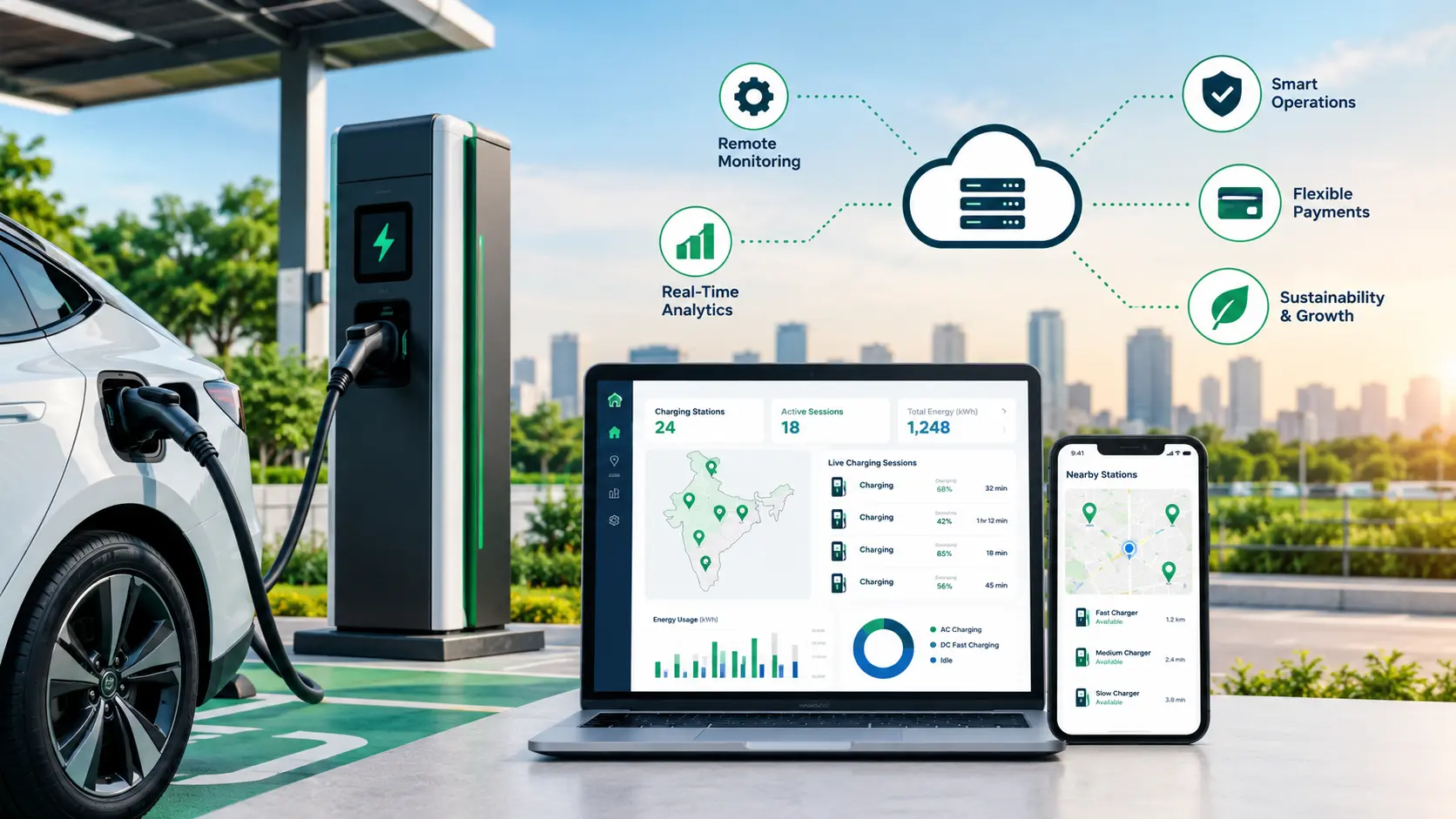
A charge point management platform runs in the cloud and talks to every charger through a standard language called OCPP. The charger sends live data, such as status, energy used, and faults. The software reads that data, sends commands back, and records each session in detail.
The platform also connects to the app on your phone. When you scan a QR code, the app asks the platform to approve your session. The platform checks your account, confirms the payment, and tells the charger to release power. If something fails, it logs the error so support teams can fix the issue quickly. That whole loop happens in a few seconds.
Why EV Owners Should Care About the Software
Most drivers blame the charger when a session fails. In many cases, the software causes the problem. A weak platform drops connections, shows wrong availability, or charges you twice. A strong one keeps chargers online and updates live status in your app. Reliable EV charging depends on software as much as on hardware.
Indian conditions raise the stakes. Monsoon outages, shared apartment power lines, and long highway gaps all test a platform. Strong software handles these cases with alerts, load control, and live availability.
Good software also protects your wallet. It shows the tariff before you start and sends a receipt when you finish. It supports UPI, cards, and QR payments, so you never hunt for cash. That clarity removes guesswork from every stop.
Key Features of a Modern CMS
Not every platform offers the same tools. Look for these core features before you trust a network with your daily commute.
- Real time monitoring: Live status for every connector, with instant alerts when a fault appears.
- Open protocol support: OCPP for chargers and OCPI for roaming between networks.
- Flexible payments: UPI, card, wallet, and QR options at the point of charging.
- Smart load management: The system shares available power across chargers and prevents overload at apartments and offices.
- Roaming access: One app and one account unlock many networks.
- Usage reports: Clear records of sessions, energy, and spend.
- Driver app: Search, start, pay, and track sessions from your phone.
- Round the clock support: Real people answer when a session fails at midnight.
Smart load management deserves extra attention. Housing societies and office parks often share one power connection. Without control, several cars charging together can trip the supply. With it, the software adjusts power for each car and keeps everyone charging safely. Frequent travelers should also read this guide to finding charging stations across India.
What Does a CMS Cost in India?
Pricing varies by provider, charger count, and feature set. Most platforms follow one of three models. Some charge a one time setup fee. Others bill a monthly fee for each charger. A few take a small share of every transaction. Hardware, installation, and electricity cost extra in all three cases.
As a driver, you rarely pay for the software directly. Operators fold that cost into the per kWh rate you see on the screen. Charger type, location, electricity rates, and payment gateway fees all shape the final tariff. To understand what you pay at the plug, read this breakdown of public charging cost per kWh in 2026. Operators who want exact figures should request a custom quote, because a fair EV charging tariff starts with a fair platform price.
How to Choose the Right EV Charging Management System in India
Use this checklist to compare options. Each point protects your time and money.
- Charger brand independence: The platform should work with many charger makers, not just one.
- Open standards: OCPP and OCPI keep you free from vendor lock in.
- Indian payments: UPI and QR support matter more than any foreign card option.
- Proven scale: Ask how many charge points the platform manages today.
- Support quality: Test the helpline before you need it.
- Transparent pricing: Insist on clear tariffs and no hidden fees.
- App quality: Read store reviews, because a clunky app ruins even the best EV charging network.
Drivers can run a quick test. Download the app, check station status, and compare the tariff with the actual bill after one session. Mismatches signal weak software. Honest platforms show the same number at every step.
Where Real Scale Meets Daily Driving
ElectreeFi operates a cloud platform that already connects more than 105,000 charge points across India. It integrates with over 80 charger brands, supports OCPP 1.6J and 2.0.1, and accepts UPI, card, and QR payments. The platform also covers roaming, fleet tools, and smart load management, with support available 24×7. Operators and property owners can review the full CMS platform page to see how the dashboard works. Drivers who plan longer routes can try the highway trip planner.
Final Thoughts
A strong EV Charging Management System keeps chargers online, prices clear, and payments simple. Check the features, compare the cost models, and use the checklist above before you commit to any network. Better software means fewer failed sessions and more miles with confidence. With that knowledge, you can make EV charging a smooth part of your day.
Ready to charge smarter? Download the mobile app today, or call the business team on +91 97111 81070 to book a demo.
Frequently Asked Questions
What does a CMS do for EV owners?
A CMS manages the link between your car, the charger, and the payment. It starts sessions, controls power, tracks usage, and shows live charger status in your app.
How much does charging software cost in India?
Costs vary by charger count and features. Operators pay setup, monthly, or per transaction fees, then include them in the tariff. Drivers only see the final per kWh rate.
What does OCPP mean?
OCPP stands for Open Charge Point Protocol. It lets chargers from different brands talk to one software platform, so you get consistent service across stations.
How do I find a working charger near me?
Open a charging app, filter by connector type, and check live availability. Pick stations that show recent status updates, and keep a backup option on long routes.
Can I pay for charging with UPI?
Yes. Most Indian networks accept UPI, cards, and QR scans. Check the payment options inside the app before you reach the station, so the session starts without delay.
ElectreeFi’s EV charging management system runs OCPP 1.6 and OCPP 2.0.1 networks across India — remote diagnostics, tariffs and settlement, UPI and card payments, load management and 24×7 monitoring.