
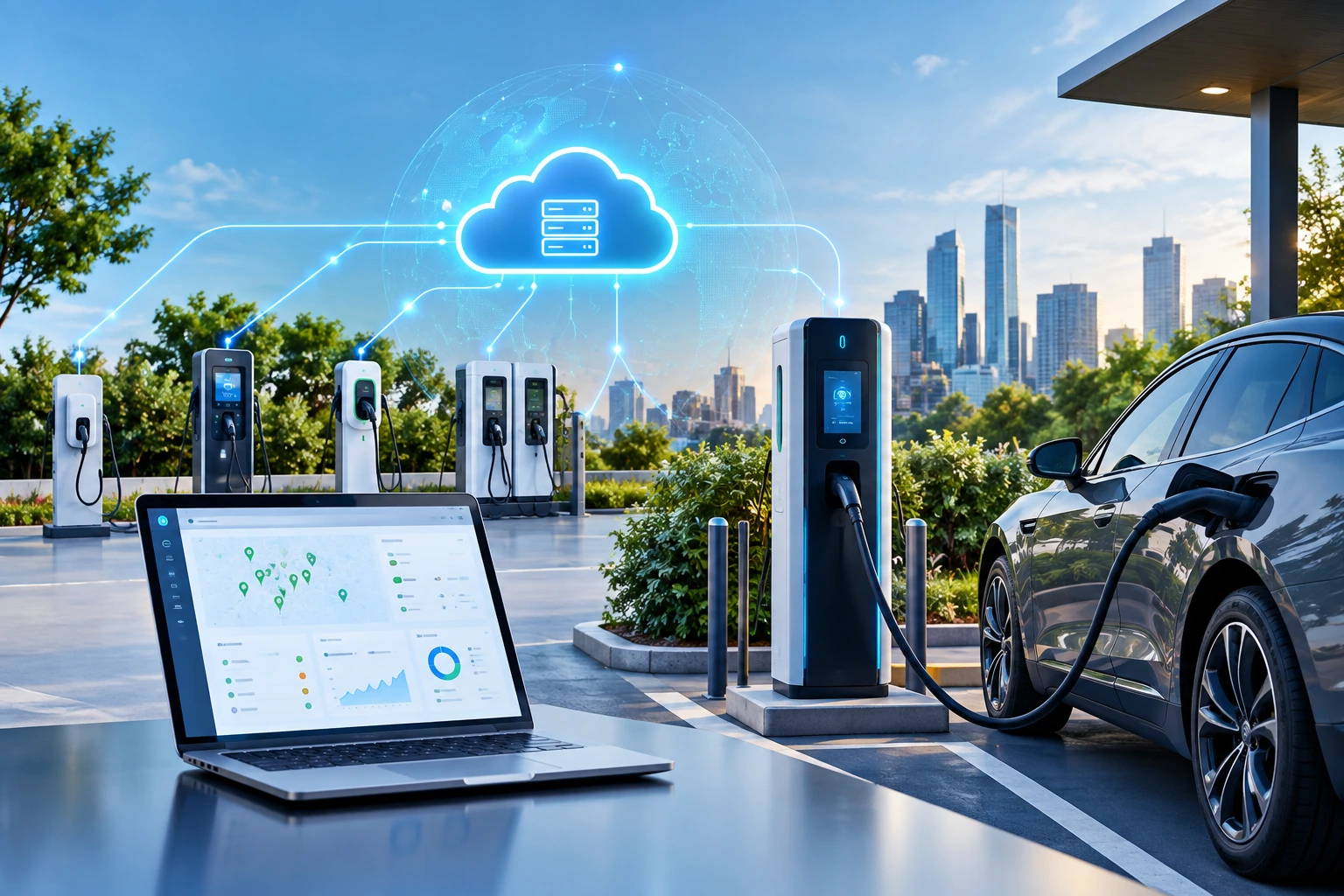
Every charge point operator eventually asks one question. How do you keep a growing charging network reliable, secure, and easy to manage as it scales? The answer often starts with a single protocol update. OCPP 2.0.1 is the latest version of the Open Charge Point Protocol, and it changes how chargers, backend systems, and drivers interact with each other. For operators planning new deployments or upgrading old ones, this update is not a minor technical footnote. It shapes uptime, security, and how much value you extract from every charger you own.
This guide breaks down what the protocol actually does, why it matters for daily operations, and how it changes the way you run a charging network.
What Is OCPP 2.0.1?
OCPP stands for Open Charge Point Protocol. It is the open communication standard that lets EV chargers talk to a central management system, regardless of who manufactured the hardware. Without this standard, every charger brand would need its own proprietary software, locking operators into a single vendor for life.
The 2.0.1 release builds on earlier versions like OCPP 1.6 by adding device management, smart charging profiles, and stronger security features. It introduces a device model that lets the backend read and configure every component inside a charger, from the connector to the meter. This level of detail was simply not available before.
Charge point operators care about this update because it solves real operational problems. Remote diagnostics become faster. Firmware updates roll out with fewer failures. Security certificates protect against unauthorized access. These are not abstract improvements. They translate directly into fewer service calls and higher charger availability.
Why OCPP 2.0.1 Matters for Charging Network Reliability
A charging network lives or dies on uptime. A driver who arrives at a broken charger rarely comes back. OCPP 2.0.1 addresses this by giving operators deeper visibility into charger health before a fault becomes a breakdown.
The protocol supports detailed diagnostic reporting, so the backend system can flag issues like connector faults or communication errors as soon as they appear. Operators no longer have to wait for a customer complaint to learn something is wrong. This shift from reactive to proactive maintenance reduces downtime significantly across large networks.
Security also improves in a way that matters for reliability. OCPP 2.0.1 supports TLS encryption and certificate-based authentication between the charger and the central system. This closes gaps that older protocols left open, reducing the risk of tampering or unauthorized firmware changes that could take a charger offline.
Smart charging profiles add another reliability layer. The protocol allows the backend to send charging schedules that respond to grid conditions in real time. During peak demand, chargers can throttle output automatically instead of tripping a breaker or overloading local infrastructure. This keeps stations running instead of shutting down under stress.
How OCPP 2.0.1 Improves Operational Efficiency
Running a charging network involves constant coordination between hardware, software, and field teams. The updated protocol streamlines much of this work through its device management model.
Operators can now push configuration changes to multiple chargers at once instead of visiting each unit individually. Firmware updates follow a more structured process, with built-in checks that confirm a charger applied the update correctly. This alone cuts field service trips and speeds up rollout across a distributed network.
Billing and transaction data also become more granular. The protocol captures metering values at a finer level, which supports accurate cost calculation for time-of-use pricing or energy-based billing models. Operators who need precise revenue reporting benefit directly from this improvement.
Reservation handling gets smarter too. Drivers can reserve a specific connector in advance, and the system manages that reservation without manual intervention from staff. For high-traffic locations like highway corridors or commercial parking, this reduces disputes and improves the customer experience.
What This Means for Charge Point Operators
If you operate a charging network today, this update affects your roadmap whether you plan for it or not. Chargers manufactured going forward increasingly ship with support for this newer standard, and backend platforms are adapting to match.
Operators evaluating new hardware should confirm protocol compatibility before purchase. A charger that only supports an older version limits your ability to use advanced features like remote diagnostics or dynamic load management later. Planning for this now avoids a costly hardware refresh in a few years.
Migration does not have to happen overnight. Many management platforms support both older and newer protocol versions simultaneously, which lets operators transition gradually as chargers are replaced or upgraded. This mixed-fleet approach keeps existing infrastructure running while new deployments take advantage of the latest capabilities.
Vendor independence remains one of the biggest practical benefits. Because the protocol is open, operators are not locked into a single charger manufacturer. This flexibility matters when negotiating hardware contracts or expanding into new regions where different brands dominate the local market.
Choosing a Platform That Supports the Latest Standard
Not every charging management platform keeps pace with protocol updates at the same speed. When evaluating a partner for your network, ask how quickly they adopt new standards and how they handle backward compatibility for chargers already in the field.
Electreefi builds its charging management platform around open standards, which means operators get device level visibility, smart charging controls, and secure communication without being tied to one hardware brand. This approach gives charge point operators the flexibility to scale their network at their own pace while keeping every charger connected to a single, unified system.
Choosing a platform that treats protocol support as a priority rather than an afterthought protects your investment as the charging landscape keeps evolving. It also puts you in a stronger position to add new revenue streams like smart charging or roaming without a full system overhaul later.
Final Thoughts
The shift toward newer communication standards is already underway across the EV charging industry. Operators who understand what these updates unlock, from proactive diagnostics to smarter load management, are better positioned to run networks that stay reliable as demand grows.
Staying current with the protocol your chargers use is not just a technical decision. It is a business decision that affects uptime, security, and long term scalability. If your current setup cannot keep up, now is a good time to review your charging management platform and plan your next steps.
Ready to future proof your charging network? Get in touch with our team to see how our platform supports the latest charging standards from day one.
Learn more about our EV charging management platform or explore our recent post on why highway EV charging hubs are booming across India for more on where the industry is headed.
Frequently Asked Questions
Is OCPP 2.0.1 the same as OCPP 1.6?
No. They are different versions of the same open protocol family. OCPP 1.6 remains widely used and reliable, but the newer release adds device management, stronger security through TLS and certificates, and more detailed smart charging profiles. Many chargers in the field still run the older version, and management platforms often support both at once so operators can migrate gradually instead of replacing hardware all at once.
Do all EV chargers support OCPP 2.0.1?
Not yet. Adoption is growing among newer charger models, but plenty of existing hardware still runs earlier versions. Before buying new equipment, operators should confirm which protocol version the charger supports and whether the manufacturer plans future firmware updates. This directly affects which advanced features, like remote diagnostics or dynamic load management, will be available down the road.
Why does OCPP matter for charge point operators?
The protocol lets chargers from different manufacturers communicate with a single management system. This vendor independence means operators are not locked into one hardware brand, which improves negotiating power and simplifies expansion into new markets with different equipment suppliers already installed.
Is upgrading to OCPP 2.0.1 expensive?
Cost depends on your existing hardware. Chargers that already support the standard need only a software or firmware update. Older units without support may require replacement. A phased migration, upgrading as chargers reach end of life, usually spreads the cost over time instead of requiring a single large investment.
Does OCPP 2.0.1 improve charging station security?
Yes. It supports TLS encryption and certificate based authentication between chargers and the backend system. This reduces the risk of unauthorized access or tampering, which matters as charging networks become larger and more connected targets for cyber threats.