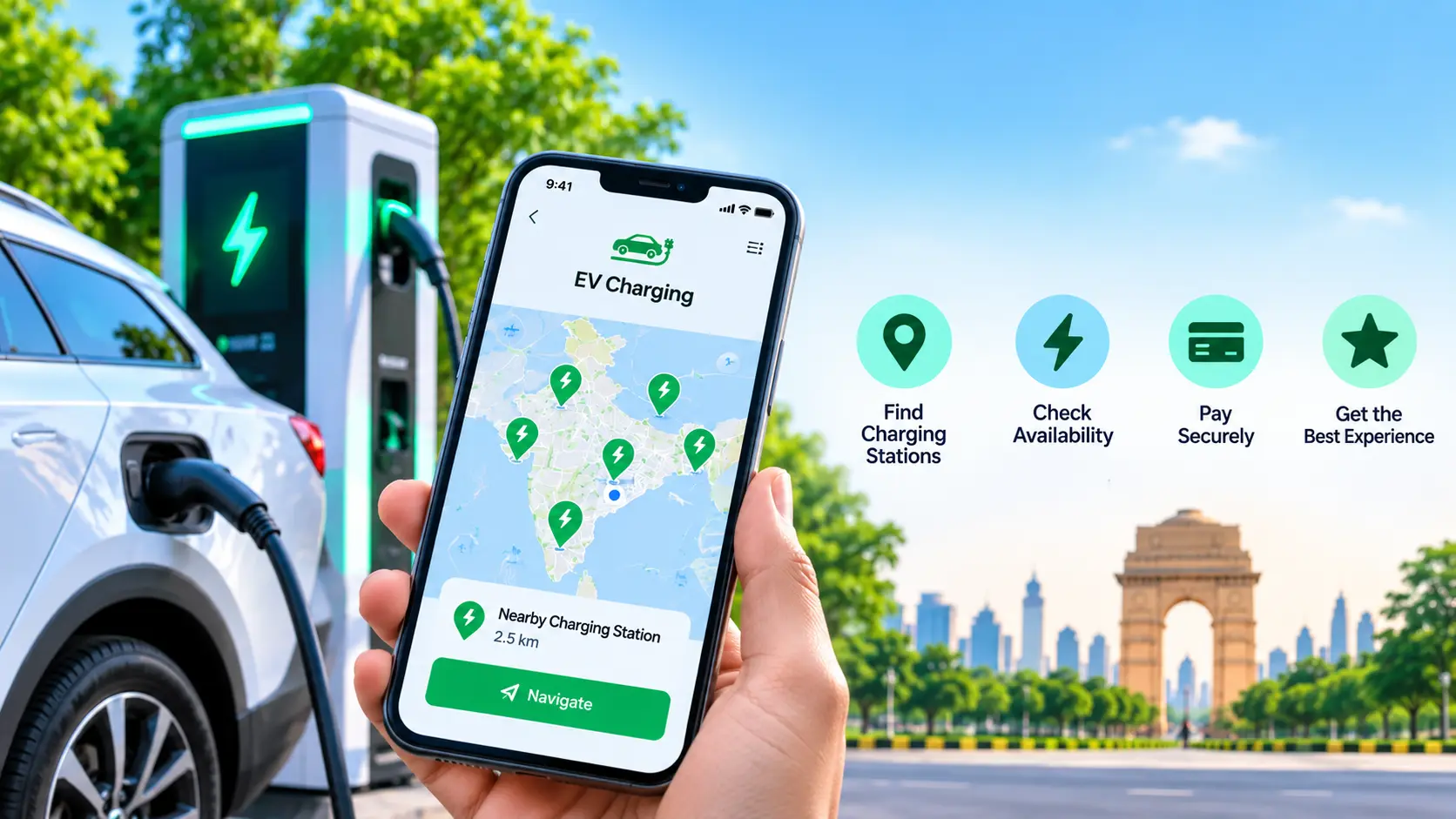
You reach a highway charger after two hours of driving, only to find it is busy, offline, or locked to an app you have not installed. Many EV owners in India know this feeling well. Public charging is growing, but it is spread across many operators, and each one has its own app, wallet and rules. The best EV charging apps in India fix part of this problem. They help you find stations, check availability, plan routes and pay for charging from one screen.
This guide explains how these apps work and compares well-known options using details from their official websites. It also shows how to pick the right one, and how driver apps differ from the software that charging businesses use.
What Is an EV Charging App?
An EV charging app is a mobile application that connects a driver to public or private chargers. At a minimum, it shows where chargers are. Stronger apps also show live charger status, let you start and stop a session, collect payment and keep your charging history.
Most apps belong to a charging network. The Tata Power EZ Charge app works with Tata Power chargers, and the Jio-bp pulse app works with Jio-bp pulse chargers. Some apps list stations from several networks. That difference matters when you choose one.
Why Are EV Charging Apps Important in India?
India has no single charging network. Stations belong to oil companies, power utilities, private operators and automakers, and each may use a different app. A car owner on a long trip may need more than one.
The government has tried to bring order to this. The Ministry of Power’s Guidelines for Installation and Operation of Electric Vehicle Charging Infrastructure, 2024 aim to build safe, affordable and accessible charging across the country. The Bureau of Energy Efficiency (BEE), the central nodal agency for public charging, also built the EV Yatra app, which was launched in December 2022 to help drivers reach public chargers. Setting up a charging station is a de-licensed activity, so more operators keep entering the market. That gives drivers more choice, and more apps to manage.
Essential Features to Look For in an EV Charging App
Station Discovery and Live Availability
Look for a map with filters for connector type, charger speed and vehicle type. Live availability saves the most time. Two-wheeler and three-wheeler owners should confirm that the app lists chargers that fit their vehicles. If you are unsure about connectors, this guide to electric car charger types explains Level 1, Level 2 and DC fast charging.
Route Planning for Long Trips
Route planning matters most on highways. A good planner places charging stops along your route using your battery level and vehicle details. Not every app offers it. Statiq lists a route planner, and ElectreeFi’s EV Trip Assist describes routes that account for charging stations, station status along the way and alerts when you need to recharge.
EV Charging Payments: UPI, Wallets and Cards
Check how you will pay. Some apps use a prepaid wallet, some accept UPI, cards or net banking, and some offer several options. Jio-bp pulse lists UPI, cards, net banking and wallets. The ElectreeFi app uses an in-app wallet and the Paytm, PayU and BillDesk gateways. Its separate payment solutions page lists BHIM/UPI, cards, tap and pay, and QR codes at the charger. Whatever you choose, confirm that the price shows before the session starts.
History, Invoices and Support
Session history, invoices and quick support help when a billing question comes up. Jio-bp pulse stores invoices under History and emails them. The ElectreeFi app generates an itemised invoice when a session ends.
How to Find Chargers and Check Availability
Open the map and filter by your connector type. Then read the live status. Tata Power’s help pages, for example, show available connectors in green. Next, use in-app navigation to reach the station.
Statuses can lag behind reality, so pick a backup station near your first choice. This is a practical tip, not an app feature. It matters most on highway routes, where the next charger may be far away.
How EV Roaming Makes Public Charging Easier
EV roaming lets one account and payment method work across several charging networks. Instead of keeping a separate wallet for each operator, a driver uses one login and gets one bill.
Roaming depends on shared technical standards. ElectreeFi’s roaming solution is built on OCPI (Open Charge Point Interface), covers both the CPO and eMSP sides, and combines session charges into one bill. Statiq has also promoted a “One Country, One App” campaign to bring chargers from many networks into one platform.
Roaming helps operators too. The ElectreeFi page notes that smaller CPOs can gain sessions at existing sites without building new chargers.
Driver Apps vs EV Charging Management Platforms
Not every tool in this space is for drivers. A driver app helps you find, start and pay for a session. An EV charging management platform serves the business that owns the chargers.
ElectreeFi’s EV charging management platform is a cloud-based system for charge point operators, fleets and property owners. It connects to charger hardware over OCPP 1.6J and 2.0.1, works with different charger brands, and offers real-time dashboards, alerts and reporting. Drivers rarely see this layer. Still, it decides whether a charger shows the right status and takes payment smoothly.
How to Choose the Right EV Charging App in India
Use these checks to narrow your options:
- Network: Which chargers do you use every week? Start with the app that covers them.
- Vehicle fit: Confirm support for your connector and vehicle type, such as a two-wheeler or three-wheeler.
- Trip needs: For intercity drives, look for route planning or roaming.
- Payments: Pick the option you will actually use, whether UPI, wallet or card.
- Support: Look for an easy way to reach the support team.
Many owners keep one app for their home network and one wider app for trips. Fleet operators should also check invoicing and reporting, since drivers charge across many sites.
How ElectreeFi Supports the EV Charging Ecosystem
ElectreeFi works on both sides of charging. Drivers can use its EV charging app. Businesses can use its platform to manage chargers, accept payments, enable roaming and apply smart charging with load management. ElectreeFi also lists EV fleet management, charger installation, operations and maintenance, and 24/7 call support.
For a CPO, the value is control. One dashboard shows charger status, and the same system handles tariffs and settlements. For a property owner or fleet, it means chargers that work with the apps drivers already use. You can read more on ElectreeFi’s EV Charging in India hub.
Conclusion
The best EV charging app is the one that works on your routes, fits your vehicle and makes payment easy. Compare network coverage, live availability, route planning and payment options before you commit. If you run chargers, remember that a good driver experience starts with good management software behind the charger.
Explore ElectreeFi’s EV charging solutions at electreefi.com to see how its technology supports charging networks and charging businesses across India.
FAQs
Are EV charging apps free to download?
Most major apps are free to download, and you pay for the energy you use. Check each app’s store listing for current terms.
How can I find EV charging stations near me?
Open an EV charging app, allow location access and filter by connector type. You can also use the government’s EV Yatra app.
Which EV charging app is suitable for long-distance travel?
Choose an app with route planning, such as ElectreeFi’s EV Trip Assist. Also confirm that the app covers chargers on your route.
Do EV charging apps support multiple charging networks?
Some do. Apps that use roaming, such as those built on OCPI, can give one account access to several networks.
How do I choose the right EV charging app?
Match the app to your daily network, vehicle type and payment habits. For trips, add route planning and roaming to your checklist.