More Indian households are switching to electric vehicles every year, and this shift brings a common question to new owners. Should you install an electric car charger for home use, or rely only on public stations? The answer is simple. A home charging setup saves time, cuts daily hassle, and keeps your EV ready every morning. This guide covers the real cost, the installation steps, expected charging time, and the benefits you get from charging your car at home.
Why You Need an Electric Car Charger for Home
Public charging stations are useful, but they are not always nearby. Long queues, busy hours, and limited slots can slow you down. A home charger removes this dependency completely.
You plug in your car overnight and wake up to a full battery. There is no waiting, no travel to a station, and no adjusting your schedule around someone else’s availability. For daily commuters, this convenience alone makes the investment worthwhile.
Home charging also gives you better control over your electricity usage. You can charge during off-peak hours when tariffs are lower, which reduces your monthly running cost over time.
Cost of an Electric Car Charger for Home
The price of a home charging unit depends on the power rating and brand you choose. Basic Level 1 chargers that use a standard 15A socket are the most affordable option. They come with your car in many cases and need no extra installation cost.
Level 2 chargers offer faster charging and typically range between 15,000 and 60,000 rupees in India, depending on power output and features like app connectivity or scheduling. Installation charges add to this figure and usually fall between 3,000 and 15,000 rupees, based on wiring length, panel upgrades, and labor in your city.
Government subsidies are available in several states for residential EV charging setups. Checking your state policy before purchase can lower your total spend significantly.
Installation Process for Home Charging
Installing a charger at home is a straightforward process when you follow the right steps.
Site inspection. An electrician checks your home’s electrical panel, wiring condition, and available load capacity. This step confirms whether your current setup can support the new charger.
Panel upgrade if needed. Older homes sometimes need a panel upgrade to handle the additional electrical load safely. This is common in houses built before EVs became popular.
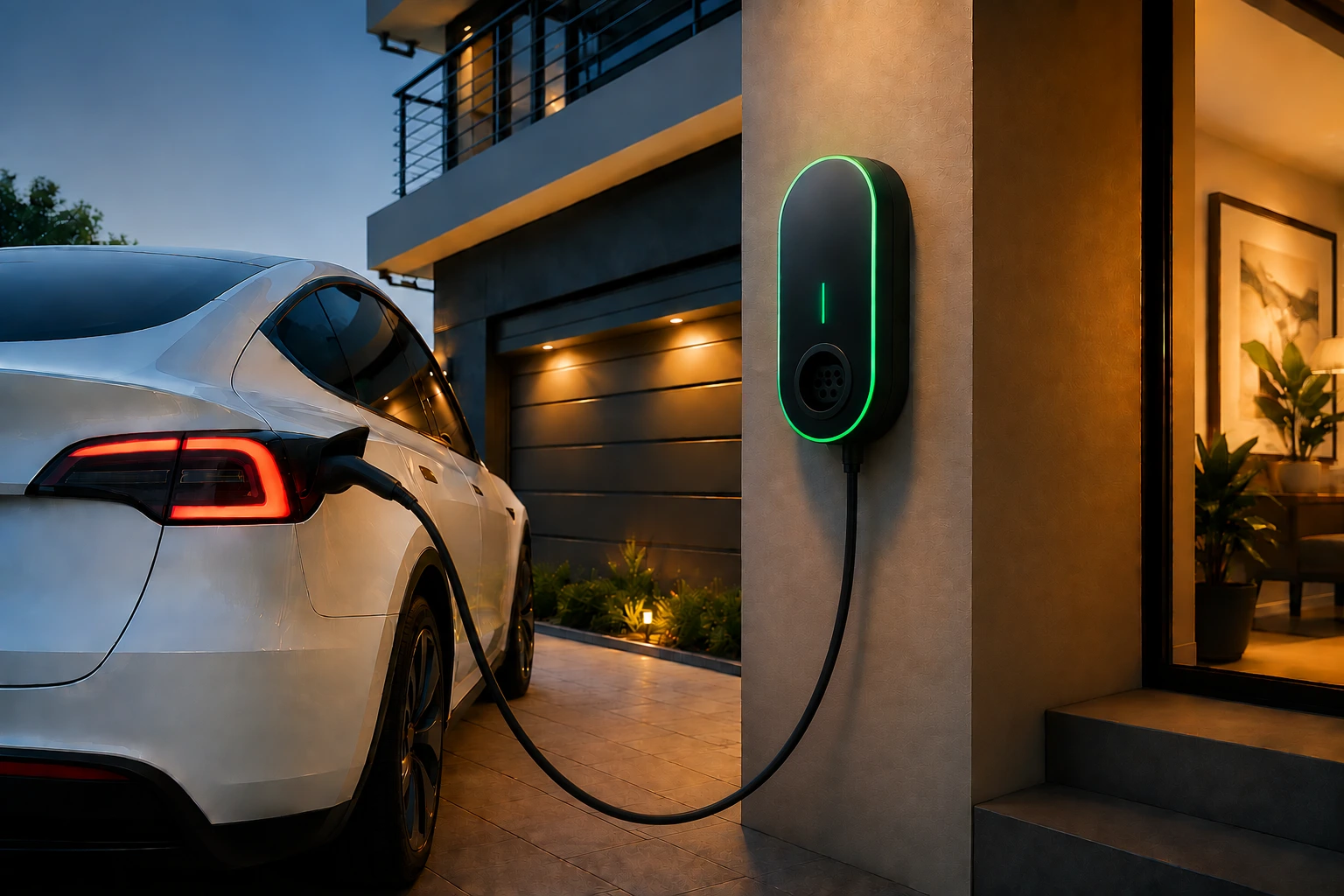
Charger mounting. The unit gets fixed on a wall near your parking spot, usually in a garage or covered driveway. Proper mounting height and weatherproofing matter for outdoor installations.
Wiring and connection. A certified electrician connects the charger to your main panel using dedicated circuit wiring. This step must follow local safety codes strictly.
Testing. Once connected, the electrician tests the unit for correct voltage, current flow, and safety shutoffs before handing it over for daily use.
Most installations get completed within a single day, though homes needing panel upgrades may take a bit longer.
Charging Time You Can Expect at Home
Charging time depends on your charger’s power output and your car’s battery size.
A Level 1 charger, running on standard household power, takes around 8 to 20 hours for a full charge. This works well if you charge overnight and only need your car ready by morning.
A Level 2 charger cuts this time down significantly. Most EVs reach a full charge in 4 to 8 hours with a Level 2 setup, making it the preferred choice for daily drivers who want faster turnaround.
Battery size also plays a role. Smaller batteries in compact EVs charge faster than larger batteries in premium models, even with the same charger type. Checking your vehicle manual for exact charging specifications helps set the right expectations.
Benefits of Charging Your EV at Home
Charging your electric car at home offers advantages that go beyond simple convenience.
Lower running cost. Home electricity rates are generally cheaper than public fast charging tariffs, especially during off-peak hours.
Time savings. You skip the drive to a charging station and the wait for an available slot. Your car charges while you sleep, work, or relax.
Battery health. Slower, consistent home charging is gentler on battery cells compared to frequent fast charging, which can help extend battery life over the years.
Property value. Homes with EV charging infrastructure are becoming more attractive to buyers as electric vehicle adoption grows across India.
Energy independence. Pairing your setup with solar panels lets you charge your car using clean, self-generated power, cutting both cost and carbon footprint further.
These benefits together make home charging a practical long-term investment rather than a one-time convenience purchase.
How to Choose the Right Setup
Selecting the right unit depends on your car model, daily driving distance, and available electrical capacity at home. Consider a charger with smart features like app-based scheduling, usage tracking, and safety certifications from recognized authorities.
Working with an experienced EV infrastructure provider makes this process easier. ElectreeFi helps property owners and individual EV users plan, install, and manage reliable charging setups backed by smart monitoring technology, so your car stays charged without added stress.
An electric car charger works best when matched correctly to your usage pattern and home electrical capacity, rather than choosing the highest wattage option available.
Final Thoughts
Installing a home charger for your electric vehicle is one of the smartest decisions you can make as an EV owner. It saves time, reduces cost, and gives you a stress-free daily charging routine. Once you understand the cost, installation steps, and expected charging time, the decision becomes much easier.
If you plan to buy an electric vehicle soon or already own one, setting up home charging should be high on your priority list. It pays off in convenience and savings for years to come.
Frequently Asked Questions
How much does it cost to install a home EV charger in India?
Installation costs typically range between 3,000 and 15,000 rupees, depending on wiring length and panel condition. The charger unit itself costs extra, with Level 2 models priced between 15,000 and 60,000 rupees based on power output and features.
Can I charge my electric car using a normal household socket?
Yes, a standard 15A socket works for Level 1 charging. This method is slower, taking up to 20 hours for a full charge, but it needs no extra installation and suits owners with lower daily driving needs.
How long does it take to fully charge an EV at home?
A Level 1 setup takes 8 to 20 hours, while a Level 2 charger completes a full charge in 4 to 8 hours. Actual time varies based on battery size and the charger’s power rating.
Do I need an electrician for home EV charger installation?
Yes, a certified electrician should handle wiring, panel checks, and final testing. This ensures safety, proper load handling, and compliance with local electrical codes
Does home charging damage my EV battery over time?
No, home charging is generally gentler on battery health than frequent fast charging. Slower, consistent charging cycles help preserve battery capacity over the vehicle’s lifespan.