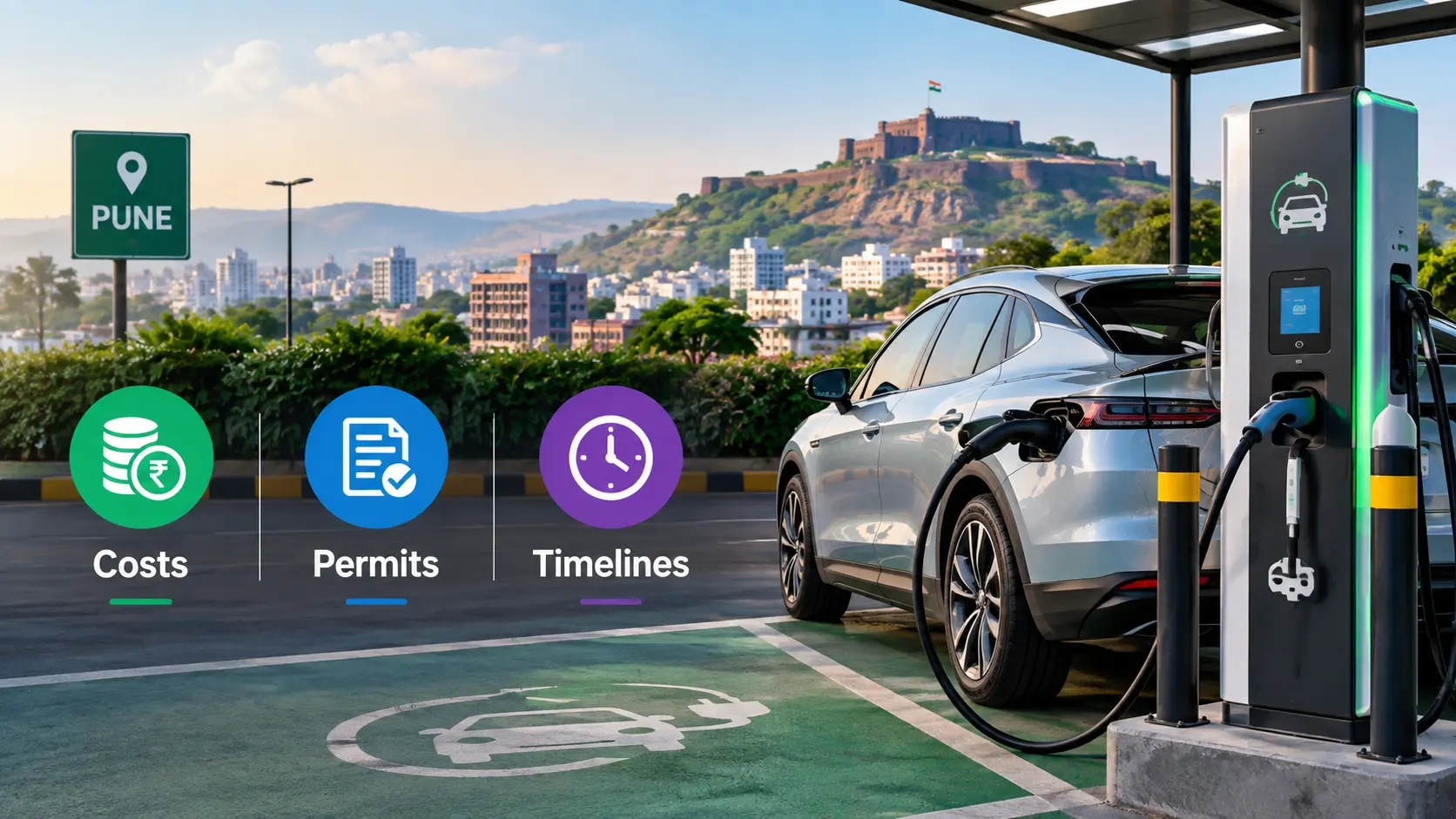
Pune has become one of India’s strongest markets for electric vehicles. IT parks in Hinjewadi, factories in Chakan, and busy housing societies in Baner and Kharadi all create steady charging demand. Smart operators now plan EV charging station setup Pune projects before rivals claim the best plots. This guide explains the costs, permits, and timelines so you can move forward with confidence.
We wrote this guide for Charge Point Operators, property owners, and fleet managers. Each section gives you practical numbers and plain steps you can act on today.
Why Pune Works for Charge Point Operators
Pune combines a large working population, a strong automotive base, and highways that link Mumbai, Nashik, Satara, and Bengaluru. EV owners here charge at offices, malls, and highway stops, so every well placed EV charging station earns repeat visits. Demand keeps rising, yet public chargers still fall short in many neighbourhoods. That gap gives you a real opening.
Maharashtra’s EV policy also supports public charging growth, and MSEDCL offers a lower EV tariff for charging load. Cheaper power improves your margin on every unit you sell.
Cost Breakdown for EV Charging Station Setup Pune
Your budget depends on charger type, power rating, and site condition. Treat the figures below as planning ranges, because vendor quotes and civil work change the final bill.
- AC chargers (3.3 kW to 22 kW): about ₹3 lakh to ₹5 lakh for a small site with a few points.
- DC fast chargers (30 kW to 120 kW): about ₹15 lakh to ₹25 lakh or more per project.
- Civil and electrical work: cabling, earthing, canopy, bollards, and signage add a significant share to hardware cost.
- Utility charges: connection fees, security deposit, and meter costs vary with sanctioned load.
- Software and payments: a management platform, OCPP integration, and payment gateway fees.
Transformer upgrades create the biggest cost swing. A DC site that needs a new transformer or a high tension connection costs far more than a site with spare load. Check available load before you sign any lease.
Subsidies can lower your outlay. Maharashtra’s EV policy offers capital incentives for eligible public and semi public sites, and MSEDCL acts as the state nodal agency for applications. Confirm current eligibility and funds before you apply, because scheme terms change over time.
Permits and Approvals You Need in Pune
India does not ask for a separate licence to run a public charging site, as long as you follow Ministry of Power guidelines. You still need several local approvals, and each one protects your investment.
- Land rights: ownership papers or a lease that clearly allows charging use.
- Local body permission: Pune Municipal Corporation or Pimpri Chinchwad Municipal Corporation approves land use and building work.
- MSEDCL connection: apply for a new connection or load extension on the EV tariff, with a separate meter for charging load.
- Safety clearance: larger sites need fire safety approval, along with electrical safety checks and proper earthing.
- Technical compliance: chargers should follow Indian standards, use CCS2 or Type 2 connectors, and talk to your software over OCPP.
Submit your documents together. Officers then review the full file once, and you avoid repeated visits.
Realistic Timelines from Survey to Launch
A small AC project usually goes live in six to ten weeks. A DC fast charging site often needs three to six months, mainly because of load sanction and equipment delivery. A typical schedule looks like this:
- Weeks 1 to 2: site survey, load check, and feasibility study.
- Weeks 2 to 6: local permissions, MSEDCL application, and load sanction.
- Weeks 4 to 10: charger purchase, civil work, and cabling.
- Final 1 to 2 weeks: testing, commissioning, app listing, and launch.
Approvals decide your schedule, so file MSEDCL papers first. This single habit shortens most EV charging station setup Pune timelines by weeks.
How to Choose a Profitable Site
Location drives utilisation more than any other factor. Look for long parking time, high visibility, and easy vehicle entry.
Office parks in Hinjewadi and Kharadi suit AC and mid power DC chargers, because cars stay parked for hours. Highway stops on the Pune Mumbai Expressway and the Pune Bengaluru corridor suit DC fast chargers, since drivers want a quick top up. Housing societies and malls suit a mix of both. Match every EV charging station you plan to the parking time at its site.
Check three things before you commit. Confirm the available electrical load, safe access for vehicles, and strong mobile network coverage for connected chargers.
Software and Revenue Models That Keep Chargers Earning
Hardware alone does not earn money. Software runs the business. A charging management platform tracks sessions, collects payments, sets tariffs, and alerts you to faults. OCPP support lets you mix chargers from different brands, so you never depend on one vendor.
Smart load management keeps peak demand in check and trims your power bill. Roaming through OCPI lets drivers from other networks find and use your chargers, which lifts utilisation without new hardware.
Most operators combine several income streams. You can charge per kWh, add idle fees, sell parking bundles, sign fleet contracts, or earn roaming revenue. Many operators recover their investment in three to five years, depending on location, utilisation, and tariff.
Safety and Ongoing Compliance
Safety builds driver trust, and trust builds repeat sessions. Install proper earthing, surge protection, and circuit breakers at every point. Use weatherproof enclosures, because Pune monsoons test outdoor equipment each year. Add clear signage, good lighting, and CCTV so drivers feel secure at night.
Compliance continues after launch. Schedule periodic electrical inspections, keep calibration records for meters, and store session data securely. Regular checks reduce breakdowns and protect you from penalties. Certified technicians should handle all repairs, which keeps your warranty valid and your chargers safe.
Mistakes That Slow Down New Operators
Operators who treat an EV charging station like a simple hardware purchase often struggle later. Avoid these common errors:
- Buying chargers before you confirm the available load.
- Skipping a maintenance plan, which lowers uptime and driver trust.
- Choosing hardware that locks you into one software vendor.
- Setting prices without checking local demand and nearby rates.
Start Your EV Charging Station Project with a Trusted Partner
ElectreeFi supports Charge Point Operators from first consultation to daily operations. Our team has worked in the EV ecosystem for over seven years. Our platform manages more than 70,000 charging points across India and connects with 48 charger brands. We help you pick the site, choose the right chargers, link them to a cloud platform, and keep them running through maintenance contracts and 24/7 call support.
Ready to move ahead with your EV charging station setup Pune plan? Contact our team for a consultation and a clear cost and timeline estimate for your site.
Frequently Asked Questions
How much does it cost to open a charging station in Pune?
A small AC site costs about ₹3 lakh to ₹5 lakh. A DC fast charging site costs ₹15 lakh to ₹25 lakh or more. Load upgrades and civil work change the final figure.
Do you need a licence to run a public charging station in India?
No separate licence applies under Ministry of Power guidelines. You still need land rights, local body permission, an MSEDCL connection, and safety clearances.
How long does it take to install a charging station in Pune?
AC sites usually go live in six to ten weeks. DC fast charging sites often need three to six months because load sanction takes time.
Is running a charging station profitable in India?
Yes, when utilisation stays healthy. Many operators recover their investment in three to five years. Site choice, tariff, and uptime decide your returns.
Does Maharashtra offer subsidies for charging stations?
The state EV policy offers capital incentives for eligible public and semi public sites. Apply through the distribution company and confirm current scheme terms first.