India added electric vehicles to its roads faster than most experts predicted. Every new EV on the street raises one question for fleet operators and charge point operators alike. Where will it charge next. This is exactly why an EV charging station has turned from a side project into a serious business decision for property owners, fleet businesses, and mobility companies across the country.
This guide walks you through the real setup cost, the current government rules, the step by step process, and the business case for building an EV charging station in India. It is written for fleet operators, charge point operators, and businesses that want facts rather than sales pitches.
Why India Needs More EV Charging Stations Right Now
India currently has close to 30,000 public charging points serving a fast growing EV fleet. That gap between vehicles on the road and available chargers is the biggest bottleneck slowing down EV adoption today.
The government has responded with the PM E-DRIVE scheme, a ₹10,900 crore push that includes roughly ₹2,000 crore set aside just for charging infrastructure. The target is to add more than 72,000 new public charging and battery swapping stations, with priority given to big cities, highways, and government premises.
For anyone planning to invest, this is a rare window. Demand is rising, subsidies are active, and the market has not yet become crowded. An EV charging station built now can capture early demand before competition catches up.
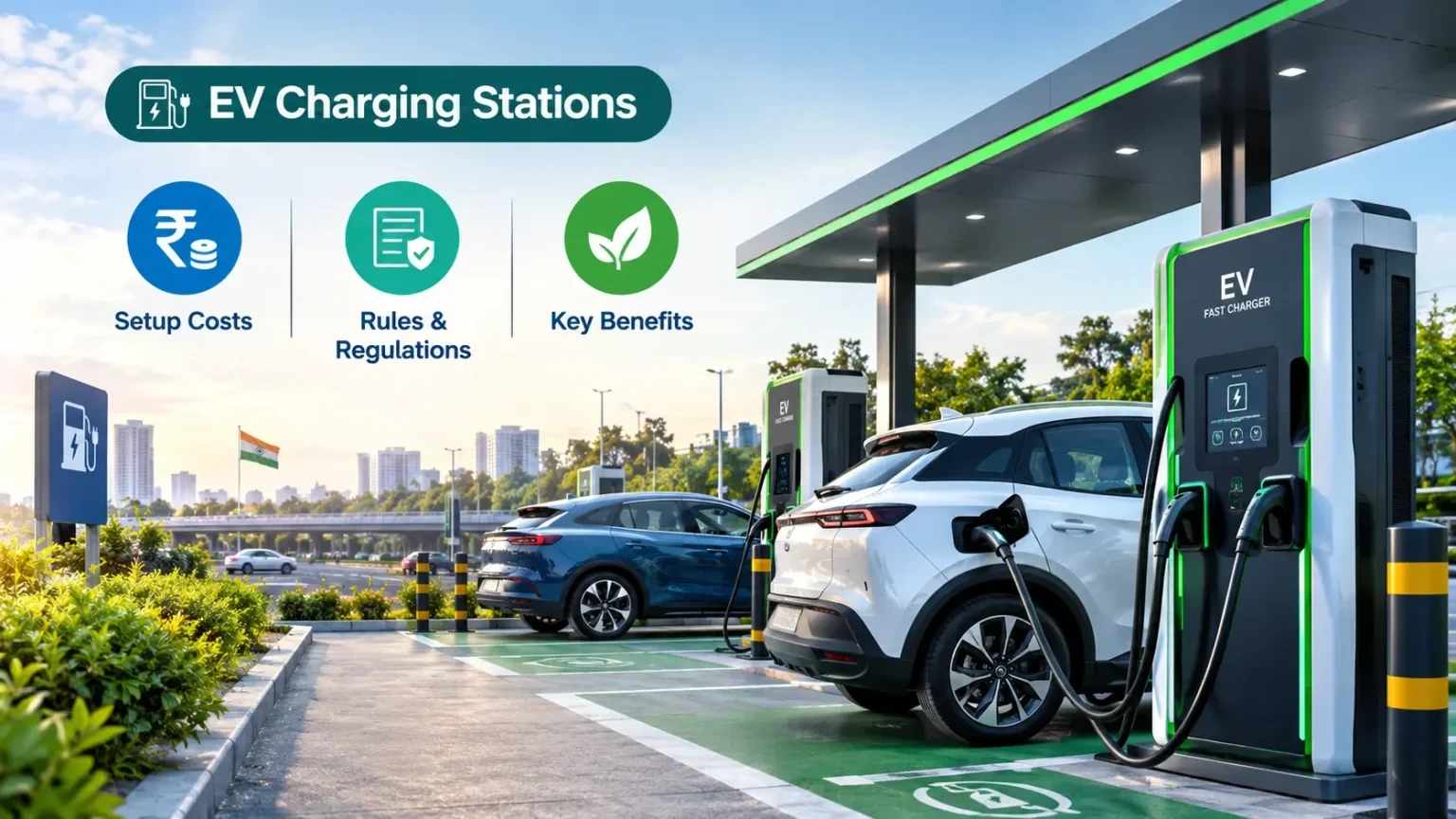
EV Charging Station Setup Cost in India (2026 Breakdown)
Cost is usually the first question fleet operators ask, and the honest answer is that it depends heavily on charger type, site readiness, and scale.
AC Charging Station Cost
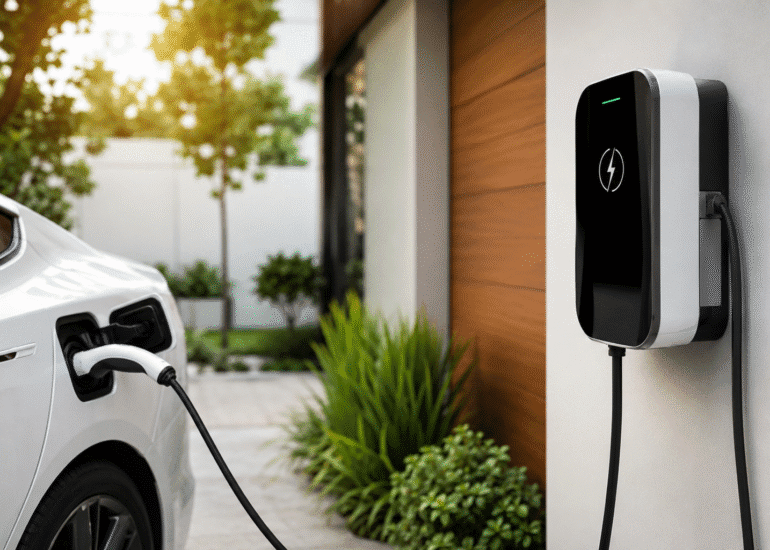
A single AC charger for home or light commercial use costs around ₹85,000 for the hardware alone. A small commercial setup with two or three AC chargers, including civil work and installation, typically falls between ₹5 lakh and ₹12 lakh.
AC chargers work well for locations where vehicles park for hours, such as office parking lots, residential societies, and malls. They cost less upfront but take longer to charge a vehicle fully.
DC Fast Charging Station Cost
A single DC fast charger setup, including civil work, electrical upgrades, and software, usually costs between ₹10 lakh and ₹30 lakh depending on power rating. An ultra fast DC hub built for highways or high traffic fleet hubs can cross ₹1 crore.
DC chargers suit fleet operators who need quick turnaround, such as ride hailing fleets, delivery vehicles, and inter-city bus operators. The higher cost is usually offset by faster charging cycles and higher daily throughput.
What Actually Drives the Final Number
The equipment itself is often only 30 to 50 percent of the total project cost. The rest goes into electrical infrastructure, DISCOM connection charges, civil work, land lease, and software integration.
Location matters more than most first time investors expect. A site with an existing three phase power connection can save lakhs on electrical work. State level subsidies and local labour rates can also swing the final cost by 10 to 20 percent either way.
Legal and Regulatory Requirements for Setting Up an EV Charging Station
Setting up an EV charging station in India is more structured than it used to be, and staying compliant protects your investment from delays and penalties.
Ministry of Power Guidelines
Every charging station in India must follow the Ministry of Power’s guidelines on charging infrastructure. These guidelines standardise connector types so that vehicles from different manufacturers can charge at any compliant station.
Two and three wheelers use Light EV DC or Light EV AC or DC combo connectors rated up to 12 kW. Four wheelers, buses, and trucks use the CCS2 standard, which covers a wide range from 50 kW to 500 kW depending on vehicle type.
DISCOM Approval and Electricity Connection
You need approval from your local electricity distribution company before installing a commercial charger. This step covers load sanction, safety inspection, and metering setup, and it usually takes a few weeks depending on the state.
The good news is that operating a charging station does not require a separate electricity distribution license under current rules, since charging is treated as a service rather than resale of power. You still need standard business registrations and safety clearances.
PM E-DRIVE Subsidy Eligibility
Government and public sector entities can access subsidies covering a large share of infrastructure cost, with benchmark figures ranging from around ₹6 lakh for a 50 kW station to ₹24 lakh for stations above 150 kW. Private businesses can participate as Charge Point Operators appointed through eligible government bodies, though they should not assume a fixed subsidy is guaranteed without applying through the correct channel.
Step by Step Process to Set Up an EV Charging Station
- Scout the location. Look at EV density in the area, average vehicle dwell time, and how far the site sits from existing chargers.
- Check power availability. Confirm whether the site has three phase power or needs a transformer upgrade.
- Apply for DISCOM approval. Submit load sanction and safety documentation to your local electricity provider.
- Choose the right charger mix. Match AC or DC charger type to how long vehicles typically stay parked at your site.
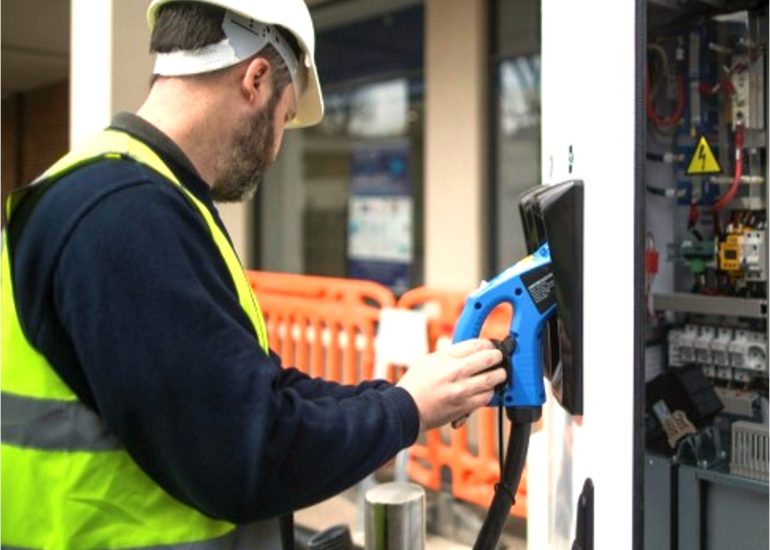
- Complete civil and electrical work. This includes cabling, protection equipment, mounting structures, and fencing.
- Install charging management software. A reliable platform handles billing, monitoring, and remote fault detection.
- Test and launch. Run a pilot period before opening the station to the public or your full fleet.
Key Benefits of Setting Up a Public EV Charging Station
A well placed EV charging station does more than serve EV drivers. It creates a genuine revenue stream and a long-term competitive edge.
Fleet operators who build their own charging infrastructure cut vehicle downtime significantly, since drivers no longer wait in line at public stations. Property owners who add charging points often see longer visitor dwell time and stronger tenant interest, since EV readiness is becoming a standard expectation rather than a bonus feature.
There is also a clear sustainability angle. Every charging session supported by clean infrastructure reduces dependence on fossil fuel transport, which increasingly matters to corporate clients evaluating vendors on environmental commitments.
Return on investment varies by setup. A small AC installation with steady utilisation often breaks even within two to four years, while a well located DC fast charging station can recover its cost faster because each session generates more revenue per hour.
How ElectreeFi Helps Fleet Operators and CPOs Build an EV Charging Station
Setting up an EV charging station involves far more than buying hardware, and this is where most first time operators lose time and money. ElectreeFi’s EV charging solution combines an IoT based charging management platform with support for multiple charger brands, so operators are not locked into a single hardware vendor.
Fleet businesses that need dedicated infrastructure can also explore ElectreeFi’s EV Fleet Hub solution, which is built specifically for companies running their own electric fleets rather than serving the general public. It covers site selection, charger selection, installation, and ongoing support under one roof.
For a closer look at how the right platform improves day to day operations, this piece on how EV charging software simplifies payment, monitoring, and user management breaks down what to look for before choosing a vendor.
Ready to plan your own EV charging station? Get in touch with ElectreeFi’s team for a consultation tailored to your site and fleet size.
Frequently Asked Questions
What is the cost of setting up an EV charging station in India in 2026?
The cost depends entirely on charger type and site conditions. A basic AC charger costs around ₹85,000 for hardware alone, while a small commercial setup with two or three AC chargers usually runs between ₹5 lakh and ₹12 lakh once civil work and installation are included. DC fast charging stations cost more, typically between ₹10 lakh and ₹30 lakh for a single unit, and can exceed ₹1 crore for a high power hub designed for highways or large fleets. The equipment itself often makes up less than half the total cost. Electrical upgrades, DISCOM connection charges, civil work, land, and software integration account for the rest. Sites with existing three phase power connections cost noticeably less to set up, since they skip expensive electrical upgrades. State subsidies, local labour rates, and land lease terms can also change the final number by a meaningful margin. Before committing, it helps to get a site specific quote rather than relying on average figures, since costs in metro cities can differ sharply from smaller towns.
What government rules apply to public EV charging stations in India?
Every public charging station must follow the Ministry of Power’s charging infrastructure guidelines, which standardise connector types across the country. Two and three wheelers use Light EV DC or AC or DC combo connectors up to 12 kW, while four wheelers, buses, and trucks use the CCS2 standard covering 50 kW to 500 kW. Operators also need approval from their local electricity distribution company before installation, covering load sanction, metering, and safety inspection. Charging is treated as a service rather than resale of electricity under current rules, so a separate power distribution license is not required, though standard business registrations still apply. The PM E-DRIVE scheme adds another layer of structure for government linked projects, offering subsidies for eligible entities and their appointed Charge Point Operators. Private businesses working outside government schemes should still confirm state specific EV policy requirements, since incentive structures and connection charges vary from state to state and change periodically as policy updates roll out.
Is setting up an EV charging station a profitable business in India?
Profitability depends on location, charger type, and how consistently the station gets used. A small AC charging setup with steady utilisation, generally around 30 to 50 percent daily usage, tends to break even within two to four years. DC fast charging stations often recover their higher upfront cost faster because each session generates more revenue per hour of operation. Location plays a bigger role than most new operators expect. Sites near offices, highways, or high traffic fleet routes see far better utilisation than isolated locations with low footfall. Government subsidies under schemes like PM E-DRIVE can also improve the payback period for eligible projects by reducing upfront infrastructure spend. Fleet operators building captive charging hubs see a different kind of return, since the value shows up as reduced vehicle downtime and lower dependence on public chargers rather than direct station revenue. A realistic business plan should model utilisation conservatively rather than assuming best case numbers from day one.
Do I need a license to set up an EV charging station in India?
You do not need a separate electricity distribution license to operate an EV charging station, since current rules treat charging as a service rather than resale of power to the public. However, standard approvals are still required. You need clearance from your local electricity distribution company covering load sanction and safety inspection before installation. Depending on your state and site type, you may also need local municipal permissions, fire safety clearance, and standard business registrations such as GST and trade license. If you plan to apply for government subsidies under PM E-DRIVE or a state EV policy, additional documentation is required to prove eligibility and compliance with Ministry of Power charging standards. Charge Point Operators working with government or public sector entities usually go through a structured bidding or empanelment process rather than a simple registration. It is worth checking with your state nodal agency early in the planning stage, since requirements can shift with policy updates.
How much space and power load does an EV charging station need?
Space and load requirements scale directly with the number and type of chargers you plan to install. A single AC charger needs modest space, similar to a standard parking bay, and works on a lower electrical load suited to three phase household or light commercial connections. A DC fast charging station needs considerably more space for the charger cabinet, cooling systems, and safe vehicle manoeuvring, along with a much higher power load that often requires a dedicated transformer. For a small commercial site with two or three AC chargers, most properties can manage with existing infrastructure or a modest upgrade. A serious DC fast charging hub, especially one built for fleet or highway use, usually needs a fresh load sanction from the DISCOM and sometimes a new transformer installation. Getting an electrical load assessment done before finalising your charger count prevents costly surprises midway through the project, since load upgrades take both time and money to arrange.