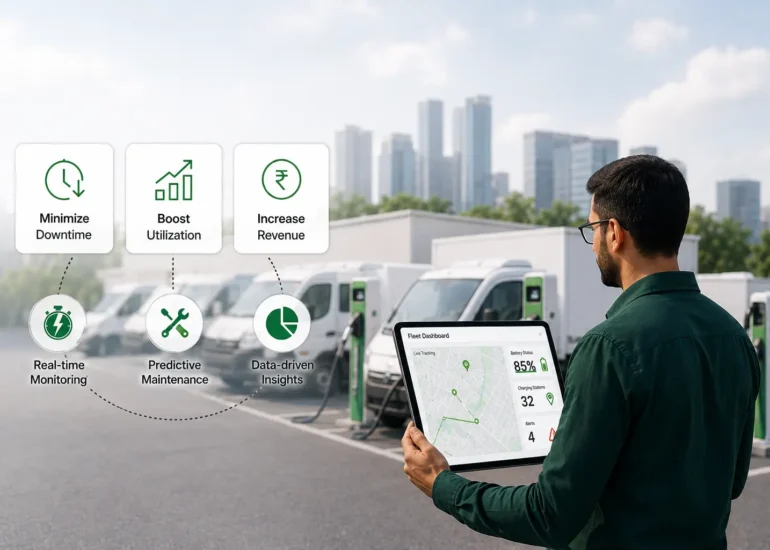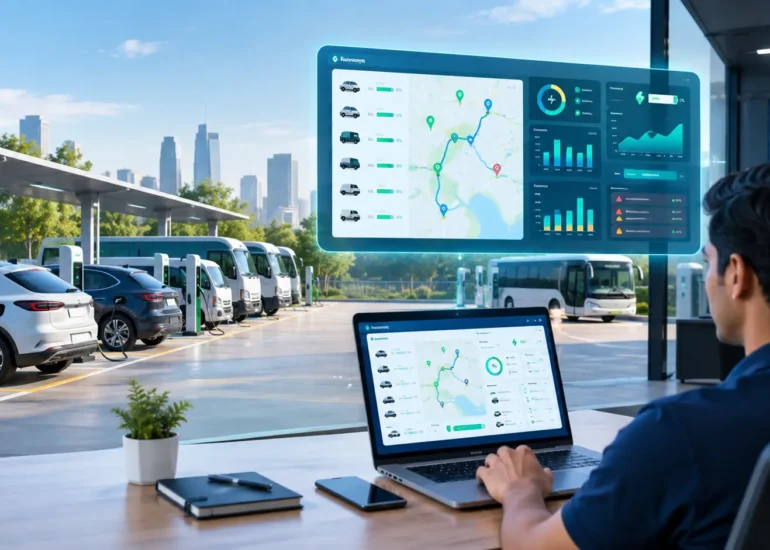
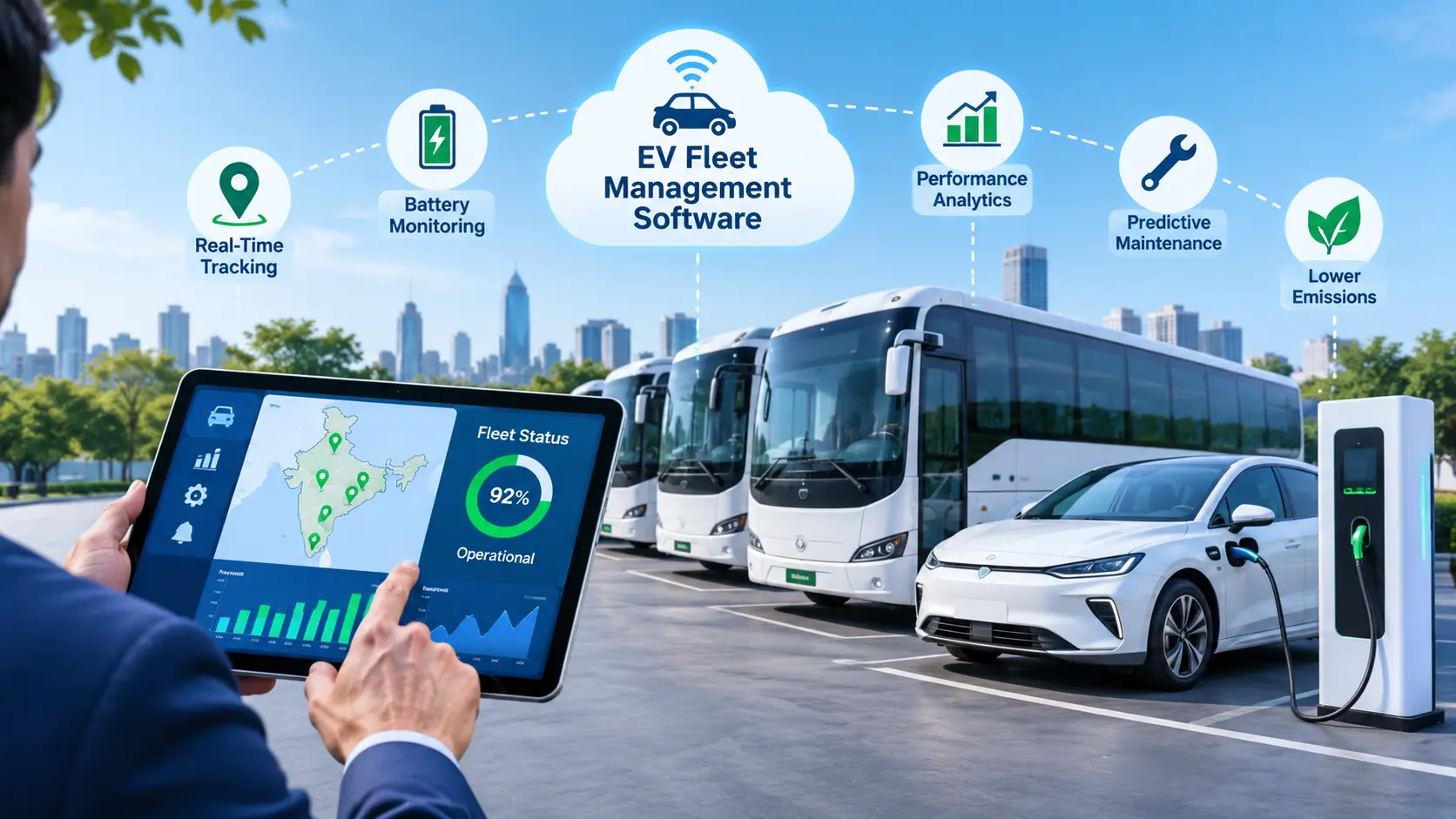
India’s electric fleets are growing fast. Delivery firms, cab aggregators, and corporate transport teams now run hundreds of electric vehicles each. The right EV Fleet Management Software decides whether those vehicles earn money or sit idle at a charger. Spreadsheets and phone calls cannot track battery levels, driver habits, and charger queues at the same time. This guide explains which features matter most and how to judge them before you buy.
Why Electric Fleets Need Purpose Built Software
Diesel fleet tools track fuel and location. Electric fleets raise new questions. How much range does each vehicle have left? Where can it charge, and how long will the queue run? Think of this software as one control room for vehicles, drivers, batteries, and charging. Without it, operators guess, and guesses lead to missed deliveries and stranded drivers.
Indian conditions add more pressure. Summer heat drains batteries faster. City traffic changes energy use hour by hour. Charger quality also varies from one locality to the next. Your software must handle all of this on one screen, and it must give your team clear answers in seconds.
Must Have Features in EV Fleet Management Software
Not every dashboard suits an electric fleet. Check for these eight features first.
Real Time Vehicle Tracking
Live location is the base layer. Dispatchers see every vehicle on a map, check its status, and reassign jobs when a delay hits. Good tracking also stores trip history, so you can settle customer disputes with facts instead of memory.
Battery and Range Visibility
Range anxiety hurts fleets more than it hurts private owners. A driver who runs out of charge blocks a route and costs you revenue. Your software should show the state of charge for each vehicle, warn dispatchers before levels turn risky, and help them plan trips around real range, not the number printed in a brochure.
Charging Integration and Scheduling
A fleet that charges blindly wastes hours. The software should link to charge points, show which ones are free, and schedule sessions around shifts. Smart scheduling also checks grid load, which keeps power costs under control. When fleet data and EV Charging data live together, managers stop switching between apps.
Driver Management and Behavior Insights
Driving style changes energy use. Harsh acceleration and sudden braking cut range and wear out parts. Driver profiles, scorecards, and behavior alerts let you coach people with data. Over time, your best drivers earn recognition and the rest improve. Safer driving also lowers insurance claims and downtime.
Trip and Route Insights
Route planning for electric vehicles must include energy. Your software should compare planned trips with actual consumption and flag routes that drain batteries too quickly. Operators then adjust assignments, so the toughest routes go to vehicles with the most charge.
Alerts and Maintenance Planning
Electric vehicles need less servicing than diesel ones, but they still need care. Tyres, brakes, and batteries wear with use. Your software should send alerts for service dates, fault codes, and unusual drops in energy. Early alerts stop small issues from becoming long breakdowns, and they keep your uptime high.
Cost and Billing Reports
Fleet owners need to know the cost per kilometre, energy spend per vehicle, and daily utilization. Clear reports show where money leaks. Automated billing also helps when you charge clients by trip or by contract, since it removes manual entry and arguments about numbers.
Open Integrations and Scalability
Your fleet will grow, and your vehicle mix will change. Pick software that works with many vehicle makes and charger brands through open standards like OCPP. A closed system locks you into one vendor and raises costs later. An open system lets you add vehicles, depots, and cities without rebuilding your setup.
Why EV Charging Data Belongs Inside Your Fleet Platform
Many operators run two separate tools. One tracks vehicles, and another tracks chargers. This split creates gaps. The fleet team sees a low battery but cannot see which charger is free. The charging team sees a free charger but cannot see which vehicle needs it.
Joining fleet and EV Charging data closes that gap. Dispatchers send each vehicle to a charger that is free, working, and fairly priced. Charge point operators, or CPOs, gain too. They learn how fleet customers use their stations, plan capacity around peak hours, and bill fleet accounts with accuracy. Fleet demand is steady and predictable, which makes it valuable for any CPO that wants stable revenue.
How We Support Fleet Operators
Electreefi builds IoT enabled software for charging, battery swapping, and fleet management across India and the UAE. Its fleet module covers real time vehicle tracking, driver management, and trip and behavior insights. It works beside a charger agnostic charging management platform that connects through OCPP 1.6J and 2.0.1, so your fleet data and charger data stay in one place.
The team has worked in the electric mobility space for more than nine years and has integrated over 80 charger OEMs. That experience matters when your depots run mixed hardware. Smart charging with load management adds another layer, since it schedules sessions against grid load and supports dynamic rates. You can also read the full fleet management service page for details.
Mistakes to Avoid When Choosing a Platform
Price alone should not drive your choice. A cheap tool that drivers refuse to use delivers no value. Test how easily your drivers and dispatchers learn it. Do not skip integration checks either. A platform that cannot talk to your chargers forces manual work every day.
Operators also forget to plan for growth. A tool that suits 20 vehicles may struggle at 200. Ask vendors how they handle scale before you commit.
Data security deserves attention too. Fleet software holds driver details, trip records, and billing data. Ask where the vendor stores this data, who can view it, and how access is controlled. Clear answers build trust with your clients and your team.
How to Evaluate a Fleet Platform Before You Buy
Run a short pilot of any fleet platform before you sign. Use this checklist during the trial:
- Does it support your vehicle models and charger brands?
- Can drivers use it on a basic smartphone?
- Does it show battery, location, and charger status together?
- Are the reports clear enough for your finance team?
- Does the vendor offer local support in Indian time zones?
Ask for a live demo with your own routes. Test how fast alerts arrive. Check what happens when a charger goes offline. These small tests reveal more than any brochure. For related reading, browse our blog library for more guides on electric mobility.
Choose Software That Grows With Your Fleet
The right platform turns scattered data into daily decisions. It keeps vehicles moving, drivers safe, and costs visible. The best EV Fleet Management Software also grows with you and connects with EV Charging networks without extra work. Ready to see it in action? Visit our contact page and request a walkthrough built around your fleet or your charging network.
FAQs
What is EV fleet management?
EV fleet management means tracking and controlling electric vehicles, drivers, batteries, and charging from one dashboard. It helps operators cut downtime, plan routes around real range, and keep costs clear.
Which features matter most for fleet operators in India?
Start with real time tracking, battery visibility, charging scheduling, driver insights, and cost reports. Open standards like OCPP also matter, because they let you mix charger brands as your fleet grows.
How does fleet software reduce running costs?
It shows energy spend per vehicle, flags harsh driving, and schedules charging when grid load is lower. Operators then fix waste early and avoid costly breakdowns and idle hours.
Can CPOs benefit from fleet management software?
Yes. CPOs see how fleet customers use their stations, plan capacity for peak hours, and bill fleet accounts accurately. Steady fleet demand also supports more stable revenue.
How much does fleet management software cost in India?
Cost depends on fleet size, modules, and hardware needs. Many vendors price per vehicle each month. Share your fleet details with our team to get a clear quote.