Charge point operators face a simple but costly problem. A charger that sits idle or broken earns nothing, and every hour of downtime pushes drivers toward a competing network. Reliability has become the real currency of the EV charging business, not just the number of connectors installed.
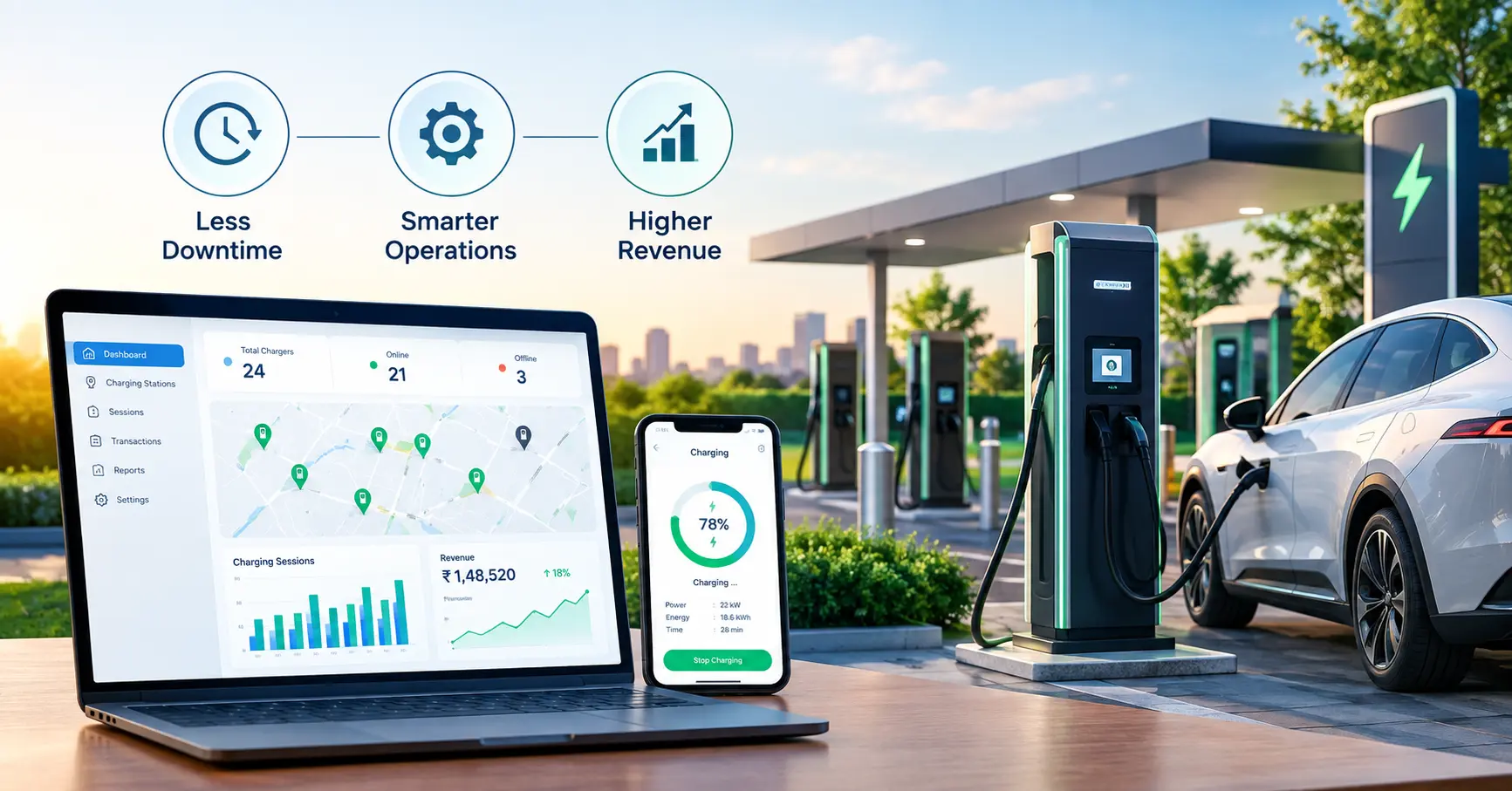
This is exactly where a modern EV charging platform changes the equation for operators. Instead of manually checking each station or waiting for driver complaints, CPOs get live visibility into every charger on their network. Faults get flagged the moment they happen, and teams can act before a small glitch turns into a full day of lost revenue.
Why Downtime Hurts CPO Revenue More Than It Seems
A single charger down for a weekend can quietly cost thousands in missed sessions. Drivers rarely return to try a station twice if it failed on the first attempt. They simply switch apps and never come back.
Downtime also damages trust in the wider network. One broken charger at a busy location can shape a driver’s opinion of the entire brand, even if every other station works perfectly. Operators who ignore this pattern often struggle to explain falling utilization rates later, when the real cause was avoidable equipment failure.
Real Time Monitoring Cuts Response Time Drastically
Live dashboards give operators a constant pulse on charger health. Every session, fault code, and connector status updates in real time, so problems surface within minutes rather than days.
Instant alerts mean field teams can be dispatched before a driver even notices an issue. This shrinks the average repair window and keeps utilization steady across the network. Operators also gain historical data on which chargers fail most often, which helps plan maintenance before breakdowns occur at all.
Predictive Maintenance Reduces Unplanned Failures
Reactive repairs are expensive and unpredictable. A platform built for predictive maintenance studies usage patterns, temperature data, and error logs to flag chargers that are likely to fail soon.
This shifts the maintenance model from firefighting to planning. Technicians visit sites on a schedule that matches actual wear, not guesswork. Fewer emergency callouts mean lower service costs and fewer angry drivers stuck at an offline station.
Smart Load Management Protects Hardware and Grid Costs
Overloading a site during peak hours strains both the hardware and the electricity bill. Smart load management balances power across connectors so no single charger draws more than the grid can comfortably supply.
This protects equipment from thermal stress that shortens hardware life. It also helps operators avoid demand charges that spike during high usage periods, which directly improves the profit margin on every session sold.
Automated Payments Remove a Common Point of Failure
Payment friction is an underrated cause of lost revenue. If checkout fails or takes too long, drivers abandon the session before it even starts, and that lost sale never shows up in any fault report.
Automated settlement systems handle payment the moment a session ends, without manual reconciliation. This reduces billing errors, speeds up cash flow, and removes one more reason for a driver to distrust the network.
Data Driven Insights Support Smarter Expansion Decisions
A platform that tracks occupancy, peak hours, and revenue per charger gives operators something manual spreadsheets never can, which is a clear picture of where demand actually exists. This turns expansion planning from a guess into a calculated decision.
Operators can identify underperforming sites early and reallocate resources before losses pile up. They can also spot high demand corridors that justify new installations, which builds a network that grows around real usage rather than assumptions.
An EV Charging Platform Turns Uptime Into a Growth Strategy
Uptime is not just a technical metric anymore. It has become the deciding factor in whether a driver becomes a repeat customer or moves to another network entirely. Operators who treat reliability as core infrastructure, rather than an afterthought, consistently outperform those who do not.
Building this kind of reliability at scale is difficult without the right technology behind it. This is where Electreefi supports charge point operators with an integrated platform covering monitoring, load management, payments, and maintenance in one connected system.
Practical Steps CPOs Can Take Right Now
Operators do not need to overhaul their entire network overnight. Small, consistent changes often produce the fastest improvement in uptime and revenue.
Start by auditing which chargers fail most often and why. Set up alert thresholds so faults get flagged within minutes, not hours. Review payment completion rates monthly to catch checkout friction early. Finally, use utilization data to guide the next round of site selection rather than relying on instinct alone.
These steps build a foundation where technology does the heavy lifting, and operators can focus on strategic growth instead of daily firefighting.
Conclusion
Reducing downtime is no longer optional for charge point operators who want sustainable revenue growth. Real time monitoring, predictive maintenance, smart load management, and automated payments work together to keep chargers running and drivers coming back. Operators who invest in strong ev charging solutions today are building the reliability that tomorrow’s EV drivers will expect as standard.
Frequently Asked Questions
What is an EV charging platform and why do CPOs need one?
An EV charging platform is a cloud based system that monitors, manages, and analyzes charging stations in real time. CPOs need one because it replaces manual checks with instant alerts, reducing downtime and protecting revenue.
How does real time monitoring reduce charger downtime?
Real time monitoring flags faults within minutes of occurrence. This allows field teams to respond before drivers notice a problem, keeping utilization steady and preventing small issues from becoming costly outages.
Can predictive maintenance actually prevent charger failures?
Yes. Predictive maintenance analyzes usage patterns and error history to flag chargers likely to fail soon. This allows scheduled repairs before breakdowns happen, cutting emergency service costs significantly.
Does smart load management increase electricity costs for CPOs?
No, it does the opposite. Smart load management balances power draw across chargers, which avoids peak demand charges and reduces strain on hardware, lowering overall operating costs.
How do payment failures affect CPO revenue?
Failed or slow checkout causes drivers to abandon sessions before they start. Automated payment settlement removes this friction, improving completion rates and speeding up cash flow for operators.