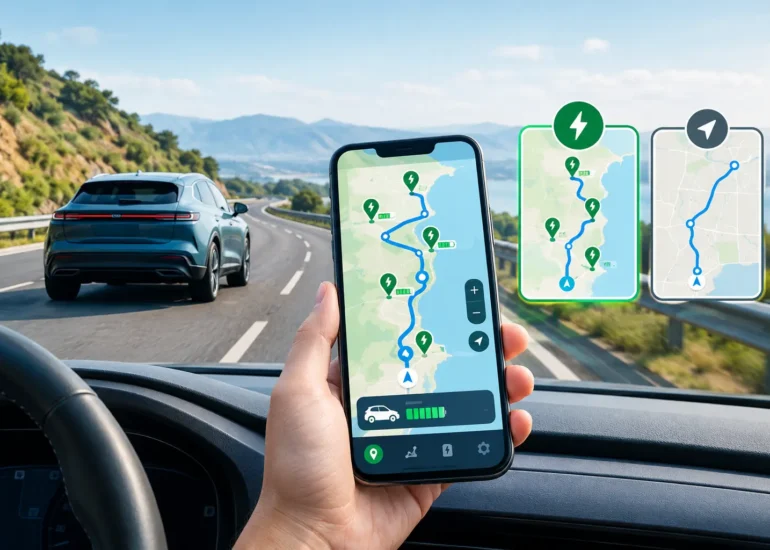
Long highway drives excite every new EV owner, and they worry just as many. You wonder where the next charger waits, whether it works, and how long you must queue. A smart electric vehicle trip planner answers those questions before you leave your driveway. It maps your route, finds chargers along the way, and tells you when to stop. This guide shows Indian EV owners how to plan stress free journeys on any highway.
You do not need to be a tech expert to travel far in an electric car. You only need a clear routine, a few smart habits, and the right tools on your phone. Read on, and you will learn what to check, what to avoid, and how to reach your destination with a healthy battery.
Why Highway Charging Feels Hard in India
India builds new expressways fast, yet public chargers still cluster in cities. Long stretches between towns leave drivers guessing. Many owners also meet broken units, busy stalls, or apps that show old data. One bad stop can cost an hour and a lot of nerves.
Weather, traffic, and speed also change your range. A car that shows 300 km at the start may deliver far less at 100 km/h with the air conditioner on. Hills, luggage, and extra passengers drain the battery faster too. You need more than a map. You need a plan that reacts to real conditions.
What an Electric Vehicle Trip Planner Does for You
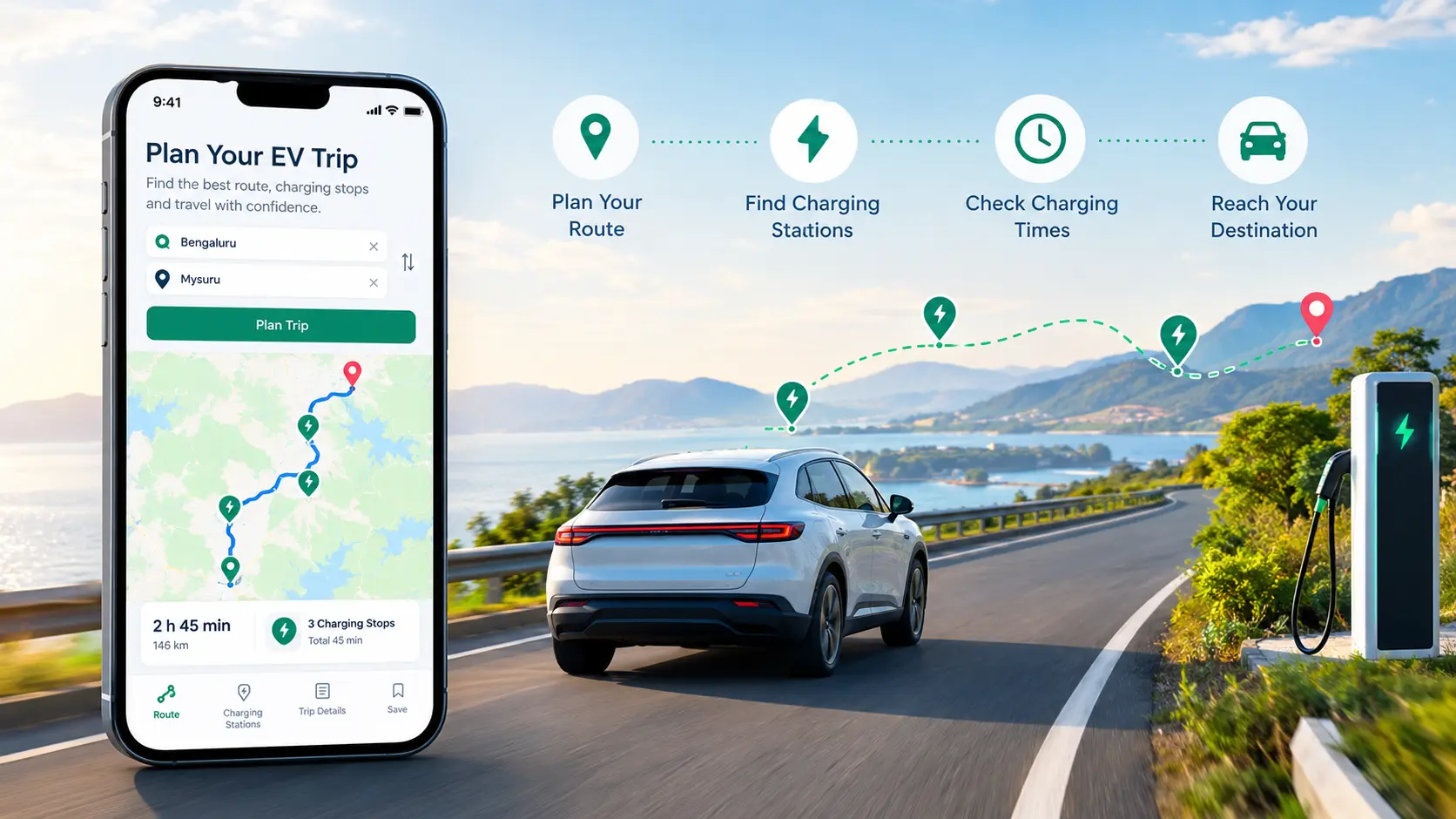
An electric vehicle trip planner turns a vague route into a clear charging schedule. You enter your start point, your destination, and your car model. The tool then calculates how much energy the trip needs and where you should recharge.
Good tools show more than pins on a map. They display charger power, connector type, price, and live availability. They estimate your battery level when you reach each stop. They also compare routes, so you can pick the one with reliable fast chargers instead of the shortest one.
This matters because a charging stop differs from a petrol stop. A DC fast charger often takes 30 to 60 minutes to lift a battery from low to about 80 percent. A planned stop fits that wait into a meal or a rest break. An unplanned stop wastes your day.
Features to Look for in a Trip Planner
Not every tool deserves a place on your phone. A strong trip planner earns trust through accuracy, so check these features before you rely on one.
Live charger status comes first. The tool should show whether a charger is free, busy, or offline. Old data sends you to dead stations. Next, look for vehicle specific range estimates. A planner that knows your car predicts stops more honestly than a generic one.
Filters help you too. Sort by connector type, power output, and payment method. Look for in app payment through UPI, card, or QR, because juggling several apps at a roadside stall frustrates everyone. Check for user reviews and photos, since drivers often report broken cables or poor lighting. Finally, confirm that the tool offers support when something goes wrong. A helpline matters at 11 pm on an empty highway.
How to Plan Your Route Step by Step
Follow this simple routine before every long drive.
First, check your battery and your car’s real range. Use your recent driving data, not the brochure figure. As a rule of thumb, cut that number by 15 to 20 percent for highway speeds and summer heat.
Second, open your electric vehicle trip planner and enter your route. Add your car model and your starting charge. Let the tool suggest stops, then review each one.
Third, pick chargers with backups. Choose a main stop and a second option within 30 km. If the first charger fails, you keep moving without panic.
Fourth, plan to arrive at each stop with at least 10 to 15 percent charge. This buffer protects you from detours and busy stalls.
Fifth, save your payment method in the app before you leave. Download offline maps as well, because network coverage drops on some stretches.
Charger Types You Will Meet on Indian Highways
Indian highways offer several charger types, and each suits a different need. Knowing them helps you read your charging plan with confidence.
AC chargers deliver slower power and suit overnight stays at hotels or highway resorts. A full charge can take several hours. DC fast chargers deliver much higher power and suit quick highway stops. Check that your car supports the charger’s connector, because Indian cars commonly use standards such as CCS2 and Type 2.
Two wheeler and three wheeler owners need different plugs, so filter your search carefully. Always match connector, power, and vehicle before you commit to a stop.
Smart Habits That Save Time and Range
Small habits stretch your range and cut your waiting time. Drive at a steady speed between 80 and 90 km/h when roads allow. Fast acceleration and sudden braking waste energy. Use regenerative braking on downhill sections to win back some charge.
Charge to 80 percent at fast chargers instead of 100, because the last 20 percent takes much longer. Travel on weekdays or early mornings to dodge queues at popular stops. Carry a portable charging cable, and keep a payment method ready.
Check your trip planner again during the drive. Charger status changes through the day, and a quick look can save you from a closed station.
How Our App Supports Your Highway Journeys
We built our tools around real Indian charging needs. ElectreeFi supports more than 105,000 charging points across India and works with over 80 charger makers. That reach helps drivers find working chargers in more places, including highway corridors.
The mobile app puts this network in your pocket. You can locate chargers, start a session, and pay through UPI, card, or QR. The app is available on the Google Play Store and the App Store, so Android and iPhone owners can download it in minutes. More than 350,000 downloads show how many drivers already use it.
Our team also offers an EV Trip Assist service for drivers who want extra guidance on longer journeys. Round the clock call support stands ready when you need help on the road.
Plan Your Next Highway Trip Today
Highway travel in an EV feels easy once you plan well. Pick an electric vehicle trip planner you trust, save backup chargers, and keep a healthy battery buffer. Download the app today, open your trip planner, and map your next highway drive.
Frequently Asked Questions
Can I take an electric car on a long road trip in India?
Yes. Plan your stops in advance, choose DC fast chargers, and keep a backup option. Highway charger coverage keeps growing, and good planning removes most range worry.
How far can an electric car travel on one charge?
Most electric cars in India claim roughly 200 to 500 km, depending on battery size. Real highway range runs lower because of speed, load, and heat. Check your own car’s real figures.
How long does it take to charge an EV on a highway?
DC fast chargers often take 30 to 60 minutes to reach 80 percent. AC chargers take several hours. Your battery size, charger power, and starting level all affect the time.
How do I find EV chargers on a highway?
Use a charging app that shows live status, connector type, and price along your route. Download it from the Google Play Store or the App Store before you leave.
How much does it cost to charge an EV on a highway?
Public chargers bill by the unit of electricity, and rates vary by operator and charger type. Fast chargers usually cost more than slower AC points. Check the price in your app before you start.