Electric vehicle owners across India want one thing at every charging stop: a fast and hassle-free payment. Tap and Pay using ElectreeFi POS gives drivers exactly that by letting them complete a charging payment with a single card tap instead of juggling apps or cash. Charging station owners who adopt this system see shorter queues, fewer failed transactions, and happier customers who return again.
India’s EV charging network is expanding rapidly, and payment friction remains one of the biggest reasons drivers abandon a charging session midway. A slow or confusing payment process pushes customers toward competitor stations. Station owners need a payment method that works instantly, supports every major payment habit, and settles funds without manual reconciliation.
Why EV Charging Payments Need a Simpler Solution
Most EV drivers charge their vehicles during short breaks, so every extra minute spent on payment feels like wasted time. Many public chargers still rely on separate mobile apps or wallet balances that require pre-loading funds. This creates a barrier for first-time users and occasional visitors who simply want to plug in and pay.
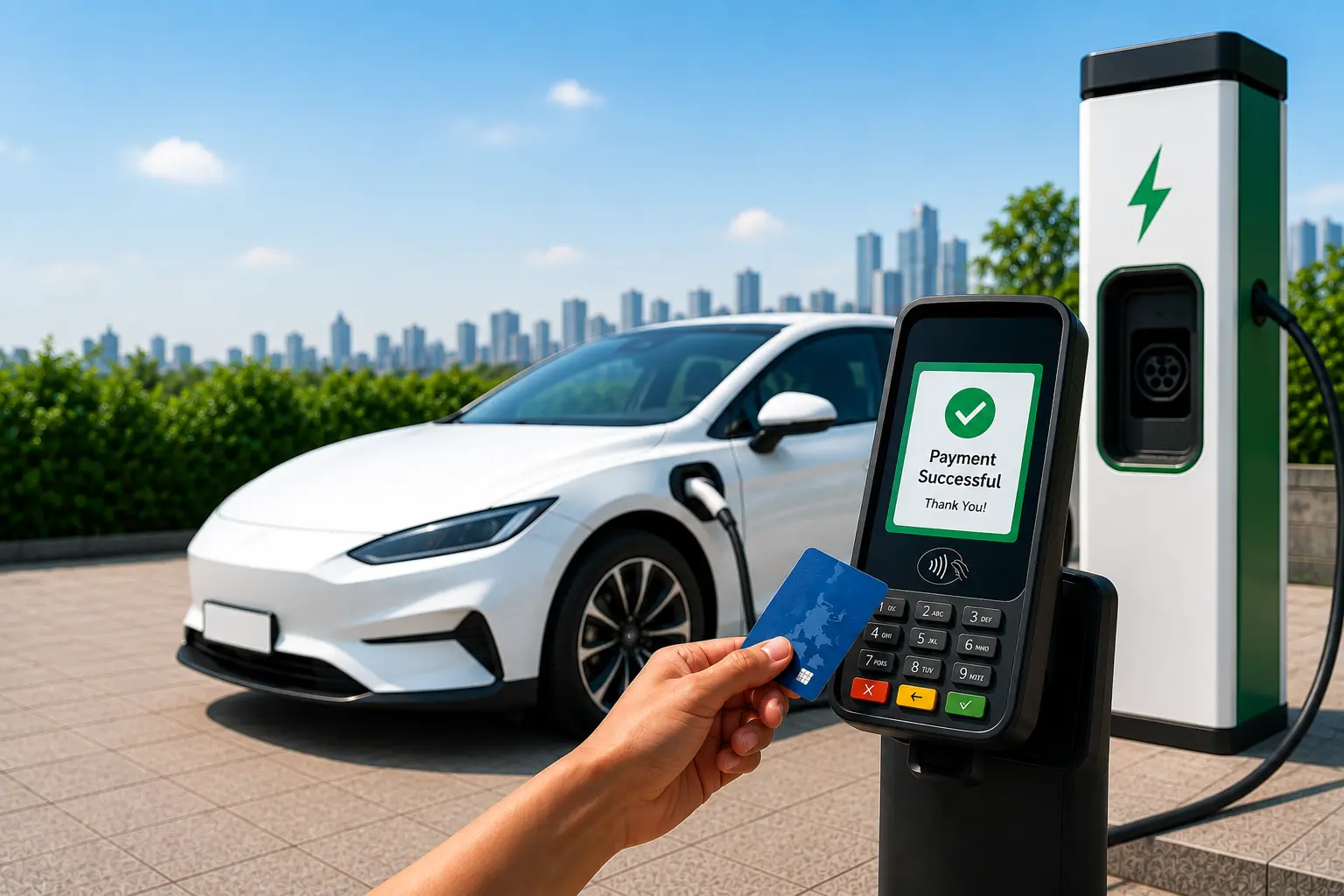
A contactless payment terminal removes this barrier completely. Drivers tap their debit or credit card on the POS device, the transaction processes within seconds, and the charging session begins automatically. No app downloads, no account creation, and no waiting for OTP verification slow down the process.
How ElectreeFi POS Simplifies the Payment Journey
ElectreeFi built its charging station payment solution around four straightforward steps. Drivers select the connector type that matches their vehicle, then choose the amount of charge they need. The POS device processes payment directly to the Charging Point Operator, and the charging session starts the moment the transaction clears.
This structured flow removes guesswork for both new and returning users. Station operators benefit too, since every transaction routes straight to the operator’s account without manual intervention. Settlement happens automatically, which cuts down on the accounting overhead that many small and mid-sized charging networks struggle with.
Tap and Pay Using ElectreeFi POS in Practice
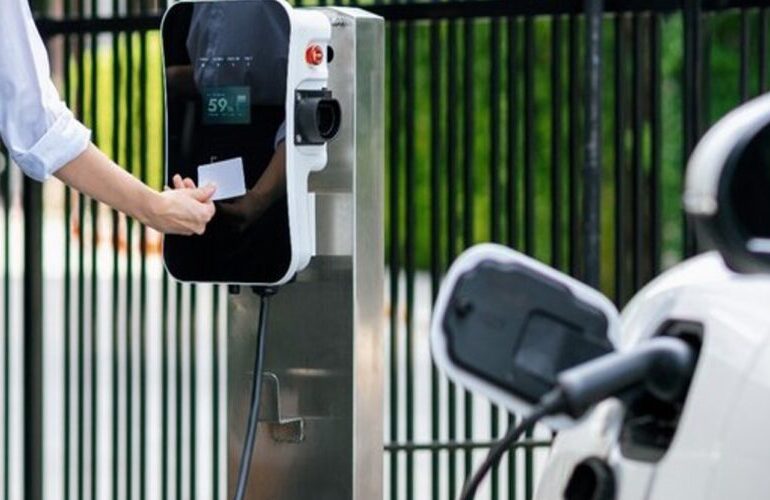
A driver walks up to the charger, taps their card on the terminal, and starts charging within seconds. This is the core promise of the system, and it works because the hardware supports standard contactless card networks that most Indian banks already issue. There is no learning curve for the customer, since tapping a card is a habit people already use at grocery stores, toll booths, and metro stations.
Station owners who install this terminal report fewer abandoned sessions during peak hours. Long queues at malls, highways, and office parks shrink because each transaction takes only a few seconds instead of several minutes.
Multiple Payment Options Under One Terminal
Contactless card payment is only one part of the system. The same POS terminal also accepts BHIM and UPI payments, which remain the most widely used digital payment method in India. Customers who prefer scanning a QR code can generate one instantly at the terminal and pay through any UPI app.
Credit and debit card payments work through the standard swipe or insert method as a backup option for cards without contactless capability. Offering four payment paths through a single device means station owners never lose a sale because a customer’s preferred payment method isn’t supported.
Benefits for EV Charging Station Owners
Station owners gain measurable advantages when they upgrade their payment infrastructure. Faster transactions increase the number of vehicles a single charger can serve in a day, which directly improves revenue per unit. Automated settlement to the operator’s account reduces the administrative work of tracking cash or reconciling multiple wallet providers.
Customer trust also grows when payments feel secure and instant. Drivers remember stations where charging felt effortless, and they return to those locations on future trips. A smoother payment experience becomes a quiet but powerful driver of repeat business.
Reduced hardware complexity is another advantage. Instead of managing separate systems for cards, UPI, and QR payments, station owners run everything through one terminal connected to a single dashboard. This lowers maintenance costs and simplifies staff training at multi-operator sites.
Pay Using ElectreeFi POS for Faster Settlements
Charging point operators managing multiple stations need visibility into daily transactions without chasing separate payment gateways. A unified terminal that settles funds directly to the operator account gives owners real-time clarity on revenue across every location. This matters most for networks scaling beyond a handful of chargers, where manual reconciliation quickly becomes unmanageable.
Security That Builds Rider Confidence
Payment security influences whether a driver trusts a charging station enough to return. Contactless and UPI transactions processed through a certified POS terminal follow standard encryption protocols used across Indian banking infrastructure. Every transaction generates a digital receipt, which gives both the driver and the operator a clear record for dispute resolution.
This level of transparency matters for commercial fleet operators too, who need accurate billing records for expense tracking. A reliable payment trail reduces disputes and builds long-term trust between charging networks and their corporate clients.
Supporting India’s Growing EV Charging Network
India’s charging infrastructure is expanding across highways, residential complexes, and commercial hubs, and payment reliability plays a direct role in that growth. Station owners exploring how EV charging station accessories and payment hardware work together can build a more complete charging setup from day one.
Operators managing software alongside payments may also find it useful to read how EV charging software simplifies payment monitoring and user management, since dashboard visibility pairs naturally with a fast POS terminal. Fleet-focused businesses planning longer routes can also review this guide on the electric vehicle trip planner for a smoother end-to-end charging experience.
ElectreeFi designs its payment terminals with these real-world station challenges in mind, focusing on speed, reliability, and settlement accuracy for operators of every size.
Getting Started with a Contactless Payment Terminal
Charging station owners considering an upgrade should evaluate how many payment methods their current setup supports and how quickly transactions settle to their account. A terminal that consolidates card, UPI, and QR payments into one device reduces both hardware costs and customer wait times.
For full details on the payment methods, workflow, and setup process, visit the EV charging station payment solutions page to see how the terminal fits into an existing or new charging station.
Faster payments lead to shorter queues, better reviews, and more repeat drivers. Station owners who prioritize payment speed today position themselves to capture a larger share of India’s fast-growing EV charging market tomorrow.
Frequently Asked Questions
What payment methods does an EV charging POS terminal support?
A modern EV charging POS terminal typically supports contactless card tap, standard credit and debit card swipe, BHIM and UPI transfers, and QR code scanning. Offering multiple methods through one device ensures drivers can pay using whatever option they already trust, which reduces failed transactions at the charger.
Is contactless card payment safe for EV charging stations?
Yes, contactless payments use the same encryption standards as in-store card transactions at retail outlets. Every tap generates a secure, verified transaction with a digital receipt, giving both the driver and the station operator a reliable record for future reference.
How fast does a tap and pay transaction complete at a charging station?
A contactless transaction usually completes within a few seconds once the card touches the terminal. The charging session begins automatically after payment confirmation, which removes the delay drivers often face with app-based or wallet-based payment systems.
Can charging station owners track payments in real time?
Yes, most POS-based payment systems settle funds directly to the operator’s account and log each transaction on a connected dashboard. This gives station owners immediate visibility into daily revenue without manual reconciliation across multiple payment providers.
Do EV drivers need a separate app to pay at the charger?
No, a POS terminal that supports card tap, UPI, and QR payments removes the need for a dedicated charging app. Drivers can pay directly at the terminal using methods they already use daily, which speeds up the entire charging experience.