India adds new chargers every month, but many operators still struggle with idle stations, failed payments, and unclear revenue. The right EV charging management platform solves most of these problems before they grow. It gives you one dashboard to monitor chargers, bill drivers, and plan expansion. The market offers many options, though, and a wrong pick leads to costly rework. This guide shows you what to check before you sign.
Think of the platform as the control room of your business. Chargers sit on the street, but your profit is made in software. Every failed session, slow refund, or missed alert costs you money and driver trust.
Start With Your Business Model
Before you compare vendors, define who you serve. A public operator who offers EV charging to strangers needs roaming, pricing control, and strong payment tools. A fleet depot needs vehicle scheduling and energy cost tracking. A housing society needs access control and simple billing for residents.
Write down your goals for the next three years. Note how many chargers you plan to add, which cities you target, and which customers you want. A platform that fits today but cannot scale will force a painful switch later. Clear goals also help you ignore features you will never use. If you plan to launch in a metro, read this CPO roadmap for Bengaluru for local context.
Check Hardware Compatibility and OCPP Support
Your chargers speak a protocol called OCPP, and your software must speak it too. Ask which versions the vendor supports, and ask for proof, not promises. OCPP 1.6J is common in India today, while OCPP 2.0.1 adds stronger security and smarter charging control. The article on OCPP explained shows why this match matters.
Next, test brand independence. Most operators buy chargers from several makers over time, and a platform tied to one brand traps you. Ask how many charger makers the vendor has integrated. Ask how long a new brand takes to onboard.
Look for Payments Built for India
Indian drivers pay in many ways. Some tap UPI, some scan a QR code, and others use cards or wallets. Your platform should accept all of them without forcing a separate app. Public EV charging lives or dies on a smooth payment moment, and a driver who cannot pay within seconds will move to the next station.
Ask how payments settle. Money should reach your account quickly, and the platform should keep clear records for every session. Check refund flows, invoice generation, and GST support as well. Finance teams save hours each month when these tools work well.
Test Monitoring, Alerts, and Reports
Ask for a live demo, not slides. Watch how the dashboard shows charger status, session data, and revenue. You should see faults the moment they happen, not the next morning. Instant alerts cut downtime, and downtime is the biggest hidden cost in this business.
Good reports go further. Look for utilization by site, peak hours, energy use, and earnings per charger. These numbers tell you where to add chargers and when to change prices. If a simple report needs a support ticket, the platform will slow your team down.
Demand Smart Load Management
Power is a real limit at apartments, offices, and depots. When ten cars plug in together, the grid connection can trip. Smart load management spreads power across active sessions so no site crosses its limit. It also shifts charging to cheaper hours and can lower your power bill.
Ask whether the platform supports dynamic charging rates and demand response. Rising demand for EV charging at shared sites makes this feature a must, not a bonus. Ask the vendor to show a real site where load management runs today.
Ask About Roaming and Scale
Roaming lets drivers use your chargers through partner apps, and it lets your app users charge on partner networks. It fills idle chargers without new hardware. Ask how many roaming links the vendor has built and which standard it uses. OCPI is the common choice.
Scale matters just as much. Indian cities add charging sites every week, so your platform must grow without drama. A system that runs well with fifty chargers may struggle with five thousand. Ask for the largest network the vendor manages today, and request references from operators of your size.
Check Security and Data Ownership
Your platform holds driver data, payment records, and charger credentials. Ask how the vendor protects that data. Look for encrypted connections, role based access, and regular security testing. Ask where servers sit and how the vendor follows India’s Digital Personal Data Protection Act.
Data ownership deserves a direct question. Can you export your session history and customer list at any time? If you leave, will the vendor hand over your data in a usable format? A clear yes protects you from lock in.
Compare Support and Total Cost
Chargers do not fail on a schedule. When one goes down at 9 p.m., you need a real person to answer. Check whether support runs around the clock and how fast the team responds. Ask whether the vendor also offers installation, maintenance contracts, and field teams, or only software.
On cost, look past the headline price. Compare setup fees, per charger fees, payment gateway charges, and the price of new integrations. Ask for a three year cost sheet. A cheap platform with hidden fees costs more than a fair one with clear pricing. The charging station management system guide covers this checklist in more depth.
Run a Pilot Before You Commit
Even a strong demo hides surprises. Ask for a pilot at one or two sites. Connect your real chargers, take real payments, and watch the reports for a few weeks. Pilots expose onboarding gaps, network issues, and support quality fast.
During the pilot, track simple numbers. Count failed sessions, alert response times, and settlement delays. Ask your site staff and a few drivers for feedback too. Their view often reveals problems that dashboards miss.
How a Strong EV Charging Management Platform Works in Practice
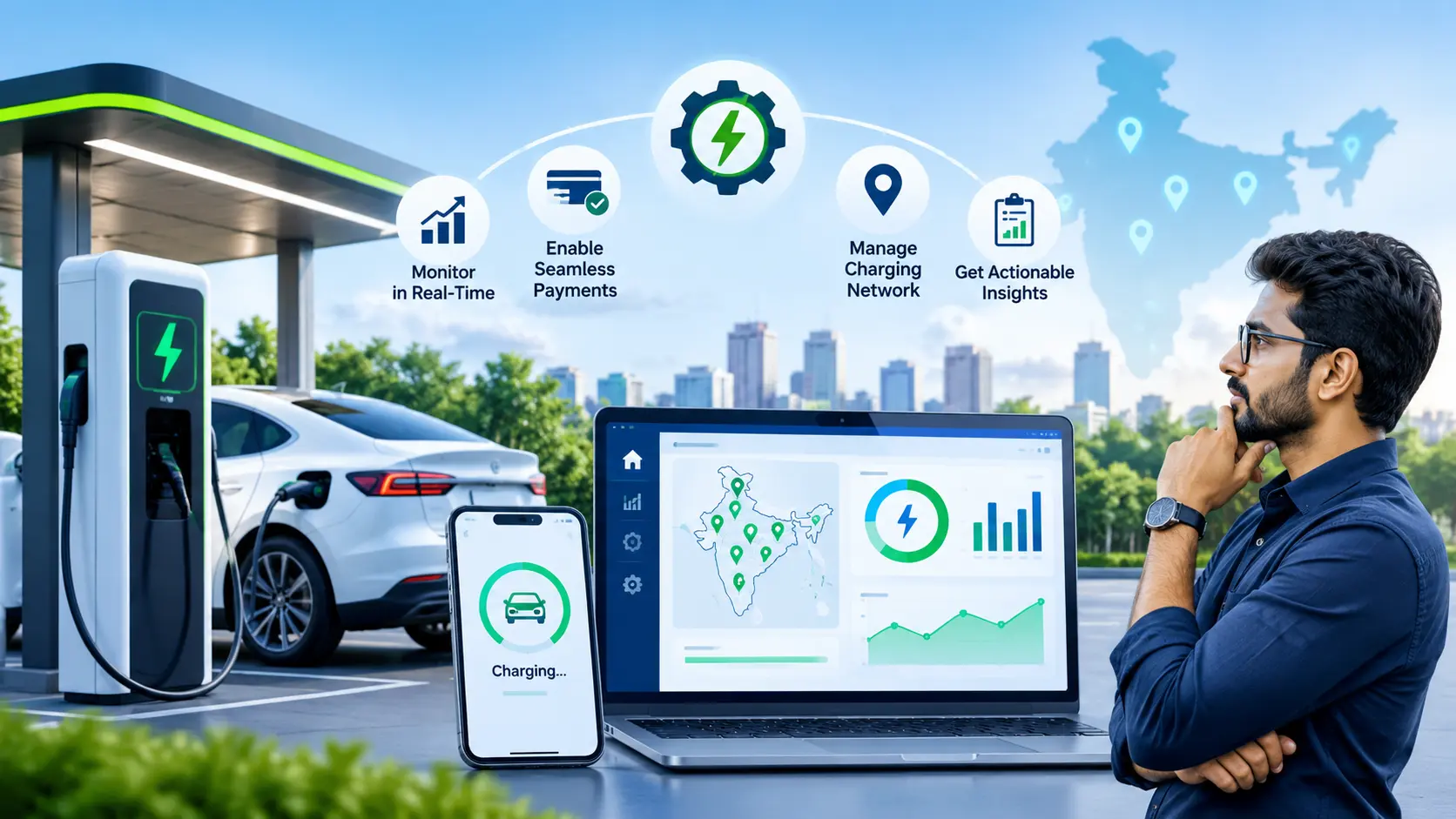
ElectreeFi shows what this checklist looks like in real life. Its cloud platform connects to chargers through OCPP 1.6J and 2.0.1, and it works with more than 80 charger makers across over 105,000 charging points in India. Drivers pay by UPI, card, or QR, and the platform covers roaming, load management, fleet tools, and round the clock support. Review the full feature set on the platform page and compare it with your own list.
Final Thoughts on Your Platform Choice
A strong EV charging management platform protects your revenue, your drivers, and your growth. Match it to your business model, test it live, and read the contract closely. Shortlist two or three vendors, run the same demo script with each, and score them on the criteria above.
Ready to see how it works for your network? Book a demo today, share your charger brands and city plans, and get a clear view of setup, pricing, and timelines.
Frequently Asked Questions
What is a charging station management system?
It is cloud software that monitors chargers, controls sessions, handles payments, and reports revenue. Operators run many sites from one dashboard.
How much does charging management software cost in India?
Pricing depends on charger count, features, and support level. Vendors usually charge setup fees, per charger fees, or a revenue share. Ask for a three year cost sheet before you decide.
What is OCPP and why does it matter?
OCPP is an open protocol that lets chargers and software communicate. It keeps you free to mix charger brands and change software without replacing hardware.
Can one platform manage chargers from different brands?
Yes, if the platform supports OCPP and has tested integrations with each brand. Ask the vendor to name the charger makers it already supports.
Is a charging station business profitable in India?
It can be, when you pick busy locations, control power costs, and keep chargers online. Good software helps with all three. Book a demo to review your site plan with experts.
