What Is a Charging Station Management System?
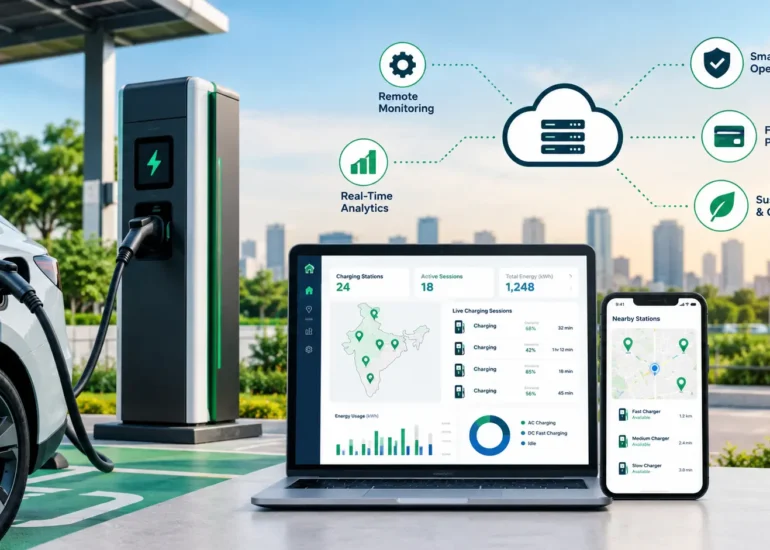
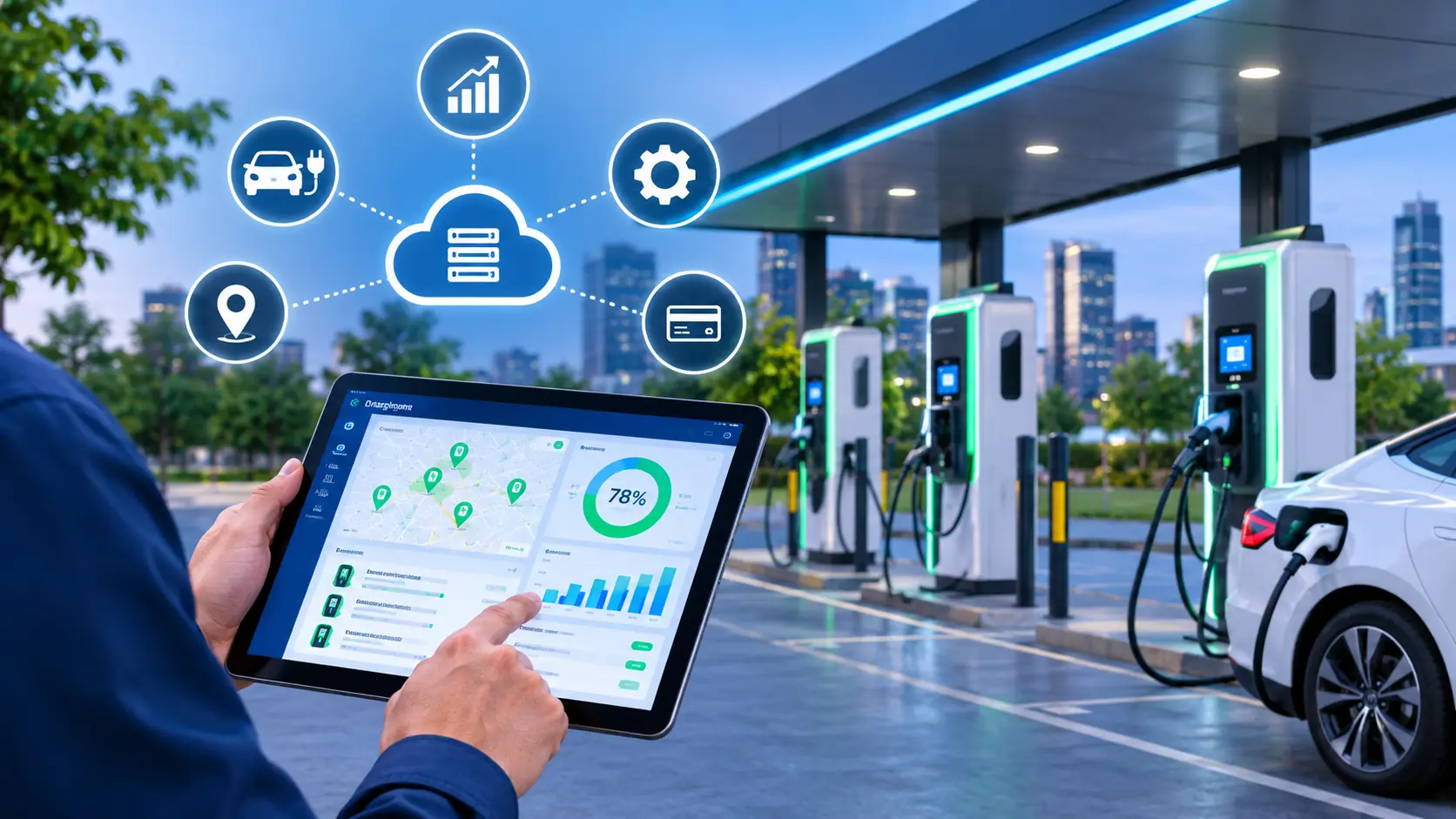
A CSMS is cloud software that connects to your chargers and controls them from one dashboard. It starts and stops sessions, tracks energy use, sets prices and collects payments. Think of it as the brain of your charging business, while the chargers act as the hands. Most chargers talk to a CSMS through OCPP, the Open Charge Point Protocol. This open standard lets chargers from different brands share data in one common language. Operators who use OCPP avoid lock in to a single hardware vendor. They can add new charger models later without rebuilding their software. Charge point operators, fleet operators, property owners and parking operators all use a CSMS. Drivers see only the app and the plug. Operators see everything else through the CSMS.How a CSMS Works Behind the Scenes
Every charger sends small messages to the cloud. These messages report its status, the connector in use, the energy delivered and any fault. The CSMS reads each message and acts on it within seconds. It can authorise a driver, send a charging limit to the charger or raise an alert for your support team. Payments follow the same path. A driver scans a QR code, taps a card or pays by UPI. The CSMS confirms the payment, starts the session and records the transaction. Later, it adds that record to your revenue reports. You see every rupee and every kilowatt hour in one place, without manual matching.Key Features of a Charging Station Management System
Feature lists look long, so focus on the ones that protect uptime and revenue. These are the core tools every Indian operator needs.- Live monitoring: Dashboards show charger status, active sessions and faults as they happen. Instant alerts help your team fix problems before drivers complain.
- Flexible pricing: You set tariffs per kilowatt hour, per minute or per session. Dynamic rates let you respond to demand and energy cost changes.
- Payment options: Drivers pay by UPI, card or QR code, and the payment goes directly to the operator.
- Smart load management: The software balances power across chargers and adjusts charging rates against grid load. This reduces strain during peak hours and helps you control power costs.
- Roaming support: Roaming lets drivers charge on partner networks with one app and one payment method. Your chargers gain more users without new hardware.
- Reports and analytics: Custom reports track occupancy, peak hours and earnings per charger. You learn where to expand and how to price.
- Access control: You assign roles to staff and manage who can use private or shared chargers.
Why Charging Station Management Matters for Indian CPOs
India adds new chargers every month, yet many sit idle or break down without notice. Good charging station management closes that gap. It tells you which chargers earn money, which ones fail often and where drivers lose patience. You then fix weak spots with data instead of guesswork. Charge point operators gain the most from this clarity. Indian operators also face special challenges. Power cuts, voltage swings and mixed charger brands appear on many sites. Payment habits favour UPI, and drivers expect a quick QR scan. A CSMS that fits local conditions handles these realities, while a generic tool often struggles. Experience also counts here. Teams that run chargers daily know that software must stay simple under pressure. Support staff need clear dashboards at 2 AM, not complex menus.How to Choose a Charging Station Management System in India
Start with your own goals. A fleet depot, a mall parking lot and a highway hub need different tools. Write down your charger count, your brands and your payment needs before you talk to any vendor. Then score each vendor against these points:- Open standards. Ask for OCPP 1.6J and 2.0.1 support, plus OCPI for roaming.
- Charger brand freedom. Confirm the software works with many brands, so you never face hardware lock in.
- Local payments. Test UPI, card and QR flows on a real charger before you sign.
- Smart load control. Look for tools that manage grid load and charging rates. This smart charging with load management approach protects your site during peak demand.
- Support and maintenance. Choose a partner that offers 24/7 support and field maintenance plans.
- Clear reporting. Check that dashboards show uptime, revenue and energy use without extra setup.
- Room to grow. Make sure the system scales from ten chargers to many more without a rebuild.
Common Mistakes in Charging Station Management
Many operators buy software on price alone. That choice often costs more later, because migration and workarounds add up. Others skip a trial and discover payment gaps after launch. Some ignore support quality until a fault stops a busy site. A smarter path uses a pilot. Connect two or three chargers, run real sessions for a few weeks and review the reports. Ask your team and your drivers what they like and dislike. Then decide. Your Next Step A CSMS gives you control, clear data and a better driver experience. Strong charging station management also builds trust with property owners, fleets and utilities who rely on your uptime. Build a short list of vendors, test them on real chargers and compare support quality. Explore roaming and payment solutions to see how each layer fits your plan. Ready to see a live dashboard? Request a demo and talk to the team.Frequently Asked Questions
What is a CSMS in EV charging?
A CSMS is cloud software that monitors and controls EV chargers. It manages sessions, pricing, payments and reports from one dashboard, so operators run many chargers with less manual work.What is the difference between a CSMS and a CMS?
Both names describe the same type of software. OCPP 2.0.1 documents use CSMS, while many Indian providers use CMS as a shorter form.Does OCPP matter when choosing a CSMS?
Yes. OCPP lets chargers from different brands connect to one software platform. It protects you from hardware lock in and keeps future upgrades simple.How much does a CSMS cost in India?
Cost depends on charger count, features and support level. Ask vendors for a written quote that lists setup, subscription and support charges, and run a pilot first.Can a CSMS increase charging revenue?
Yes. Dynamic pricing, higher uptime, roaming users and clear reports help operators earn more from every charger they run.
ElectreeFi platform
Looking for a CSMS to actually run your chargers?
ElectreeFi’s EV charging management system runs OCPP 1.6 and OCPP 2.0.1 networks across India — remote diagnostics, tariffs and settlement, UPI and card payments, load management and 24×7 monitoring.