Electric two-wheeler fleets are growing fast across Indian cities. Delivery companies, ride-hailing operators, and last-mile logistics providers are switching to electric scooters and bikes to cut fuel costs and meet sustainability targets. But fleet owners quickly discover that charging speed decides whether a fleet stays profitable or stays parked, which is why many are now turning to Battery Swapping Station Setup Services to keep vehicles moving without long charging downtime.
Riders who spend hours waiting for a battery to charge lose earning time. Fleet managers who cannot predict battery availability lose delivery slots. This is why more operators are turning to professional setup and installation support to build reliable swapping infrastructure instead of relying only on plug-in charging.
What Is a Battery Swapping Station and Why It Matters
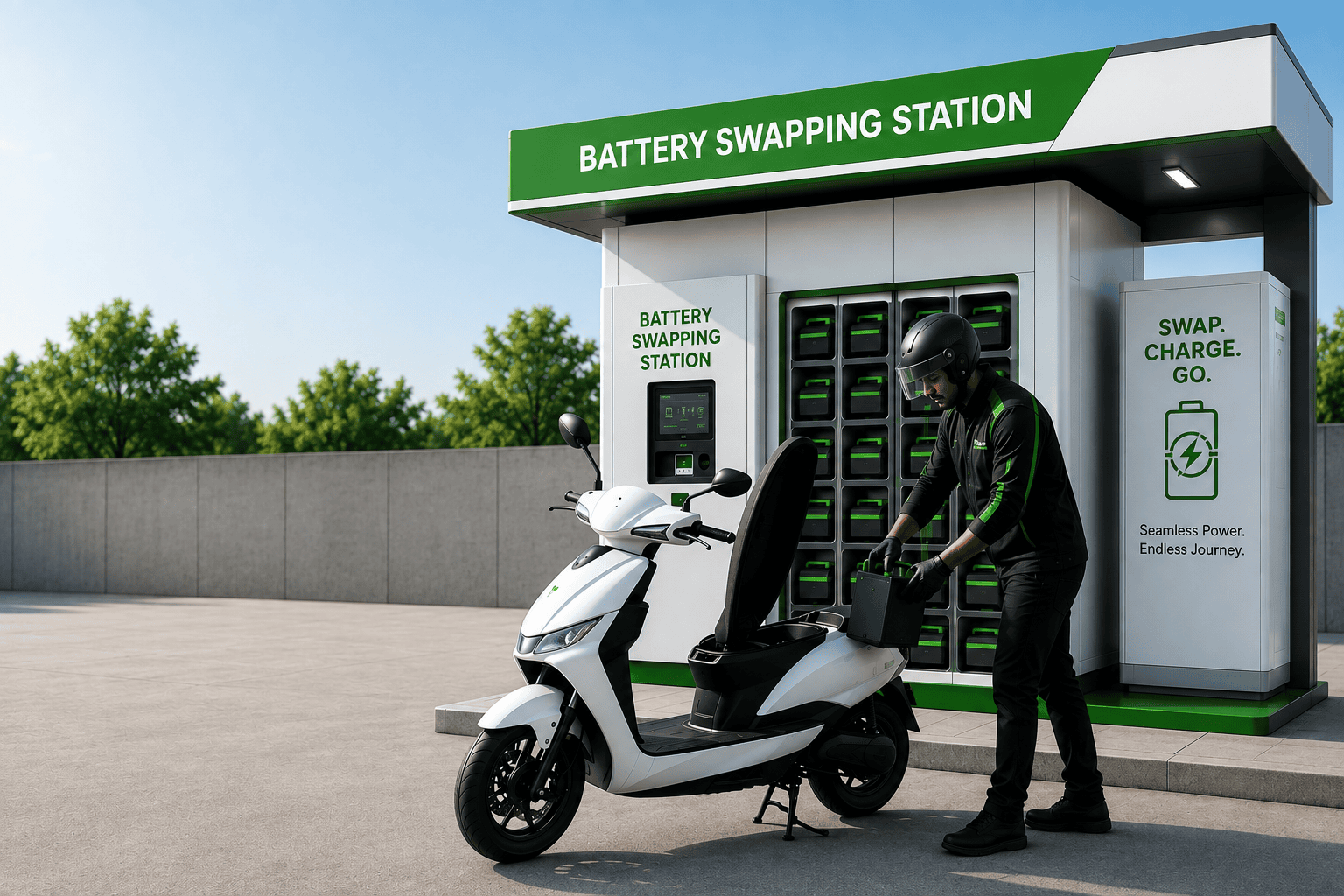
A battery swapping station lets a rider exchange a depleted battery for a fully charged one in a few minutes. There is no waiting for hours at a charger. The rider simply pulls in, swaps the battery, and gets back on the road.
For two-wheeler fleets that run on tight delivery windows, this speed makes a real difference. A single scooter can complete more trips in a day because it spends less time idle. Fleet operators also gain better control over battery health, since batteries are charged in a controlled environment rather than through inconsistent home or roadside charging.
The Growing Need for Battery Swapping Station Setup Services
Setting up a swapping station is not as simple as installing a charger and calling it done. It involves site evaluation, electrical load planning, safety compliance, battery inventory design, and integration with a monitoring platform that tracks usage in real time. Fleet owners rarely have this expertise in house, which is why dedicated Battery Swapping Station Setup Services have become essential for two-wheeler fleets that want to scale without operational headaches.
A professionally planned station accounts for peak swap hours, battery cycling limits, and power backup needs. It also considers how many docking bays a location requires based on fleet size and route density. Getting these details wrong leads to bottlenecks during rush hours, which directly hurts rider productivity and customer delivery timelines.
Why In-House Setup Often Falls Short
Many fleet operators try to build swapping infrastructure on their own to save costs upfront. This approach often backfires. Electrical connections may not match local grid capacity. Battery racks may lack proper ventilation or fire safety measures. Software systems may fail to sync battery health data across locations.
These gaps create downtime, safety risks, and higher long-term maintenance costs. A structured setup service reduces these risks because it follows tested engineering standards and compliance checklists from day one.
Core Benefits for Electric Two-Wheeler Fleet Owners
Fleet owners who invest in professional station setup gain several advantages that directly affect daily operations and long-term costs.
Reduced vehicle downtime is the most immediate benefit. Riders spend minutes instead of hours getting a fresh battery, which keeps more vehicles active on the road at any given time.
Better battery lifespan follows naturally. Centralized, monitored charging avoids overcharging and deep discharge cycles that shorten battery life when riders charge batteries individually at home.
Lower operational costs come from smarter inventory planning. A well designed station tracks which batteries are charged, in use, or under maintenance, so operators avoid overbuying batteries or running short during peak hours.
Improved rider satisfaction matters too. Riders earn more when they spend less time waiting, which improves retention in a market where driver attrition is a constant challenge for fleet businesses.
Scalability is another advantage that fleet owners often underestimate. A station built with proper planning can expand as fleet size grows, without needing a complete infrastructure overhaul later.
Real-Time Monitoring Changes the Game
Modern swapping stations rely on cloud-based platforms that track battery status, swap history, and inventory levels continuously. Fleet managers can see exactly how many charged batteries are available at each location without visiting the site physically.
This visibility helps operators redistribute batteries between stations during demand spikes, plan maintenance before a battery fails, and generate reports that support better fleet-wide decision making. Without this layer of monitoring, station operators are essentially guessing, which increases the chance of running out of charged batteries during peak delivery hours.
EV Battery Exchange Station Installation Requires Technical Precision
Installing the physical infrastructure for battery exchange is a technical process that goes beyond placing a rack in a parking lot. Proper EV Battery Exchange Station Installation includes electrical load assessment, transformer or power backup sizing, fire safety compliance, and secure battery locking mechanisms that prevent theft or tampering.
Location selection also plays a major role. Stations placed along high-traffic delivery corridors or near fleet hubs see far better utilization than stations placed based on convenience alone. Experienced installation teams study rider movement patterns before finalizing a site, which improves return on investment significantly.
Compliance and Safety Cannot Be an Afterthought
Battery storage and exchange involve lithium-ion cells that require strict handling standards. Poor ventilation, incorrect wiring, or substandard racks can create fire hazards. Regulatory bodies in India have been tightening safety norms for battery storage facilities following past incidents in the EV sector.
A professional setup team builds stations that meet these evolving safety standards from the start. This protects the fleet’s physical assets, protects riders, and protects the business from regulatory penalties or insurance complications down the line.
How to Choose the Right Setup Partner
Fleet owners evaluating a setup partner should look beyond installation cost alone. The right partner offers end-to-end support, starting with site assessment and covering installation, software integration, and ongoing maintenance.
A good partner also provides real-time monitoring dashboards, transparent reporting, and rapid support response when issues arise. Fleet operations cannot afford long downtime windows, so response time during technical faults should be a key evaluation factor.
Experience with similar fleet sizes and route types also matters. A partner who has deployed stations for delivery fleets understands rider behavior patterns differently than one who has only worked with private EV owners.
Building Infrastructure That Supports Long-Term Growth
Two-wheeler fleets that invest in properly planned swapping infrastructure position themselves for sustainable growth. As delivery volumes rise and competition increases, fleets with faster turnaround times and lower downtime will consistently outperform those still relying on slow charging methods.
ElectreeFi works with fleet operators to design and deploy swapping stations that combine solid physical infrastructure with cloud-based monitoring, helping businesses reduce downtime and manage battery inventory with confidence. Fleet owners exploring EV charging infrastructure options alongside swapping can also review dedicated EV fleet hub solutions designed specifically for businesses scaling their electric fleets. For a closer look at how swapping networks are reshaping fleet operations across India, this piece on the rise of battery swapping networks offers useful context.
Choosing the right infrastructure partner today determines how efficiently a fleet operates tomorrow. As two-wheeler fleets continue to expand across Indian cities, professional swapping station setup will separate operators who scale smoothly from those who struggle with avoidable downtime.
Ready to eliminate charging downtime from your fleet operations? Talk to ElectreeFi about a battery swapping station built around your fleet’s size, routes, and growth plans.
Frequently Asked Questions
How long does it take to set up a battery swapping station for a fleet?
Timelines depend on site readiness and electrical infrastructure, but most stations take a few weeks from site survey to commissioning. Sites with existing power connections move faster than locations needing new grid upgrades.
How many batteries does a fleet need per swapping station?
This depends on fleet size, ride frequency, and charging cycle time. Setup providers usually calculate a buffer ratio, keeping extra charged batteries ready to handle peak swap demand without delays.
Is battery swapping cheaper than plug-in charging for fleets?
Swapping often lowers operational costs over time because it reduces vehicle downtime and extends battery life through controlled charging, even though upfront setup investment can be higher than basic chargers.
What safety standards apply to battery swapping stations?
Stations must follow fire safety, ventilation, and electrical wiring standards for lithium-ion battery storage. Compliance protects riders, assets, and the business from regulatory or insurance issues later.
Can an existing charging station be upgraded to support battery swapping?
Many locations can be retrofitted, though this requires evaluating existing power capacity, space for battery racks, and compatibility with a swapping management platform before installation begins.